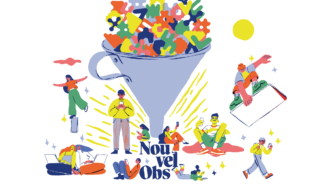
Le Nouvel Obs is one of France’s most iconic media brands, with a unique editorial legacy. But for years, its digital strategy was largely driven by audience volume. When Sandro Martin arrived as CEO in September 2024, traffic had already been declining for nearly two years. Rather than chasing more content and more clicks, the team chose a different path: fewer articles, stronger editorial choices, and a renewed focus on reader value.
In this interview, Sandro Martin explains how Le Nouvel Obs reshaped its editorial production, data culture, newsroom organization, newsletters, and reader relationship strategy to build a more differentiated and sustainable digital model.
> Le Nouvel Obs cut its article output by nearly 30% and everything went up: pageviews rose 30% year on year, median pageviews per article rose 50%, and digital subscriptions rose 35%

> The cuts were structural rather than across the board. Raw newswire reposts went, print-shaped cultural reviews became digital-first compilations, and premium content doubled as a share of the feed

> The mechanism is simple: fewer pieces competing for the same homepage and distribution means each surviving article reaches more people, which lifts propensity to subscribe

> A daily morning briefing puts editorial and data in the same room, and deliberately spotlights what worked rather than what flopped. They chose positive reinforcement over chasing underperformers
Le Nouvel Obs is a prestigious publication with a unique place in French history, but for a long time digital strategy was based solely on audience numbers. When you arrived, those numbers had been declining for nearly two years. How did you respond?

In 2024, our digital strategy was based primarily on two metrics: overall audience and subscriber growth, with no real prioritization. However, our audience had indeed been in steady decline for nearly 24 months, and our ability to recruit new subscribers had plateaued at levels lower than those of our direct competitors.
In recent years, Le Nouvel Obs had undertaken a major overhaul of its platforms, which is already a positive step, but without completely rethinking how they align with the editorial and marketing strategy.
So, when I arrived, Editor-in-Chief Cécile Prieur and I sought to realign these three dimensions—editorial, marketing, and user experience—around shared priorities. My arrival as the new CEO allowed us to revisit issues with the editorial team and make it a central pillar of our transformation. This initiative was launched in late 2024, following a study trip to the United States, which served as the catalyst.
To get started, you brought in an outside consultant. What was the idea behind that. To get an outside perspective, or to speed things up?
We did indeed decide to work with Max Leroy, an Audience and Product Strategist. Having spent the early part of his career in the US—notably at CNN and The New York Times—and later at POLITICO Europe, Max brought a wealth of international experience. Our goal wasn’t to outsource the strategic thinking, but rather to save time, structure our approach, and objectively validate our intuitions through macro-level data analysis and international benchmarks.
This collaboration allowed us to quickly identify our true priorities and rule out several false leads. Four central objectives emerged:
- Showcase our editorial value-add more effectively in the digital space, where the flood of breaking news often diluted our core offering
- Support the evolution of editorial production to better meet our readers’ changing needs
- Strengthen reader relationships by moving beyond the mere logic of traffic and pageviews
- Evolve our organization to focus more energy, expertise, and decision-making power on digital platforms
We opted for a highly pragmatic approach that combined data analysis, team feedback, and strategic planning workshops. The goal was to arrive at actionable outcomes and shared decisions in order to begin implementation.