
At the Audiencers’ Festival Montréal, Corinne Osnos, VP of Subscriptions and Marketing at Foreign Policy, shared three low-effort, high-impact tactics her team uses to bring in readers despite running one of the strictest paywalls in media.
⚙️ Three low-lift moves worth testing
> Build one segmented "win-back" email targeting lapsed-but-recent visitors
> Test an exit-intent registration wall instead of loosening your paywall
> Turn your best columnist into a short email course for readers who aren't ready to subscribe yet
Foreign Policy was founded in 1970 at Harvard by two professors, in the aftermath of the Vietnam War, originally as a forum for views on US foreign policy that weren’t getting airtime elsewhere. Today it covers geopolitics globally rather than just American foreign policy, and its subscribers reflect that: about 60% US, 40% international, with Canada as its second-largest market.
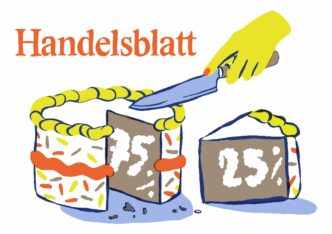
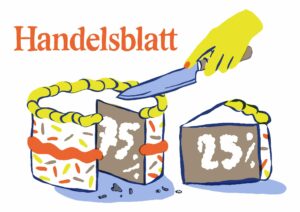
Subscriptions are the core of FP’s revenue, split between individual subscribers and group subscriptions (organizations like the UN, Yale or the US Department of Defense buying access for their entire staff), which make up about 25% of subscription revenue. FP runs no programmatic advertising at all on the subscriber website, which means, in Osnos’s words, every single page view has to be optimized toward subscription rather than traffic. The other half of the business is partnership revenue: custom research, podcasts, and events built with outside organizations. FP’s biggest annual moment isn’t an election, it’s the UN General Assembly each fall.
The organization is small for its output: about 70 full-time employees total, with a three-person marketing team.

The paywall is genuinely strict, and getting stricter
FP offers essentially no free content. Osnos was upfront that this is unusual – freemium is perhaps the most popular model in Europe, whilst in Canada a lot of content is freely accessible and many media are government supported. And their model has only gotten more restrictive over time. In 2018, the meter allowed around five free articles a month. Today it’s practically zero. Because there’s no ad revenue to fall back on, every article needs to justify its existence through subscription value.
Four problems sitting underneath that strategy
Osnos framed FP’s current position around four challenges, several of which will be familiar to most publishers reading:
- Top-of-funnel erosion. Organic discovery through Google search, historically a major channel, has dropped off significantly, even though FP isn’t chasing traffic.
- A demographic gap. FP’s core paying audience skews over 50. But it also has a large 18-to-23 segment, driven almost entirely by university group subscriptions. Those students are a meaningful exposure channel (Osnos says it’s one of the most common things she hears from subscribers she meets: “I used to read FP at university”), but they arrive through IP-authenticated access, meaning FP has no contact information for them, and loses nearly all of them the moment they graduate.
- High pricing on a strict meter. Because there’s no ad revenue, FP has to price for value and hold the line on access, which creates real friction for readers who aren’t ready to pay upfront.
- Rising competition in a moment that should otherwise favor FP. Geopolitics is dominating headlines, which sounds like a tailwind, but it also means FP is now competing directly with much larger outlets like The Washington Post and The New York Times for the same coverage. Osnos noted that FP used to see clear, isolated traffic and subscription spikes tied to major geopolitical moments (the clearest being the outbreak of the Russia-Ukraine war). More recent moments, including developments around Venezuela, have still moved the needle, but far less distinctly, because so many outlets are now covering the same stories simultaneously.
Given a small team (3 on the individual subscription side, 2 focused on group subs), Osnos’s operating principle is to prioritize low-effort, high-impact tactics, three of which she shared with us in Montréal:
Win 1: The weekly trending digest
This is a weekly email combining a curated feed of articles, with marketing messaging at the top and bottom. Its effectiveness comes almost entirely from precise targeting and testing, not from the format itself.

Targeting: the email goes to users who visited the site in the last 30 days but haven’t visited in the last 7, a segment the team calls “Active 30, Dark 7.” These readers haven’t seen the last week’s stories, so the email surfaces what’s new rather than repeating content they may have already seen, and it re-engages them before they drift into a fully at-risk state. Readers still inside that 7-day window get more direct subscription-offer messaging instead, since they don’t need a content refresher.
Article selection: the team tested a blend of signals (last-touch conversion attribution, subscriber engagement time, and Apple News performance as a proxy for general news interest) against Sailthru’s personalization engine. Curated selection matched or outperformed the automated personalization engine consistently. Osnos’s read: curation still beats algorithmic personalization here, even though full automation would have been the lower-effort path.
Format specifics, tested directly: seven articles per edition, chosen after testing five, seven, and ten; seven won. The email always ends with an “end unit,” a final clickable item (a magazine issue, a new feature, a limited offer) so the reader has somewhere to go after the content rather than the email simply stopping. The top of the email is segmented into four different versions depending on who’s reading it, students and academics with .edu addresses see different pricing and messaging, former subscribers see a different version again, and existing subscribers never see price or offer messaging at all (they instead see messaging to reinforce sub benefits e.g. gift links, new issues, FP Live).
Effort and what’s next: the whole build takes under 30 minutes a week and consistently lands in FP’s top 10 monthly conversion sources (by campaign). The team is now testing an internally built AI tool that analyzes FP articles for conversion and subscriber-traffic performance and generates optimized headlines and decks, since the email leans almost entirely on headline and deck to pull readers back to the site.
Win 2: The exit-intent registration wall
FP has tested hard paywalls against softer meter strategies repeatedly, across every audience segment (known, unknown, newsletter subscribers, everyone), and hard paywalling consistently converts 5x better. That’s why 80% of FP’s traffic sees a hard paywall 100% of the time.
The remaining 20% is where the exit-intent wall comes in. When the system detects a reader about to leave the page (or swipe away on mobile) without paying, it offers a registration prompt instead: create a free account, get that one article. This avoids cannibalizing the primary hard-paywall conversion moment while still capturing readers who weren’t going to pay this time but are worth keeping in the funnel.

What happens after account creation matters as much as the wall itself. New registrants go through on-site onboarding and a structured nurture sequence: an explanation of why FP exists, a set of “greatest hits” articles with the paywall temporarily removed, a note from a subscriber-favorite columnist, and promotion of newsletters, which the team has found to be one of the strongest drivers of paid conversion among registered-but-not-subscribed readers, along with FP Live, FP’s video series. The average time from account creation to paid subscription across this flow is 14 days.

Win 3: Newsletter courses
FP’s first newsletter course, an introduction to core international relations theory, was launched in 2026 and authored by Stephen Walt, a Harvard professor and one of FP’s top-converting columnists (also featured in the onboarding nurture sequence above). The format is a five-part email series covering foundational IR concepts.
The logic behind it: geopolitics is increasingly relevant to people well outside FP’s usual readership, but without some grounding in the basics, a general reader has a hard time getting real value from FP’s actual coverage. The course is designed to meet a younger, less specialized audience where they are and bring them into FP’s orbit gradually.
In its first six weeks, the course drew roughly 9,500 signups. 40% of signups were net new to FP, meaning they’d never previously been in FP’s email system. Paid acquisition for the course is running at a $1 cost per lead, against FP’s normal average of roughly $3. These users are driven to the FP website rather than using an ad platform email capture, a strategy that may lead to higher CPLs but means higher quality leads.
The course also functions as a self-contained subscription funnel. Throughout its five parts, it embeds subscription messaging: “homework” assignments using gift links to relevant FP coverage, and promotion of specific benefits, like FP’s podcasts, that the team believes will resonate with a similar audience. Rather than offering a broad free trial that risks prompting cancellations among existing subscribers, FP built a narrower incentive: completing the course earns a 30-day free trial, available only to that specific, already-engaged cohort. So far, 18% of readers exposed to the trial offer go on to claim the trial.
Because the course is built once and requires no ongoing maintenance to keep running, it fits the same low-effort, high-impact principle as the other two tactics: a small team’s structural bet, built on the front end and left to keep converting on its own.
For any publisher weighing a stricter paywall against the traffic it might cost, Osnos's session is a useful reminder that the constraint didn't stop growth, it forced the team to continuously innovate and develop tactics precise enough to convert when article access can’t.