Jack Riley, Chief Customer Officer at The Observer, explains why the 233-year-old title launched with a single umbrella subscription rather than tiers, how Culture Club became a central retention bet, and why the hardest part of the build has been saying no.
> The Observer launched its first-ever digital subscription in November 2025 at £16 a month or £144 a year, with a single umbrella tier covering print, digital, audio and Culture Club benefits from spring this year.
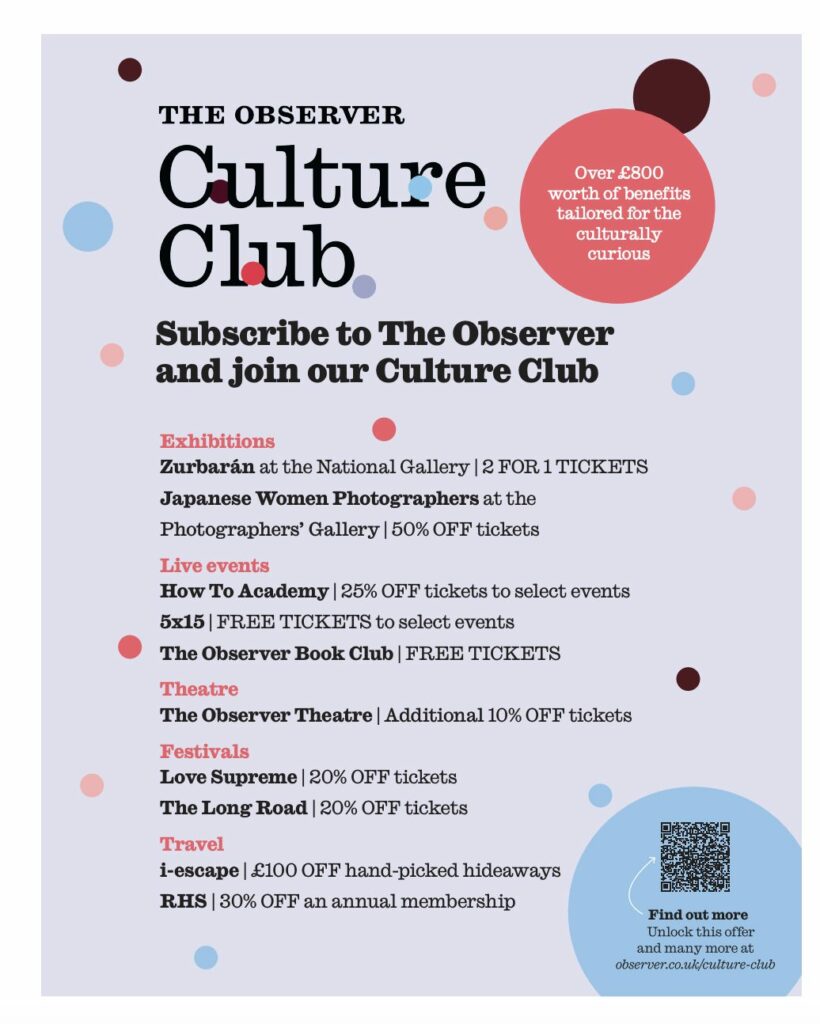
> Culture Club, a set of arts and culture perks worth more than £800, is given to every subscriber instead of being held back for a premium tier.
> Early data shows subscribers who engage with multiple parts of the product, from Nigel Slater's recipes to the puzzles to podcasts, are significantly less likely to cancel.
> The Salt Path investigation and its podcast and documentary afterlife have been the single biggest growth catalyst since launch.

Lessons:
> A single, transparent subscription can beat early tiering when you are reintroducing a brand to its audience.
> Retention comes from breadth of engagement across a product, not from any one flagship story.
> Old brand equity can bridge readers into new daily habits, but only if the product is built to earn that habit.

When Jack Riley joined The Observer in 2025, he inherited separate journalistic businesses rather than one. Tortoise Media built digital infrastructure for audio, events and membership, but not the volume or breadth of content a newspaper needs.
The Observer brought a newsroom with genuine authority and a 233-year history, but none of the digital scaffolding that sits around it. “We really had to design a lot of stuff almost from scratch in order to bring it to life,” Riley says.
The consolidation happened in two waves. The first was making sure the Sunday paper kept getting out of a newly combined newsroom. The second was an open-access sampling site throughout the summer, used to build registration and newsletter lists ahead of a proper launch. What followed was an intense six months of building and prototyping: new iOS and Android apps for phone and tablet, a full website redesign, brand refresh and the subscription infrastructure underneath it, including analytics, paywall logic, access controls and integrations with both the Guardian’s print systems and Tortoise’s existing membership base.
Why there are no tiers
Where many publishers reach for tiers early, The Observer launched with a single umbrella subscription covering print, digital, audio and now, Culture Club (see below). “We wanted the subscription to be simple to understand, great value for money and comprehensive,” Riley says. Reintroducing a heritage brand to an audience that may not be familiar with it, or has never encountered it digitally at all, is not the moment to ask people to choose between packages.
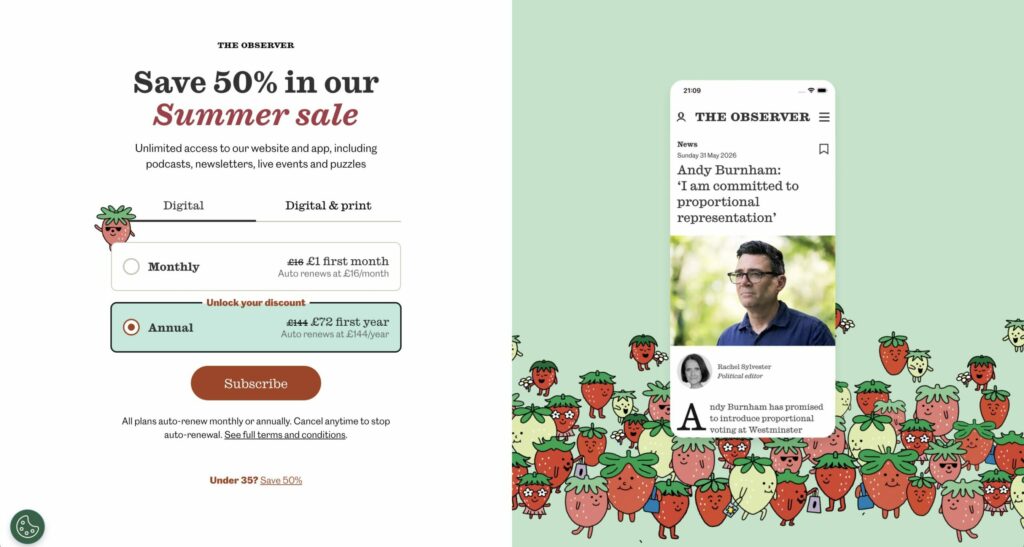
A separate audio-only subscription, a legacy of the Tortoise audio model, exists through Apple Podcasts and Spotify for readers who want nothing else, and there is real cross-pollination between formats. But the umbrella model is deliberate: with only six months of data, Riley says tiering decisions now would rest on very little evidence. Simplicity was the safer bet, leaving room to see where the value lands before carving up the product.
Culture Club, for every subscriber
The Observer’s most visible product launch since the initial rollout is Culture Club, a set of arts and culture benefits bundled into every subscription: two-for-one tickets to the National Gallery, exclusive cinema screenings with directors, author events and book clubs held in the newsroom, and discounted theatre tickets. “It’s your cultural life, curated,” is how Riley describes it.
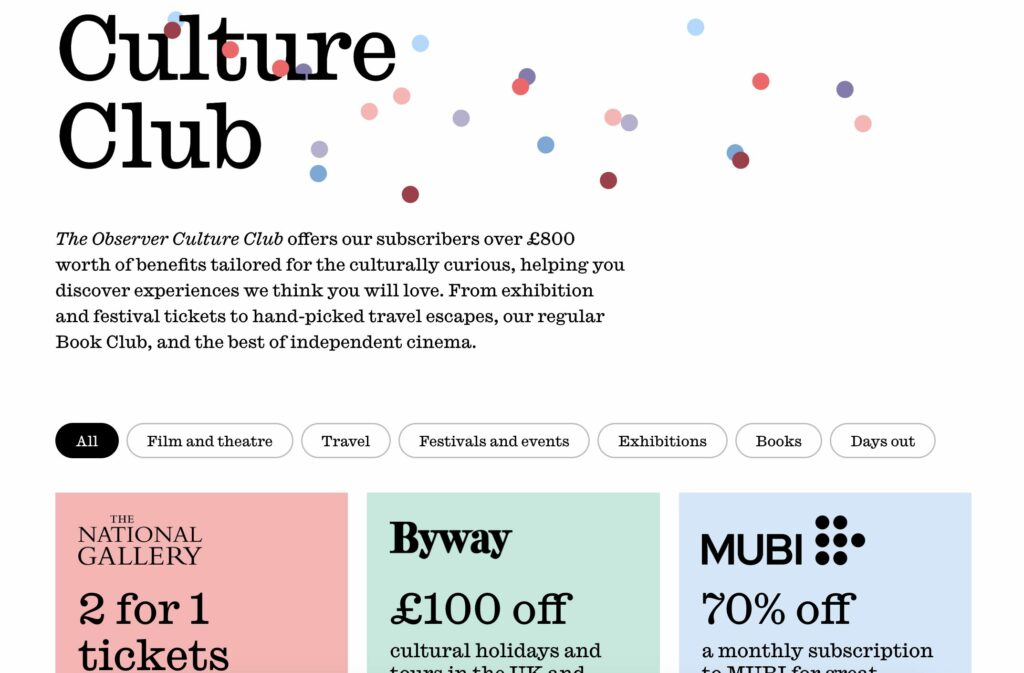
Rather than a separate product built for a distinct audience, Culture Club is included in the standard subscription and goes to every reader who pays for it, with no separate tier. Riley frames it as adding significant partner benefits to those that The Observer was already quietly offering, like giving a 70% discount on home cinema memberships through their partner MUBI and turning them into a coherent proposition tied to the brand’s editorial identity. Arts and culture were the deliberate focus rather than, say, food or travel: Riley sees it as a standout interest for Observer audiences that other subscription products in the market have overlooked. The commercial logic is retention as much as acquisition: subscribers who attend an event or use a benefit build a tangible relationship with the brand that a login alone cannot create.
Riley traces the conviction to the i newspaper, where he launched reader events and saw that most people find news organisations distant and faintly mysterious right up until they are sitting in a room talking to a journalist. Subscribers who have had that kind of experience with a brand, in his experience, are simply more likely to stay, which is the logic Culture Club now builds into the subscription itself.
Pricing without the tricks
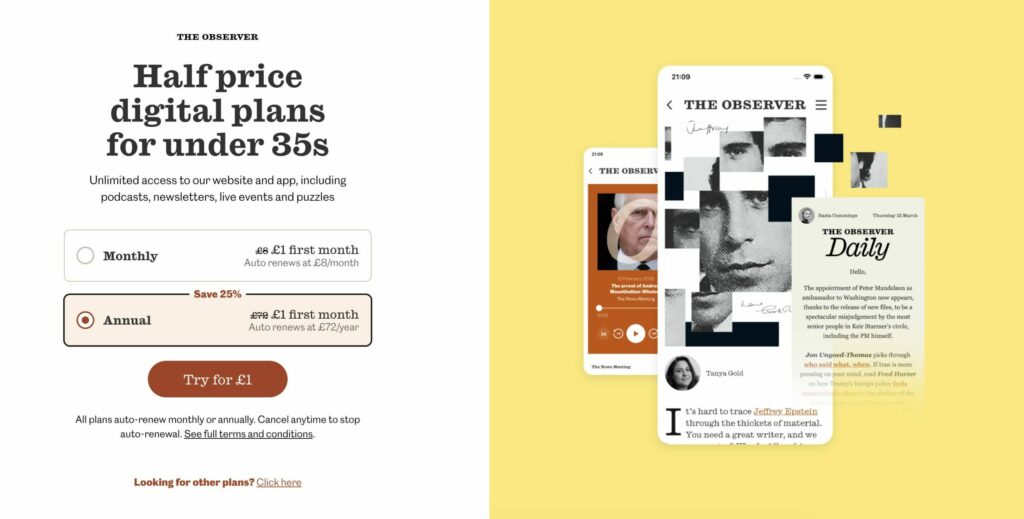
The Observer priced its subscription at £16 a month or £144 a year, deliberately avoiding 99p-style pricing. “That was part of just trying to be really clear about what we think the value is of the work that we’re doing,” Riley says. An under-35 price point at 50% off acknowledges that younger readers are often priced out of premium subscriptions, with 35 chosen as a deliberate life-stage threshold.
The Observer has no obvious competitor to benchmark against. The Guardian’s UK voluntary model and the Times’ hard paywall represent decades of pricing evolution aimed largely at winning back or re-engaging audiences a mature business has already exhausted. The Observer has no such legacy to correct for, which Riley treats as an advantage: the headline price can reflect where the business is now, without unwinding years of promotional pricing.
What’s driving retention
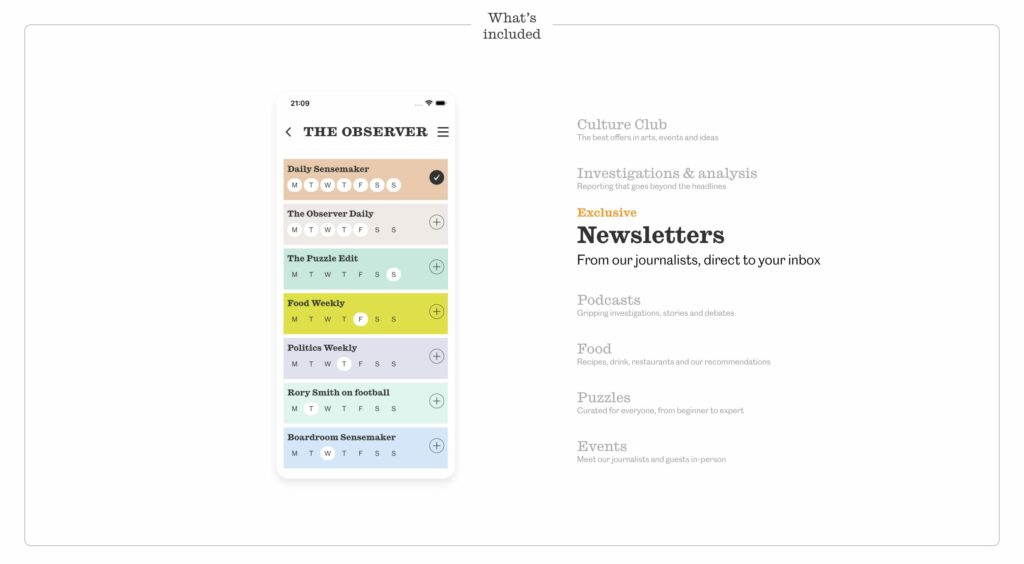
Six months in, Riley says the clearest signal in the data is breadth of engagement. Subscribers who touch multiple parts of the product, reading Nigel Slater’s recipes, doing the crossword and listening to a podcast, are significantly less likely to cancel than those who arrived for one thing and never explored further. Because the product is still young, many subscribers do not yet know everything they have access to.
That is why subscriber messaging pushes Culture Club so hard: highlighting more than £800 in available benefits is a fast way to demonstrate value to someone who subscribed for a single podcast series before they reach a cancellation decision. The Observer has also seen a healthier-than-expected skew towards annual plans, which Riley reads as an early show of faith, buying time to build a relationship before the first renewal.
The Salt Path’s second life
The Chloe Hadjimatheou investigation into the bestselling memoir The Salt Path was a hit before the subscription even existed, driving millions of readers to the open-access site last summer and helping build the registration base the launch depended on. In January, a narrative podcast series built on the investigation became, in Riley’s words, the biggest catalyst for subscriber growth in the first few months after launch, driving uptake in both the standalone audio subscription and the full subscription that includes it. A Sky documentary over Christmas had extended the story’s reach further. A new Hadjimatheou series, We Call Her Emma, has just been released, an investigation focusing on the extraordinary rise of Asma al-Assad from West London girl to the heart of Syria’s brutal dictatorship: the next test of whether a story that brings subscribers in at scale can hand them on to the rest of the product.
Building fast without the legacy costs
The Observer’s product team has moved almost entirely to an agentic coding approach, using AI tools to handle the bulk of feature development. A small team of engineers from an outside agency works alongside an in-house tech lead and product manager. Claude writes most of the code for new features, while the engineers concentrate on harder technical problems and on testing and quality assurance, checking that the output does what it was meant to. The approach lets a young, lean organisation compete with newsrooms that have far larger legacy technology teams, freeing more of the business’s resources for journalism itself.
Riley applies the same instinct himself. After seeing a story-support widget demonstrated by a US publishers’ collective at the recent Audiencers Festival in London, he built a rough version of it within an afternoon, not to launch it but to show his own team the idea. Prototyping, he says, has become quick enough that showing is often faster than telling.
On the harder question of AI companies and publisher content, Riley is careful not to stake out a fixed position. The Observer has partnered with Particle News, an AI-powered aggregation app, as its first UK publisher, and Riley points to Reuters Institute research showing a growing share of global news journeys now beginning inside a chatbot as a signal publishers cannot ignore, whatever position they eventually take on direct deals versus industry coalitions.
The hardest part isn’t the technology
Asked what has been harder than expected, Riley doesn’t hesitate: discipline. A brand this old, with this much editorial breadth, invites endless extensions: more tiers, more products, more features, especially now that the barrier to building any of them has collapsed.
“When Claude can build you a recipe site in an afternoon, you have to ask yourself: is that really what we want to build?”
Riley has previously cited The Atlantic’s decade-long path to a million subscribers as a realistic model for the kind of timeline this takes. His ambition for The Observer is to build a sustainably profitable media business on reader revenue and other income streams, and he argues that doing so without the legacy cost base of an older company changes the calculation. He won’t share subscriber numbers this early. Six months in, he says, The Observer is on track. There is, by his own admission, still a long way to go.
Jack Riley is Chief Customer Officer at The Observer, where he leads customer revenue strategy across subscription growth, marketing, data and product. He joined in 2025 from The London Standard, where he was Chief Digital Officer, and previously led Huffington Post’s turnaround to profitability as Managing Director. The Observer is owned by Tortoise Media.