Why SFGATE launched an app instead of a paywall, and called it “Friends”

SFGATE SFGATE
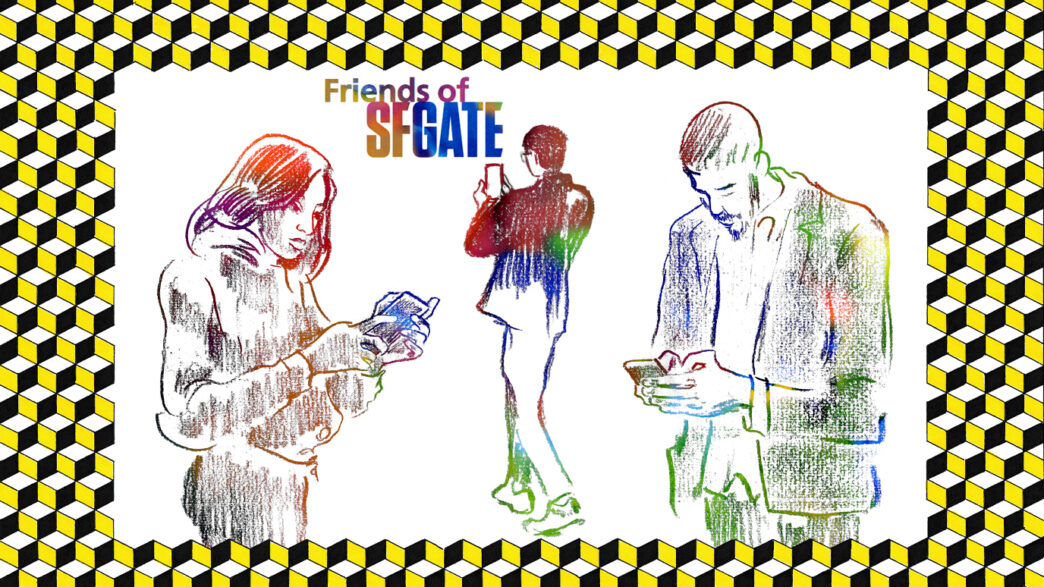
© Illustration by Jean-François Desserre

SFGATE has been a free site for its entire existence. Rather than bolt a paywall onto that, the team built something separate: a paid app called Friends of SFGATE, designed with lasting reader relationships in mind. We spoke with Grant Marek, Editor-in-Chief of SFGATE, and Mark Campbell, Chief Marketing Officer across Hearst Newspapers, about the thinking behind it, four weeks after launch.

Key takeaways to copy & share
> SFGATE didn't add a paywall to its free site. It built a separate paid app instead, so the free web experience that built its audience stays untouched

> The name "Friends of SFGATE" beat "subscription" and "membership" in testing specifically because it read as warmer than a transaction but less formal than a cause people feel obligated to fund

> Nearly 90% of readers who took the 7-day free trial converted to paying Friends, an exceptionally high trial-to-paid rate relative to widely accepted industry benchmarks, though it's still early days

> The North Star metric shifted from total visits to repeat visits: can a reader who showed up once be brought back a second and third time, not just once by anyone

> The launch required real org change, not just a new app: a first-ever Community Engagement Program Manager role, a second video hire, and an existing editor with app experience redirected to lead app programming

Most publishers solve the reader-revenue question by drawing a line through their content. Some of it is free to access, some of it is paywalled. SFGATE deliberately didn’t do that. The web stays entirely free, exactly as it’s always been. What’s new sits next to it, a separate, paid app.

Why not just add a paywall

CMO Mark Campbell has spent close to 30 years thinking about this exact tradeoff, including stretches at The Wall Street Journal during its freemium era and at The New York Times shortly after they launched a metered model. For him, the free web experience on STGATE is core to what built its audience in the first place, both the daily loyalists and the one-off visitors searching for expertise on California. Messing with that to insert a paywall risked damaging the very thing that made the site valuable to begin with.

So instead of retrofitting the existing site, the team built a second product entirely: an app for the readers who wanted something more, and were willing to pay for it.

Become a friend of SFGATE

The data pointed the same direction. Across Hearst’s other properties, including the San Francisco Chronicle and Houston Chronicle, app users consistently showed deeper engagement and higher repeat visitation than web users. An app installed on a phone tends to become a habit in a way a bookmarked website doesn’t. Building a dedicated app for SFGATE’s most engaged readers matched behavior the team was already seeing.

The premium experience offered in the app

The app isn’t a stripped-down version of the site. It’s built around giving already-engaged readers more ways to spend time with SFGATE’s journalism and journalists.

  • Pop-up newsrooms (launching soon) in parks across San Francisco, where readers can meet a journalist in person. Editor-in-chief Grant Marek cited a statistic that only 23% of people have ever met a journalist face to face, and framed the initiative as a direct attempt to change that for SFGATE’s own readers
  • Planned live journalism events across California, built around specific local reporters who are, in some cases, literally living the stories they cover. Julie Brown Davis, a reporter covering the Lake Tahoe housing market, was born and raised there, and was herself pushed out to Reno by rising housing costs. The plan is to put reporters like her in community spaces with readers who already trust them
  • A California-themed mini crossword, distinct from a generic puzzle in that some clues specifically reward local knowledge. The app adds a streaks feature (consecutive days completed) and a leaderboard letting readers see how they stack up against SFGATE’s own staff
  • Audio versions of articles, extensive bookmarking, and premium maps that plot SFGATE’s historic archive geographically
  • Granular push notification controls, roughly 30 different alert categories, built specifically because California’s geography doesn’t map neatly onto any one set of interests
Friends of SFGATE crossword

Why Friends?

Before landing on ‘Friends of SFGATE,’ the team tested more classic subscription names, including SFGATE+ and SFGATE All Access. But they found that ‘subscription’ read as too transactional for what they were trying to signal, and ‘membership’ carried strong associations with charities and causes that people support out of obligation rather than affinity. ‘Friends’ tested as warmer than the former and less formal than the latter, reflecting a relationship that already existed with SFGATE’s most engaged readers, rather than inventing a new transactional one.

Redefining what success looks like

Marek described a shift in how his newsroom is measuring its own performance since the move towards reader revenue. Total visits, historically the default newsroom metric, matters less to this project than repeat visits. How many times can someone who’s already shown up once be brought back a second and third time. 

That reframing also changes the editorial calculus. While competing on the exact same breaking story as ten other outlets used to be table stakes, Marek’s team is now weighing differentiated, SFGATE-specific coverage more heavily, on the logic that unique journalism is what actually builds the habit loop the app is designed around.

The early numbers

Four weeks post-launch, one figure stood out to Campbell specifically: of the readers who took the 7-day free trial, close to 90% converted into paying Friends. It’s an early signal rather than a settled result, but this number represents a higher trial-to-paid conversion rate than he’s seen in close to three decades of doing this work.

This is, in part, due to active retention early on, during these 7 days:

  • An email series that includes a personal message from Marek himself, alongside reminders of specific app benefits
  • Push notifications, tuned to each reader’s chosen interests from day one
  • The crossword’s streak mechanic, which Marek described as quietly addictive once someone gets a few days in
  • Daily social content (SFGATE has the largest Instagram following of any Hearst Newspapers title) introducing different app features on rotation, audio, bookmarking, events, to readers whether or not they’ve installed the app yet

What changed internally to make this possible

The launch required real organizational change, not just a new product wrapper:

  • A newly created role, Community Engagement Program Manager, currently being hired for, is a first for SFGATE
  • A second hire added to the video team, driven by strong reader response to journalists as recognizable, followable creators (Melissa Cho, known to readers as “SFGATE Girl,” for instance)
  • An existing audience desk editor, with prior app programming experience at The Athletic and SmartNews, moved into leading app programming for SFGATE specifically, work Marek described as sitting dormant until this launch gave it a purpose
  • On the marketing side, Hearst’s existing team and infrastructure stayed the same in headcount. The real work was calibration, such as learning to write copy and design interstitials that actually sound like SFGATE, a two-way collaboration between the marketing lead and SFGATE’s news team

Marek connected this to a broader shift he’s watched happen over his career. Journalists who started out purely writing have had to add video, then podcasting, and now, in his framing, business literacy generally. Understanding Campbell’s side of the operation, and vice versa, is what he considers necessary now for finding initiatives that contribute to reader revenue. 

What’s still being figured out

On acquisition, Campbell’s team is four tests into learning what actually drives trial sign-ups, testing different feature framings and on-site placements, with paid acquisition still to come.

On audience targeting, Campbell said the current approach has been intentionally broad – go wide and go loud, but the next phase, drawing on lessons from Hearst’s other subscription brands, is sharper segmentation, including identifying which readers are statistically most likely to convert to a Friend, and targeting acquisition efforts accordingly rather than treating the whole audience as one pool.

The bigger shift this represents

Campbell framed Friends of SFGATE as evidence that the old binary (a site that’s either a subscription business or a free one) doesn’t have to hold. 

It’s a structurally similar idea to the ‘willingness to pay versus willingness to commit’ gap The Washington Post has written about in its own flexible-access research. Rather than forcing every reader through the same single gate, SFGATE has effectively added a new, optional tier above the free web experience, built specifically for readers who were already deeply engaged but never had a way to formalize that relationship or directly support the journalism.

SFGATE has, for its entire history, had no answer for the reader who finishes a story during a big moment and asks how they can support their work. Now there’s a concrete answer. And one that has been designed with lasting reader relationships in mind. 

Thank you to Grant & Mark for their time!