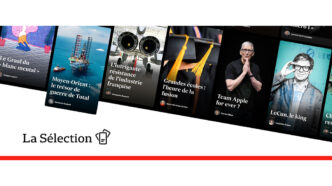
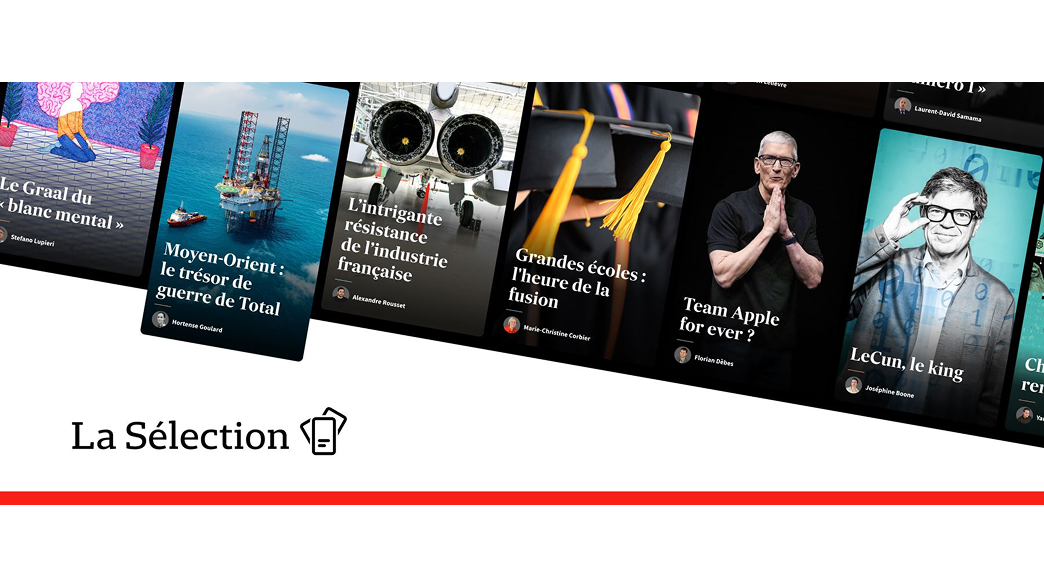
At its stand at VivaTech, on Tuesday 17 June 2026, Les Echos devoted a session to a question every publisher knows: “What is the answer to French readers’ information fatigue?”. On the agenda: the data-backed diagnosis from Jean-Baptiste Leroux (OpinionWay), the brand’s values presented by Célia Pénavaire (journalist and digital editor-in-chief at Les Echos), then the product answer led by Yasmine Maslouhi, Director of subscription activities and revenue at Les Echos: a new offer called « La Sélection ».
> According to OpinionWay, the average French person consumes about 6 media families a day, 20% already use a generative AI to get informed, but a majority say they feel overwhelmed, even fatigued, by the news

> Faced with information fatigue, unlimited access is not the answer. Les Echos is instead making the opposite bet, that of selection

> "La Sélection" consists of between 9 and 15 articles a day, chosen from a daily output of 120 to 150 pieces, following a reader-needs grid (inform, reflect, get inspired, develop, unwind) and a strict quota discipline

> Three platforms (a dedicated tab in the app, a section on the site, a daily newsletter), a weekly long read on Saturdays, and 5 shareable articles a month. Early bird price sits at €9.90 a month
The diagnosis: more information, but a consumption that comes at a high psychological cost
Jean-Baptiste Leroux (OpinionWay) set the scene. Information fatigue, also called information overload, is a concept born among American sociologists in the 1970s, taken up in Europe and reworked by Edgar Morin around the idea of an “information cloud”, the body of information delivered each day by the basket of media we consume. The average French person consumes around 6 media families a day (television, radio, press, social media, podcasts, and now AI). A live test in the room: roughly 20% of French people use a generative AI such as ChatGPT to get informed about the news.
The first virtue of this cloud is that it informs people better than 20 years ago, even as the world is seen as increasingly complex. But the trade-off is heavy: the feeling of always seeing the same information, the sense, at the end of the day, of not having learned much, and a majority of French people who say they feel overwhelmed, even fatigued, by the news. For some of them, the news is even seen as depressing.
It is not the information itself that is depressing, it is the way it is prioritised and treated. If you only put forward hot, anxiety-inducing news, with a sensationalist treatment, you create anxiety.
Jean-Baptiste Leroux, OpinionWay
His metaphor: the ocean. Immediacy-driven media stay at the surface, on the foam of the waves. Media that take you down to the depths teach you something, but that is more demanding. All of this in a climate of distrust, fuelled by the sense that fake news is multiplying and the impression that media favour the clash of egos and ideas over explanation and analysis. In response, French people build their own strategies: cross-checking sources, talking about the news with those close to them (83% see the news as a topic to discuss with the people around them), taking back control to choose their information rather than endure it, favouring media that help them understand, easing the pressure by slowing down their consumption, and finally accepting that quality information has value and must be paid for. Total avoidance, for its part, concerns only 10 to 15% of French people.
Les Echos’ answer: four editorial pillars and an assumed responsibility
Yasmine Maslouhi first noted that journalists feel this fatigue too, and that it is wrong to believe only anxiety-inducing content works: inspiring and useful content, success stories or profiles of business leaders, work just as well. The group’s answer rests on four editorial pillars. Two belong to the title’s historic DNA, more than a hundred years old: reliability (systematic verification of every piece of information, across all platforms, drawing on a newsroom of experts) and impartiality (analysing the facts without taking sides, decoding the economy and the life of companies). Two are more recent: inspiration (solutions journalism, which does not just note a problem but shows who is solving it) and useful information, for professional as well as personal life (handling a toxic manager, for example).
It is essential for us to give people back a taste for the news, and a taste for reading. We want to live in a society where people read, where everyone can give themselves at least 30 minutes of uninterrupted reading. It is also a societal stake: to take an informed part in public life, people need to rediscover a taste for information.
Yasmine Maslouhi, Director of subscription activities and revenue, Les Echos
Two needs, two answers: unlimited on one side, selection on the other
The most interesting strategic point for publishers lies in a deliberately segmented view of needs. On one side, readers who use Les Echos daily to work, to prepare business plans or pitches. For them, the answer remains unlimited access to the documentation and to 35 years of archives, complemented by a new AI assistant designed to boost their daily productivity. On the other, those looking for a trusted daily intellectual companion. For that need, Les Echos’ position is clear: unlimited access is not the answer.
Unlimited access has been used a lot as a promise by telecoms and by media. Today, with this information fatigue, we believe a different promise is needed. We have chosen almost the opposite promise: selection.
Yasmine Maslouhi, Les Echos
“La Sélection”: three criteria, three values, one editorial discipline
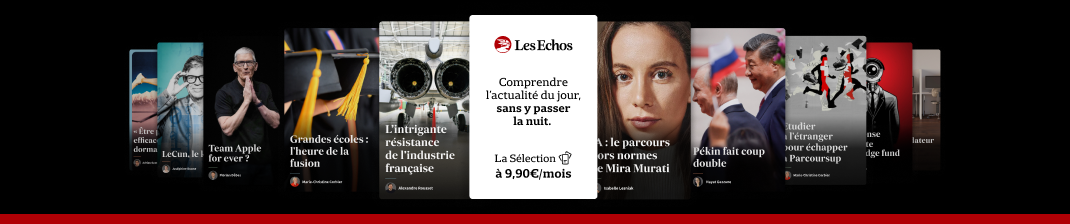
“La Sélection” rests on three core criteria. Balance first: the goal is no longer breaking news at all costs (others do breaking news better than Les Echos), but information that is useful for understanding the world and taking a step back. Calm next: plural voices and op-eds, but grounded in evidence-based, balanced arguments. Impartiality finally, the title’s historic value.