
Alban Mazrekaj leads the Editorial Product Development team at NZZ, establishing a new way of working that respects journalism while making it more audience-centric, going beyond traditional journalistic performance metrics to align with broader business goals.
With this kind of job description, how could we not want an interview to find out more!
“In product management, empathy for users is key. But in media, success starts with empathizing with those who create the experience: journalists. Their work is the foundation upon which all product experiences are built. Without understanding their needs and challenges, no product can truly succeed.”
> NZZ has built an Editorial Product Development team that sits beside the classic product team. Three editorially-minded people translate journalists' needs into product decisions rather than imposing product thinking on them

> Each of the three keeps a foot in the newsroom, spending two days a week in their original editorial role. One is a former newsletter editor, now the newsletter product manager

> The journalists who suit these roles aren't the ones who love the craft most. They are the ones already asking about target groups, business goals and internal processes

> Research found readers couldn't tell opinion pieces from news. The fix, showing the writer's face in the teaser, needed editorial buy-in, and it lands better from a colleague than from a product manager with post-its

> Because the team already knew the photo desk's workflows, defining requirements took half the time. Success is measured on completion rates, recirculation and engagement, treated as a leading indicator for churn
Tell us a little bit about you & your background
At NZZ, where I work now, they were looking for a product manager for their newsletter portfolio – perfect! So I joined 4 years ago. Today, I’m responsible for the entire editorial product development.
What is “Editorial Product Development”?
Editorial Product Development aims to establish a new way of working that respects journalism while making it more audience-centric.
The concept bridges the gap between editorial and product teams. This takes more than alignment meetings and shared goals. It requires a role that speaks the language of editors while thinking in product principles.
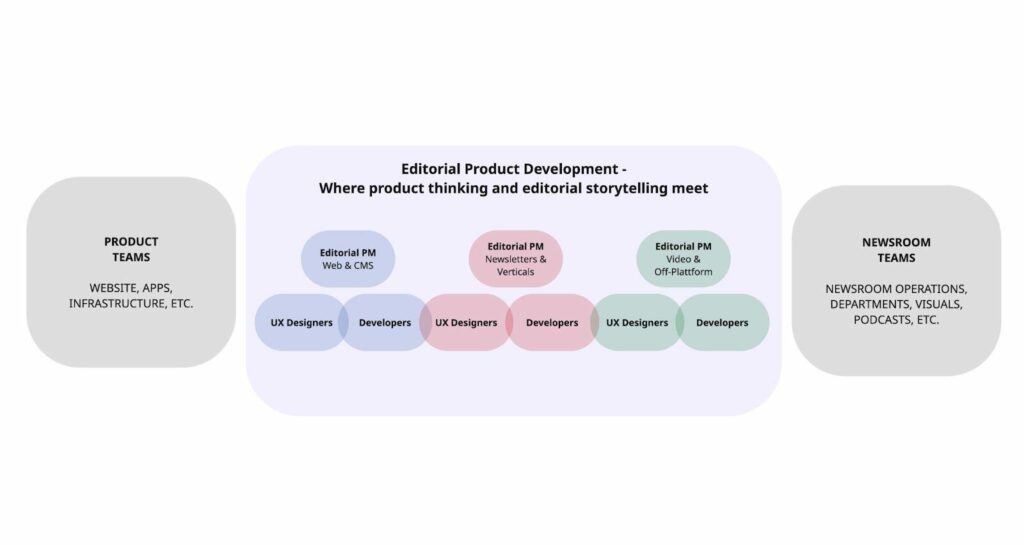
Enter Editorial Product Development! It brings together product- and editorial-minded individuals to align newsroom workflows with audience-driven strategies while preserving editorial independence. It translates the needs of journalists into product solutions and ensures that decisions empower the newsroom rather than burden it.
Building this Editorial Product team
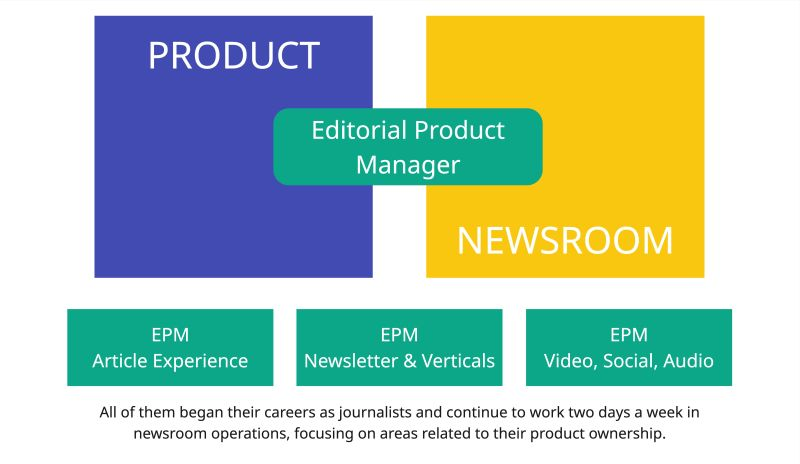
There are 3 editorial-minded individuals in our team. One focuses on digital workflows, such as homepage curation, planning tools, push notifications, etc. The second is the Newsletter PM, who previously worked as a newsletter editor and therefore has operational experience of what works and what doesn’t. Finally, we have the Editorial PM for off-platform work – an essential perspective for any new product development today. Each of them spend 2 days a week in their original editorial roles and the rest of their time in a more product-focused role within my team. We sit next to the classic product team, who manage the website and app features – while we focus on making the content come alive.
A powerful combination
You have strong UX professionals coming from product, who deeply understand user needs and how to act on them. At times, their deep empathy can lead to a strong user-first perspective. Journalists offer a valuable counterbalance. They come with a clear story to tell and a drive to share it, even if it’s not always based on detailed user research.
Bringing these two mindsets together – such as having a journalist step into a product management role – creates a powerful blend. It’s the kind of balance media companies need to serve both their audience and their editorial mission.
How to pick the right journalist
There are journalists who quite simply love the craft – they want to write the story, produce the video, or create the podcast, but aren’t particularly interested in what happens after publication. They are essential! People ultimately come to us for our stories, no matter how great the product experience is. However, they are not necessarily the ones who will thrive in product roles.
Others are curious to go beyond content creation. They ask questions about target groups, business goals, and internal processes. These journalists show potential for working in product. Bringing them into product roles not only increases the chances of success but also fosters greater acceptance and cultural change.
“Media companies cannot afford to treat product development as separate from editorial realities. The best digital products come from organizations where product and editorial teams co-create rather than operate in silos. Empathy makes this possible – empathy not just for readers, but for the people who bring the stories to life every day. If we want to build truly impactful media products, we must start by understanding and supporting them.”
The team’s work in practice
When launching a new audience feature, an Editorial Product Manager doesn’t just look at engagement metrics. They also analyse how it impacts storytelling and how it fits into the workflows and constraints journalists face under tight deadlines. This understanding is crucial for developing products that support rather than hinder the newsroom.
One case study involves opinion pieces. User research revealed that while some readers – especially younger audiences – prefer unbiased facts, others enjoy opinion-based content. However, many readers couldn’t distinguish opinion pieces from regular articles. One idea was to display the editor’s face in the teaser when it’s an opinion piece. Here, Editorial Product Managers played a crucial role, particularly in two ways:
1. The cultural aspect: We needed editorial buy-in. Not every journalist is thrilled about having their picture attached to an article. But if the idea comes from someone within editorial who understands their work, it’s received much better than if a “product guy” comes along with post-its and user-centric arguments.
2. The process aspect: We had never used photos of editors at article level before. We needed support from the photo editorial team to source consistent images. Because Editorial Product Managers already know these workflows and backend processes, defining requirements and moving forward took half the time.
What does success look like for Editorial Product Managers?
Our work contributes to overarching business goals, such as increasing subscription or advertising revenue. Success is measured using journalistic performance metrics, depending on the initiative – such as article completion rates, content recirculation, or user feedback. Ultimately, engagement is our key success indicator. It drives conversions and prevents churn. Engagement thus serves as a proxy for harder KPIs like subscription sales and cancellations, which it significantly influences.
Success is also about empathizing with journalists: helping their stories gain the value they deserve from both audiences and the business. Journalists sometimes feel that their role is becoming less important – when in fact, the opposite is true.