

Every year, INNOVATION Media Consulting’s Innovation in Media report, published for WAN-IFRA and FIPP, takes stock of trends in the industry and, in particular, how publishers are making money. The 2026/27 edition’s theme is that the model hasn’t broken, but it has matured.
Reader revenue is now the main source of income for many news businesses, making up 46% of total revenue for the median news business unit, overtaking advertising. The Reuters Institute adds that the share of people paying for (or using) paid online news has nearly doubled over the past decade, to almost one in five adults across 20 markets.
But the report is clear that the most engaged readers have largely already converted, acquisition is slowing and fewer new users are entering subscription funnels. So what comes next? We’ve pulled out the trends and case studies that matter most for reader revenue teams to share 7 lessons to help overcome this challenge.
> Subscribers keep growing while traffic falls. At the NYT, WSJ and The Guardian, growth now comes from higher prices (up 5% on average in 2025), upgrades and bundles, not bigger audiences

> With monthly churn often below 5%, small retention gains have an outsized revenue impact. Leading publishers treat pricing as a variable and the cancellation journey as a moment to reinforce value

> Bundles pay off through retention, not price. NYT bundle subscribers pay slightly less per user but churn significantly less. At Mediahuis, subscribers who activated the RouteYou app churned around 26.5% less

> Build outward from your journalism. Bundle additions closely tied to editorial content stick, bigger leaps don't. For membership, spell out whether readers pay for access, a cause or a community
1. Subscriber growth has decoupled from traffic growth
Digiday’s reporting, cited in the report, shows that The New York Times, The Wall Street Journal and The Guardian have continued to grow their subscriber bases (in some cases, faster than before) while their overall traffic declined over a 12-month period.
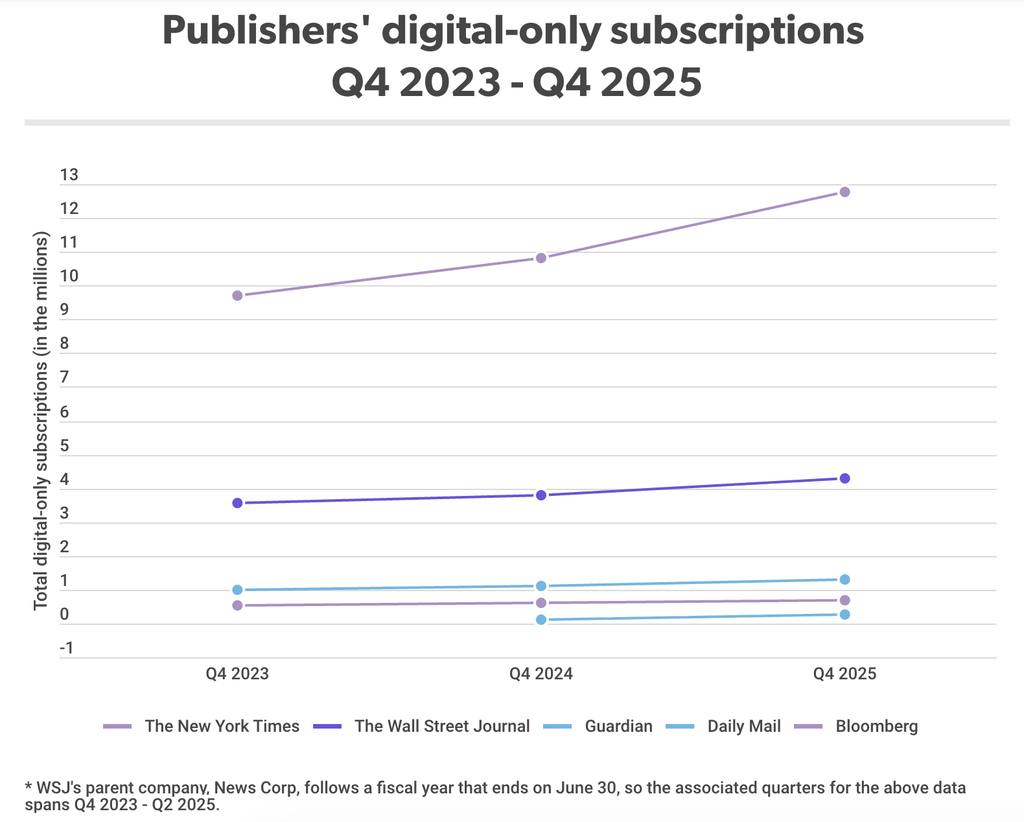
That growth isn’t coming from bigger audiences. It’s coming from getting more value out of existing ones:
- Subscription prices rose by an average of 5% year over year in 2025
- Publishers pushed subscribers towards higher-value tiers and bundles
- Meanwhile, median audience reach across the hundreds of publishers tracked by INMA fell by double digits year over year, driven by weaker news cycles, falling platform referrals and competition from creators