

You're reading The Audiencers' newsletter #88 sent out on April 29th, 2026. To receive future newsletters straight to your inbox every two weeks, sign up here.
In today’s newsletter:
- How Stern rebuilt their subscription from zero
- How to use a “Customer Rail” to drive retention and habit formation: lessons from The Times
- Obligatory registration at Radio-Canada: how a risky move, that many doubted would work, proved to be a very successful gamble
- 🔗 Links to add to your reading list
How Stern rebuilt their subscription from zero
Instead of trying to build subscriptions on top of an ad-focused, portfolio model, Stern, one of Germany’s most iconic magazine brands, rebuilt everything from the ground up. Their impressive work, from a team who understands the foundations of a strong digital reader revenue model, provides valuable lessons for other legacy brands with the same end goal.
> Product-first thinking: a new digital platform, apps, and subscription infrastructure designed around user experience
> Org transformation: editorial, product, and tech teams were restructured to operate as one, aligned around digital growth
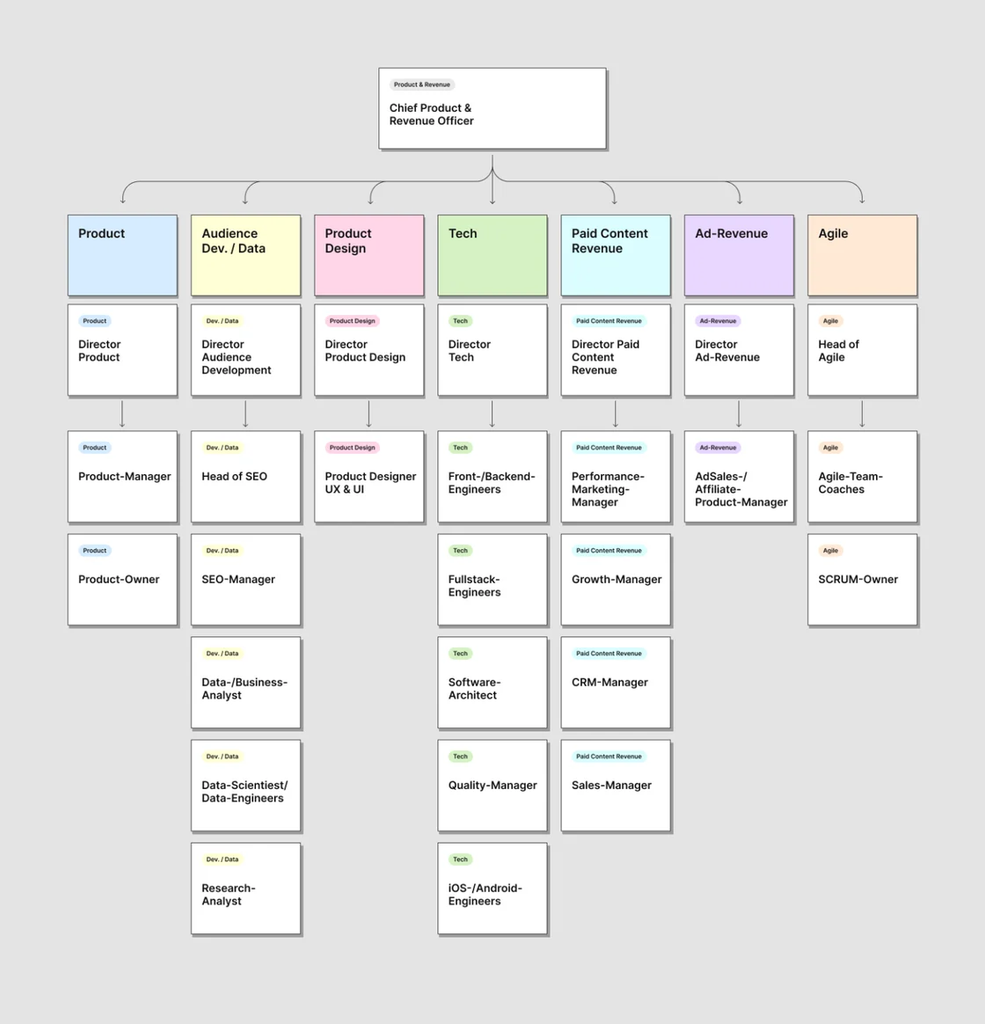
> Clear value proposition: premium journalism, strong visuals & multimedia storytelling became the core of the paid offer
> Bundling: combining content from Stern, Geo, and Capital created a richer, differentiated subscription product
> Tech as a growth lever: new paywall systems and subscription flows significantly improved conversion (+121%)
TL;DR: they’ve designed products, pricing, and experience for today’s users.
> Full article interview with Chief Product & Revenue Officer, Johannes Vogel, on Audiencers
The Times: How to use a “Customer Rail” to drive retention and habit formation
Recent research from The Times revealed a common pain point: subscribers often didn’t know the full extent of their benefits. “I didn’t know I had X, Y, and Z in my subscription,” was a recurring theme in surveys.
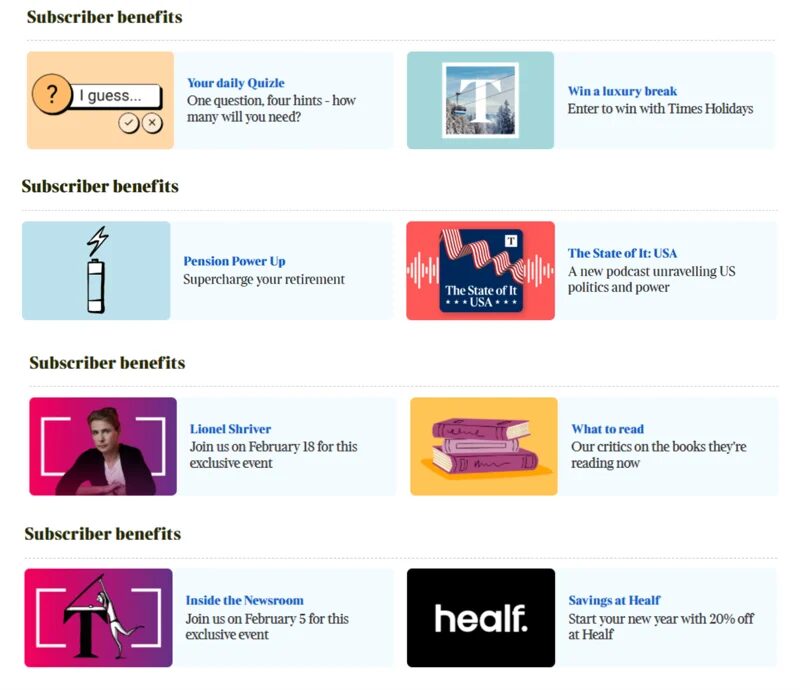
The solution: adding a“Customer Rail”, a dedicated, highly visible module on the homepage designed to surface high-value actions (HVAs) that drive long-term retention.
1. Define your “High-Value Actions” (HVAs)
Key HVAs identified at The Times include:
> Newsletter Sign-ups: Direct lines of communication straight into a subscribers’ inbox
> App Downloads: Shifting users to a more controlled, immersive environment.
> Bonus Accounts: Sharing a subscription (which The Times found improves retention by 6 percentage points).
> Puzzles: High-frequency, low-friction interactions that build a daily habit.
> Times+ Rewards: Redeeming exclusive discounts or entering competitions (like a high-performing Coldplay ticket giveaway last summer).
2. Claim “marketing-owned” real estate
At The Times, the rail sits directly under “Editor’s Picks” on the subscriber homepage. It consists of two blocks that are updated every Tuesday and Friday.
3. Establish a cross-functional “gatekeeper” system
To keep the content fresh and relevant, The Times established a bi-monthly stakeholder meeting to map out upcoming launches (e.g., a new puzzle like “Word Hunt”) and rotate them against evergreen benefits (e.g., app downloads) based on past performance data.
4. Move towards deep personalization
The “North Star” for any customer rail is completion of the action, but The Times is currently moving towards a Next Best Action (NBA) model, one that hides tiles for actions a user has already taken.
5. Measure quality, not just clicks
The Times uses an automated report to track click-through rates (CTR) but goes a step further by working with the analytics team quarterly to measure conversions.
Obligatory registration at Radio-Canada: a successful gamble
Let’s talk about the fear that keeps product managers tossing and turning at night: the soul-crushing fear of alienating your audience. There’s nothing quite like the stress of watching users churn because you dared to put a barrier in their way.
Yet, a little over a year ago, Radio-Canada decided to stop holding its breath and start taking risks, doing the unthinkable for a public broadcaster: implementing a hard registration wall across their entire app suite.
“We worried that users would become discouraged, that the most impatient would leave, and that the trust we had built up over decades would be undermined. Internal skeptics argued that people would never create an account just to listen to the radio or read a quick news story, noting, ‘we’re not Netflix’.”
Even still, a wall was deployed on July 3, 2024.
“We launched on iOS, Android, and connected TVs, followed by a partial web rollout ahead of the Paris Olympics. On that day, we took the risk of frustrating our users in the name of long-term relationships.”
Spoiler alert: Not only did people not leave, but they came back in greater numbers and with accounts.
- +83% monthly active accounts in one year.
- +14% engaged visits to our platforms (excluding the Olympics).
- Peaks of over 800,000 active registered visitors per month.
- Stable engagement: No collapse in reading time or listening, and no abandoned applications.
TLTR: Trust is not lost by asking for an account, but it can be lost by pretending that we can build the future with anonymous visitors. For a public media outlet like Radio-Canada, the status quo was and is impossible.
> Catherine Léger, Director of Performance Marketing, & Mathieu Therrien, Director of Products, share their experience on Audiencers (and will be diving deeper at our Montreal Festival this June 25th)
Links to add to your reading list
- Mastering audience segmentation with Selma Stern
- From page views to propensity: How the Daily Mail is retooling for a zero-click world
- CNN says it’s ‘meeting and beating’ subscriber targets following launch of first paywall
See you in 2 weeks for the next newsletter,
Madeleine