The Telegraph: retaining subscribers with a killer mobile strategy


This article summarises the session given by Mathias Douchet, Chief Product Officer at The Telegraph, during the Audiencers’ Festival in Paris on 16th September 2025. The slides from his presentation can be downloaded at the end of the article.
> The Telegraph puts around 90% of its product resources into the mobile app, with teams built around it. App usage is now the single most predictive indicator of subscriber retention

> That displaced what they used to prioritise. Multi-channel engagement and newsletter signups were the signals they watched before, and app usage beats both

> The numbers behind it: app users have eight more sessions a week than web users, and 30-day retention is six percentage points higher. App usage grew 15% in a year

> Access is light freemium: the home screen and a few articles open, the rest for subscribers, with a 14-day trial for new app users in exchange for an email. It converts better than a standard paywall

> The catch they are open about is that people drop off when the trial ends unless the follow-up is well orchestrated, so activation after day 14 is the live problem
Founded in 1855, The Telegraph is one of the UK’s leading news outlets, with 30 million monthly readers across its website, app and print editions, and over a million subscribers.
The product culture is long-standing and well-established, with the ability to make clear and decisive decisions about subscriptions and the reader experience.
The mobile app: a flagship product
In 2022, The Telegraph merged its two apps: the first was a digital version of the newspaper – highly regarded but little used; the second was a live feed version – more widely distributed but not very popular.
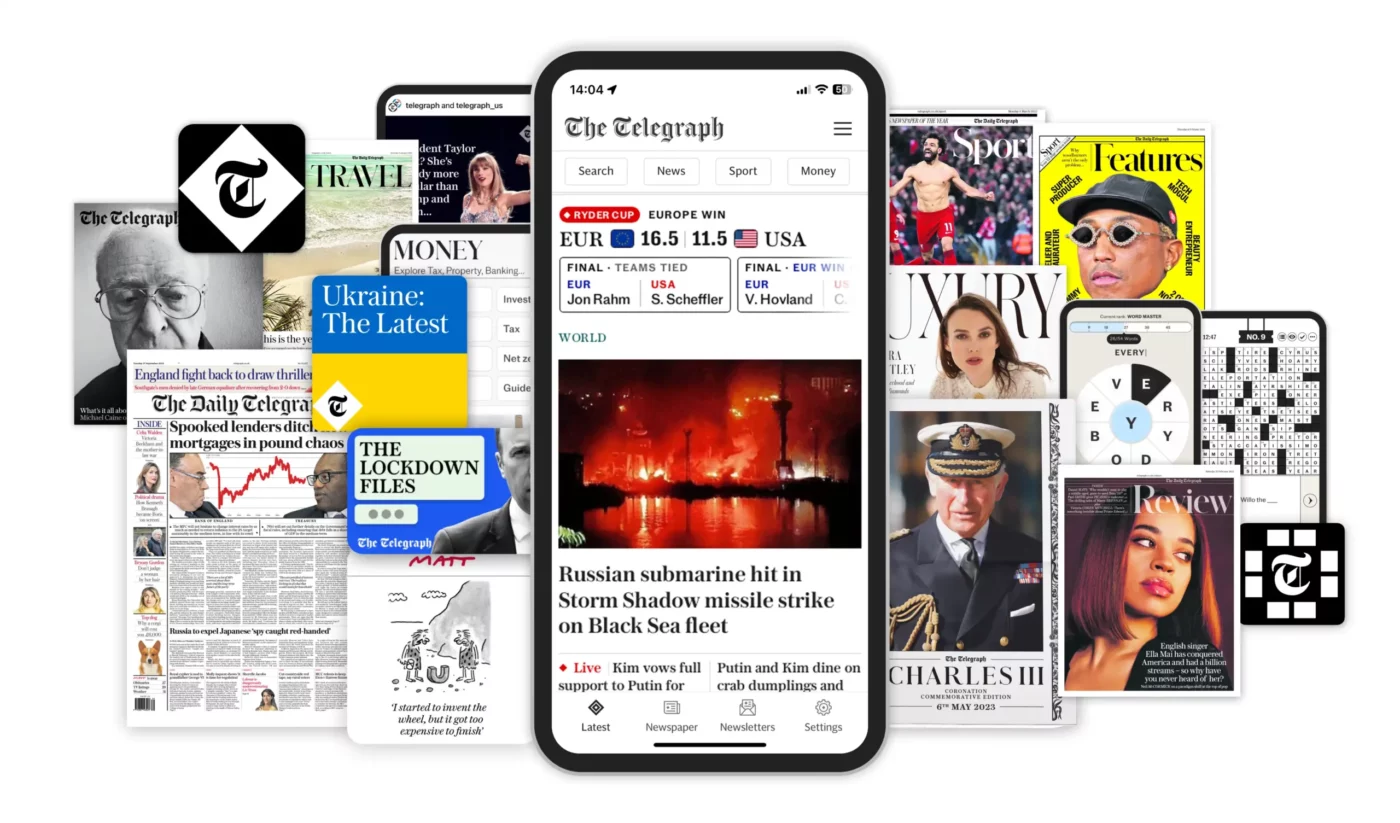
The current app is the result of 3-4 years of work, with engaging additional features such as games, news feeds, discoveries and newsletters.
The Telegraph app in a few words:
-> Freemium model: a selection of free articles, the rest is reserved for subscribers
-> A 14-day free trial is offered to new app users
-> App usage has increased by 15% in a year
-> 8 more sessions each week vs web
-> 6 percentage points higher 30-day retention vs web
Of all the projects tested in recent years, not everything has worked, and that’s key to the approach: test quickly, keep what works, and discard the rest.
The access model is simple: light freemium. The home screen and a few articles are visible to everyone, while the rest is reserved for subscribers. To compensate for the significant amount of closed content, new app users are offered a 14-day trial, available via email. This allows for data collection and has proved more valuable to conversion rates than a standard paywall. The downside however is that users may drop out after 14 days if the follow-up is not well orchestrated, hence the ongoing work on activation and retention after the trial.
The app significantly out-performs web
Mobile app users have eight more sessions per week than web users and show six more subscription retention points at 30 days.
App usage is becoming the most predictive indicator of retention, ahead of other signals that were previously considered priorities, such as multi-channel engagement and newsletter subscriptions. This justifies the strategic refocusing and budget shift.