FIPP's latest data shows a digital subscription market growing 24.7% and concentrating fast. The winners are bundling, embedding, and reducing their dependence on search. The losers are still renting their audiences from Google.
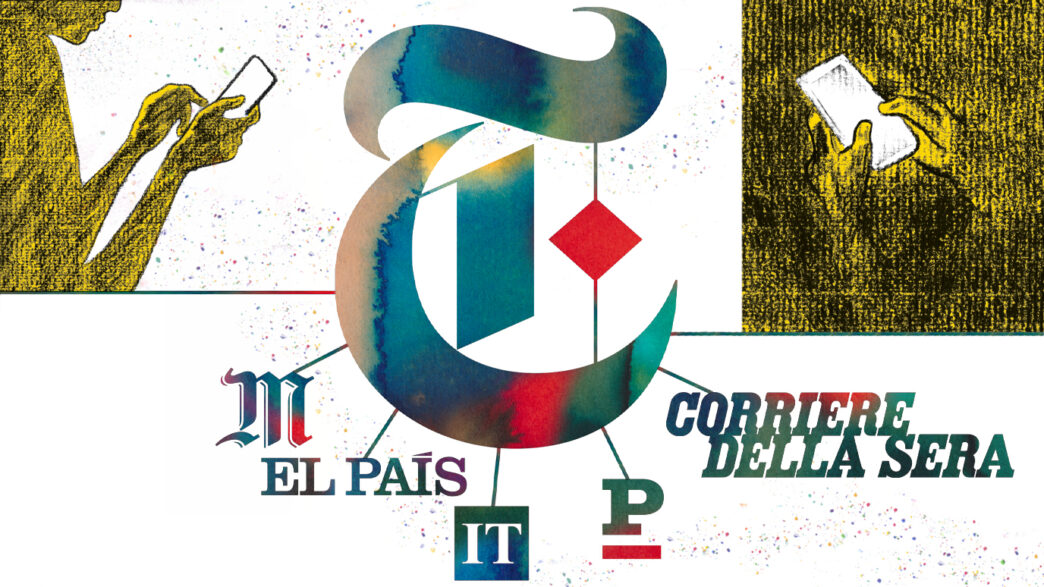
Nine international publishers, Le Monde, El País, The Irish Times, Politiken, Corriere della Sera and De Standaard among them, now sell subscription bundles that include access to The New York Times alongside their own journalism, according to Nieman Lab. The arrangement suits both sides. Local publishers add internationally recognised reporting to their value proposition without the cost of producing it. The New York Times Company extends its subscriber reach into markets where direct acquisition is slower and more expensive.
One of those nine publishers, De Standaard, sit inside Mediahuis, whose “essential subscription” is the clearest worked example of the strategy. As I wrote for Audiencers, Mediahuis has built a bundle that wraps journalism, e-books, masterclasses, a hiking and cycling app, and access to The New York Times into a single subscription. The early data is compelling: activated users churn 26.5% less, and the bundle is engineered to push subscribers up from the basic tier to a premium one priced at roughly double. The New York Times partnership is one component of that bundle, not a curiosity bolted on top.
That arrangement is the clearest signal of where the market is heading. FIPP’s latest Subscription Report counts 53 million digital-only subscriptions across 206 titles, and the headline 24.7% growth conceals a sharp split. Publishers that have built direct audience relationships, bundled product ecosystems and cross-title access are accelerating. Those still dependent on single-title subscriptions and search-driven acquisition are losing ground, in some cases losing subscribers outright.
The rapid expansion of AI into search has sharpened the divide. Referral traffic that publishers relied on for audience acquisition and advertising revenue is compressing. Publishers that were renting their audiences from Google are finding the lease harder to renew. The response from the strongest performers is consistent: own the relationship, deepen the product, reduce dependence on external distribution.
No company illustrates that logic more clearly than the New York Times Company, which is why the cross-publisher bundles matter: they are central to the strategy, not a side experiment.
The New York Times is no longer just competing. It’s embedding
The New York Times Company now reports 12.21 million digital-only subscribers and stopped reporting title-level numbers this year. The second decision reframes what kind of business the company believes it is in. The New York Times is no longer a newspaper with digital products attached. It is a subscription business that happens to include a newspaper, alongside Games, Cooking, Wirecutter and The Athletic, bundled into a single proposition designed to make cancellation feel like losing several things at once.
The cross-publisher bundles extend the same logic outward. As AI search compresses referral traffic, the value of a subscription with multiple compelling reasons to stay increases. Bundles reduce churn inside a single portfolio. Cross-publisher bundles spread that logic across the whole market and position the New York Times Company as the connective tissue of other publishers’ subscription strategies, not just its own.