

You're reading The Audiencers' newsletter #90 sent out on June 10th, 2026. To receive future newsletters straight to your inbox every two weeks, sign up here.
It’s our London Festival tomorrow! Very exciting line up of speakers, incredible slides being sent to me ahead of the day, and Audiencers coming from 12 countries (still in awe of people travelling for our events!) – Can’t wait to see many of you there!
In today’s newsletter:
- Lessons from Marseille: some slides that caught our attention at WAN-IFRA’s World News Media Congress last week
- We have officially entered the Community Era, how can you make sure you’re keeping up?
- What can we learn from non-media subscriptions? Wine, toilet paper, coffee, AI… we analyzed 100+ subscription businesses to help you improve yours
- 🔗 Links to add to your reading list
Lessons from Marseille
Last week we had the pleasure of attending the WAN-IFRA World News Media Congress in Marseille. Aside from beautiful sunsets overlooking the ocean (not too bad at all) we also saw some brilliant presentations from media brands around the world. Plenty of article summaries coming your way soon, but in the meantime, here are a couple of our fave slides…
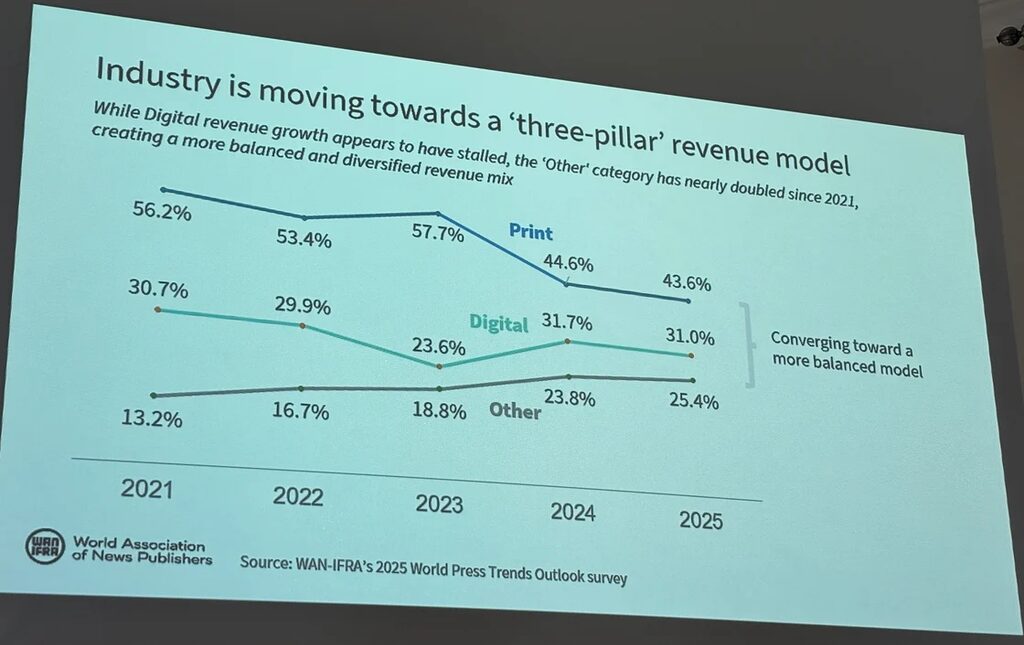
This first one speaks for itself.
The takeaway: don’t put all your eggs in one (revenue) basket.
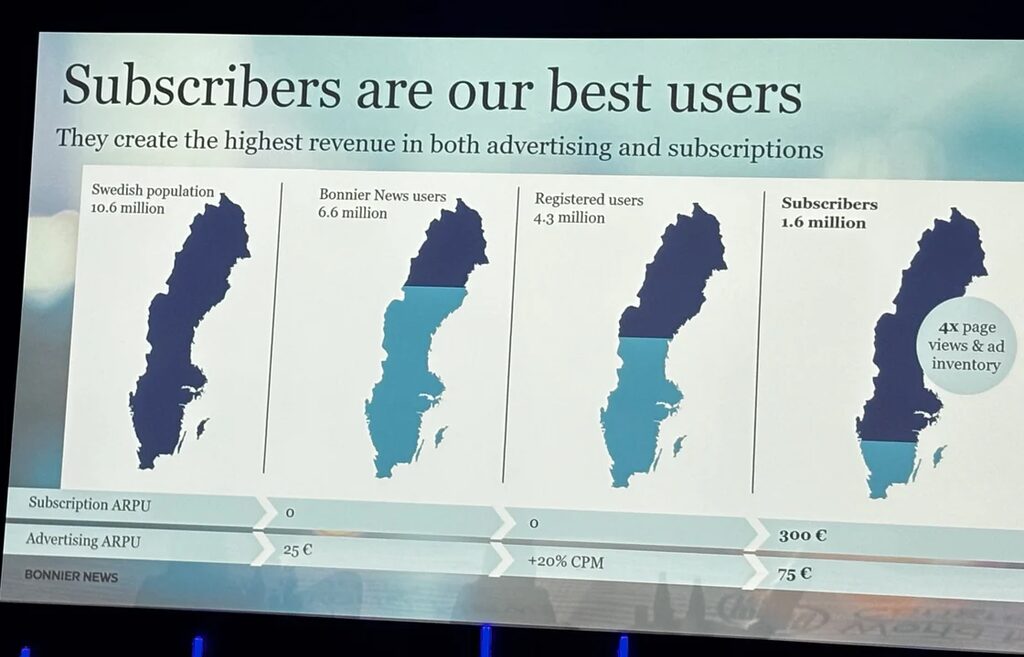
A powerful slide from Bonnier below, reminding us of the Pareto Principle, and that ads & subs revenues can work together rather than against each other.
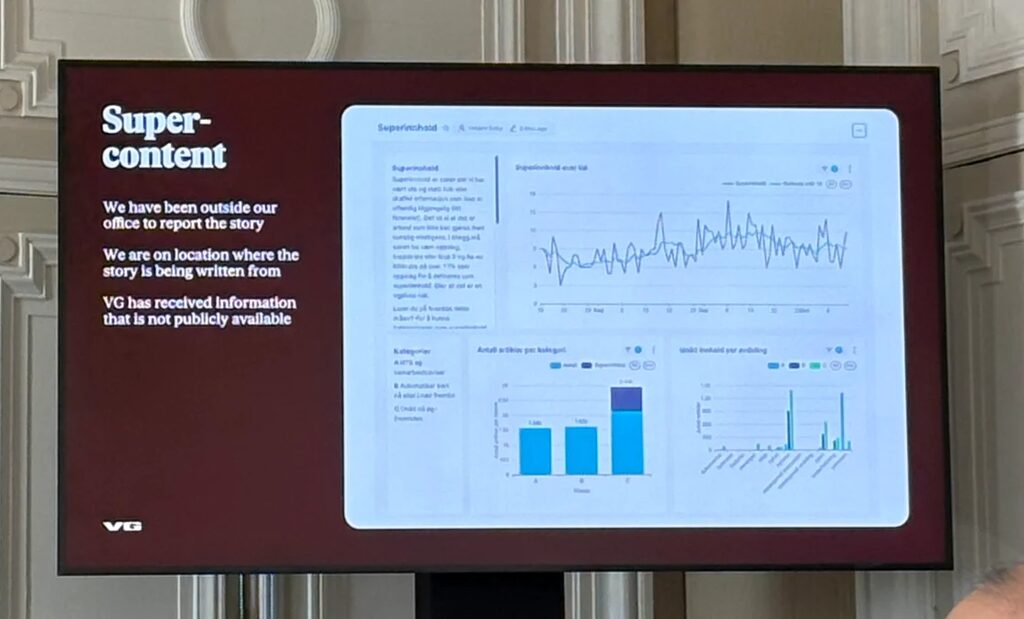
VG has a dashboard showing reports solely on what they call “Super content”, i.e. content that can’t be replaced by AI.
Another reminder that you are what you measure (as we saw here with Amedia’s search for younger audiences)
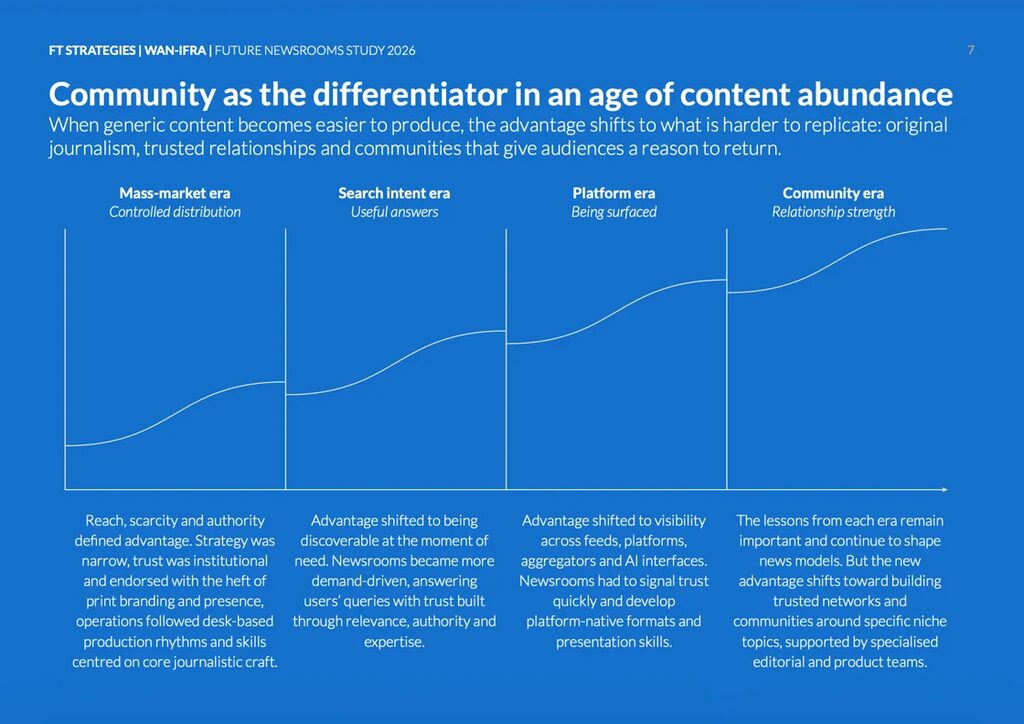
We have officially entered the ✨ Community Era ✨
In the age of content abundance, relationship strength is the differentiator.
Thankfully, FT Strategies just released a report to help you bridge the gap between the classic audience-first rhetoric and actual operations, split into 4 core pillars:
1. The strategy gap: moving engagement to the heart of the business
🚨 Whilst 73% of newsroom leaders state audience engagement is their top priority, 25% of newsrooms still make daily editorial decisions purely on instinct or reactivity
🤝 Move away from destination-first publishing (where 64% of newsrooms design content for a single legacy channel first) to consider user needs. Bring audience and platform leaders directly to the strategy-setting table to align daily commissioning with genuine user needs
2. The audience trust gap: rethinking participation and storytelling
🚨 Trust is shifting to personal, relational signals. Yet reporters currently spend 38% of their week on technical production drag, and a meager 11% on post-publication community building
🤝 Reallocate capacity by automating production workflows. Bring audience participation back in-house through dedicated forums, reader-led investigative verticals, and formats that showcase authentic journalist expertise
3. The capability gap: shifting AI from efficiency to strategic maturity
🚨 42% of newsrooms measure AI success strictly by ‘time saved’, trapping them in low-risk administrative use cases. And 57% of newsrooms have absolutely no AI representation embedded in their editorial teams, resulting in low literacy and cultural resistance
🤝 To build a high-literacy AI culture, embed technical leads directly within reporting desks, upgrade backend metadata, and offer specific, voluntary workflow training
4. The skills gap: transitioning from generalists to sharper specialists
🚨 The ecosystem demands sharp specialization (including tech-enabled reporting, data fluency, and visual format mastery), yet 61% of newsrooms offer zero formal training for new skills
🤝 Invest in structured talent upskilling, especially on-camera training for journalists expected to compete on visual platforms. Consider compensation models to retain your most prominent, community-driving editorial voices
> We’ve summarized the report on Audiencers here
> And you can download the full FT Strategies & WAN-IFRA report here
Toilet paper, wine, coffee, cars, AI… What can we learn from non-media subscriptions?
It always comes back to the same thing: why would someone pay for this, every month, and not cancel?
> “I feel good about buying this” – when the value prop is identity
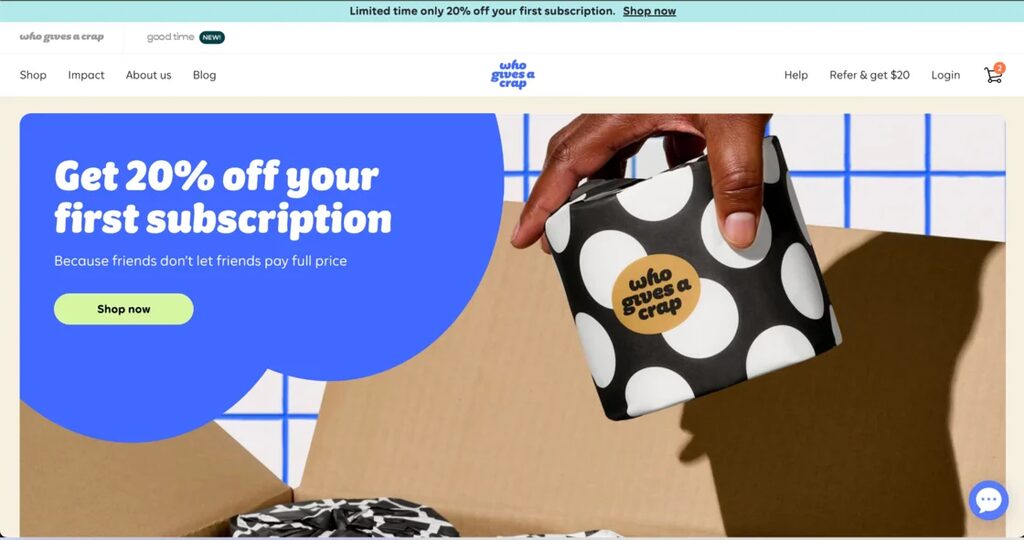
Who Gives a Crap toilet paper subscription: £45.5M in UK revenue alone in 2024, over 1M subscribers globally, and over £10M donated to charities since launch. They have a brand identity & voice so strong that people subscribe for what it represents. This is definitely something publishers could learn from.
> “I don’t have to think about it anymore” – when the value prop is to remove friction or effort
Dollar Shave Club doesn’t really sell razors, it sells the fact that you never have to think about buying razors again. And HelloFresh doesn’t sell meals, it sells the fact that you don’t have to decide what to eat or go grocery shopping.
> “I discover things I’d never find on my own” – when the value prop is surprise
TokyoTreat sends you Japanese snacks, Kube sends you books, Le Petit Ballon sends you wine. Different products, same model: the value proposition is discovery itself.
> “This product gets smarter the more I use it” – when the value prop is personalization over time
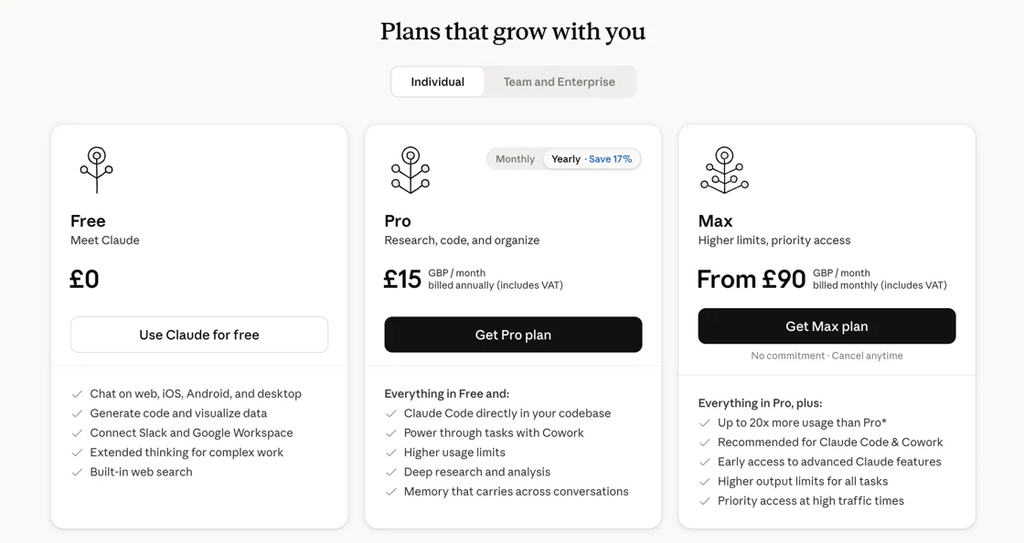
Claude and ChatGPT have a base subscription with tiers, plus usage-based pricing on top. The more you use the product, the more you pay, but also the more value you get. (hybrid pricing (fixed subscription tier + usage-based layer) is actually a very interesting model for publishers to consider…)
🔗 What do they all have in common?
They combine a strong brand identity, a clear value proposition, and an obsession with user engagement with an infinite loop of micro-conversions.
And it’s also true for media subscriptions…
Links to add to your reading list
- Why the Freemium subscription model is emerging as the definitive way to keep growth in ads and subs
- “Do something with your luck”: What German news brands are doing right
- From WAN-IFRA’s Congress in Marseille: A.G. Sulzberger, Publisher atThe New York Times, calls AI’s founding act a theft (full video of his hard-hitting speech here)
See you in 2 weeks for the next newsletter,
Madeleine