What the F Are You Doing? Why frequency is the metric that matters in the AI era

Frequency is the metric that matters most Frequency is the metric that matters most
Mark Zohar, President and CEO of Viafoura, shares why he believes that Frequency (the F in RFV) is the most important metric to be tracking in an era where content is increasingly a commodity that AI can summarize, paraphrase, and serve without ever sending a click your way.

The publishing industry has spent the better part of two decades chasing the wrong metrics.

Publishers chased reach when scale was the story. They chased pageviews when programmatic told us impressions were currency. And now, in an AI era where Google’s AI Overviews, ChatGPT, Perplexity, and a growing constellation of answer engines are intercepting traffic before it ever reaches a publisher’s domain, the old playbook isn’t just tired. It’s broken.

So here’s the question every publisher CEO, CRO, and audience leader should be asking right now:

What the F are you doing?

The “F” in RFV is the metric that survives the AI era

RFV (Recency, Frequency, Volume) has been a customer-analytics staple for decades. Recency tells you when someone last showed up. Volume tells you how much content they consumed while they were there. But of those three letters, Frequency is the one that quietly does the heavy lifting. Frequency tells you whether you have a business.

Frequency is the metric that tracks habit formation. It’s the metric that signals brand loyalty. It’s the leading indicator of customer lifetime value, registration propensity, and subscription conversion. And in an environment where AI is steadily eroding the casual, search-driven, one-and-done visit, Frequency is the only metric that compounds in your favor.

If a reader visits you once a month because Google sent them, you don’t have a reader. You have a rounding error.

If that same reader visits you twelve times a month because they want to be there, to weigh in, to read what others are saying, to participate in a live conversation with your journalists, to follow a topic they care about, then you have a customer. You have ad inventory that actually performs. You have a registration waiting to happen. You have a subscriber in the making.
AI broke the funnel. Community rebuilds it.

The uncomfortable truth is that the open web’s traditional acquisition funnel, SEO at the top, content in the middle, monetization at the bottom, was always borrowed infrastructure. Publishers rented audience from platforms, and now those platforms are keeping the audience for themselves.

The publishers who will win the next decade are the ones who own the relationship, not rent it. And ownership doesn’t come from content alone anymore. Content is increasingly a commodity that AI can summarize, paraphrase, and serve without ever sending a click your way.

What AI cannot replicate is community. It cannot replicate the experience of debating a local election with your neighbors in a comment thread moderated by your newsroom. It cannot replicate a live Q&A with the reporter who broke the story. It cannot replicate the feeling of being recognized, replied to, and known by a brand you trust.

This is where Frequency lives.

The Frequency Loop

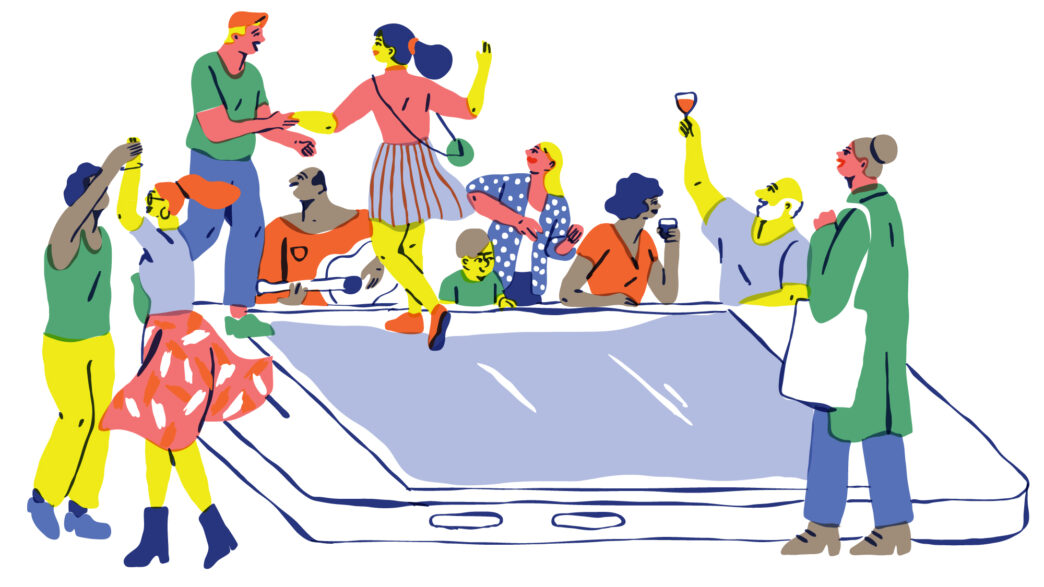
When publishers invest in community-building experiences like commenting, Live Q&As, topic-based chats, polls, personalized feeds, and real-time notifications, something powerful happens. Readers stop coming back for the content alone. They start coming back for the conversation.

That shift creates what I call the Frequency Loop

Article content

A reader visits for the content. They engage with the community. They get notified when someone replies, when a new live event starts, when a topic they care about is being discussed. They come back. They engage again. They register to keep participating. They subscribe to deepen the relationship. Every loop tightens the bond, increases the visit count, and unlocks more revenue per user.

The economics of this loop are not theoretical. Viafoura‘s data shows that engaged community members visit at a rate that is 6-8 times higher than fly-by users. And the downstream impact is well documented across the industry. Piano’s Subscription Performance Benchmark has found that registered users convert to paid subscriptions at roughly 45 times the rate of anonymous visitors. Frequency is what closes the gap between the two.

Article content
Piano Subscription Performance Benchmark Report

More frequency means more ad impressions. More frequency means higher page RPM, because engaged sessions monetize at premium rates. More frequency means a registered-user base that’s actually worth registering. More frequency means subscription offers that land, because the reader has already demonstrated, behaviourally, that they value what you do.

What the F should you actually do?

If Frequency is the metric, here’s the honest diagnostic every publisher should run:

Do you give your audience a reason to come back tomorrow that isn’t a new article? Do you have a place on your property where readers talk to each other and to your journalists? Do you notify them when their participation matters? Do you personalize what they see based on what they engage with, not just what they read? Do you treat your registered users like a community, or like a CRM list?

If the answer to most of those is no, you don’t have a Frequency problem. You have a community infrastructure problem. And in an AI era where every other lever (search traffic, social referral, content differentiation) is getting harder to pull, community infrastructure is the lever that’s getting more valuable, not less.

The bottom line

AI is going to keep getting better at answering questions. It’s not going to get better at being a community. That asymmetry is the single largest strategic opening publishers have right now, and Frequency is the metric that tells you whether you’re walking through it.

So the next time your board asks how you’re future-proofing the business against AI disruption, don’t show them a traffic chart. Show them your Frequency curve.

And if you don’t have one, well, you know what to ask yourself.

What the F are you doing?