
We interviewed Johannes Vogel, Chief Product & Revenue Officer at stern (published by RTL Deutschland) about how they relaunched a subscription offering from scratch, with teams & systems designed for digital reader revenue.
> stern, published by RTL Deutschland, had been built as what Chief Product & Revenue Officer Johannes Vogel calls "a portfolio machine", optimised for mass reach with the distinct identities of stern, GEO and Capital dissolved into digital scale. Workable for advertising, fatal for subscriptions

> Weekly pricing beat monthly on conversion, especially among readers with little prior attachment to the brand. The app stores went back to monthly after weekly renewal prompts created friction

> GEO and Capital now outperform on both conversion and retention, because a sharply defined brand profile answers a specific reader need rather than a general one

Lessons:
> For a general interest publisher, personalisation is not a feature — it will be the product

> The article that converts is not always the one that retains. Content consistency matters more than acquisition volume

When Johannes Vogel, Chief Product & Revenue Officer, joined stern in late 2023, the digital operation wasn’t obviously broken. Traffic was significant, the brands were well-known, and the technology was functional. The problem ran deeper.
The entire organisation had been built on a portfolio model with its core business being mass-reach advertising. “It was a portfolio machine,” Vogel says. “The important thing was not the individual title or the distinctive brand — it was the massive reach.” The distinct editorial identities of stern, GEO and Capital had been quietly dissolved in the pursuit of digital scale.
For advertising, that was a manageable trade-off. For subscriptions, it was fatal. A reader revenue model only works if you are offering something specific enough that an individual reader will pay for it and, importantly, keep paying. stern’s digital setup had spent years doing the opposite.
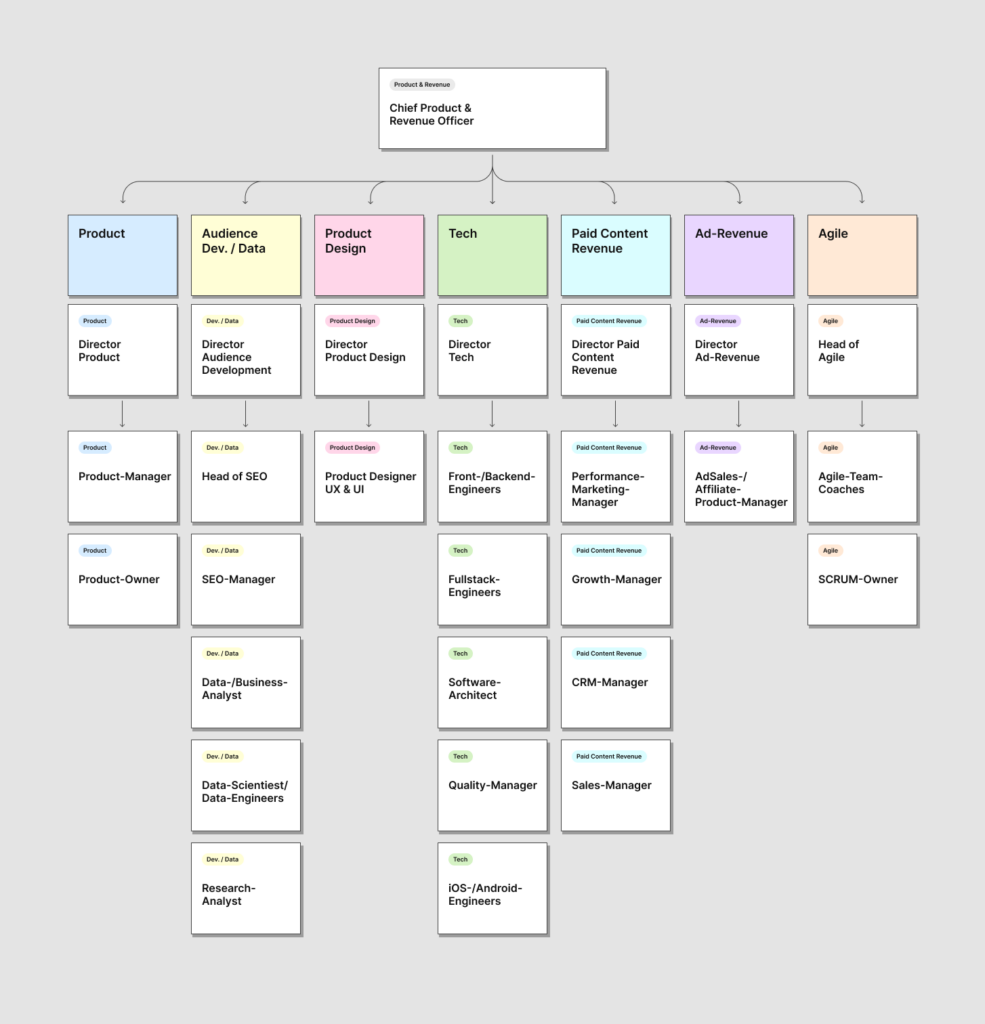
Subscription sales sat in a separate silo from editorial and product, with few shared goals and little shared accountability. Vogel and editor-in-chief Gregor Peter Schmitz decided early that there was no point trying to reform what existed. “We had the big chance to build a new team,” Vogel says. “We could work on a new philosophy and a new culture.” They started with seven people, one business, and product organisation.
Building the team
Seven became 75, now heading toward 100. The priority among those early hires was product managers, UX/UI designers, data analysts, software engineers, and subscription marketing specialists. In the editorial areas, the focus was more an transformation the organisation toward a digital-first mindset and way of working. The journalism already existed across three established brands. What was missing was the capability to build, iterate and measure a digital product around it. A subscription business requires product thinking, data infrastructure and commercial mechanics that most legacy editorial operations had never needed to develop.