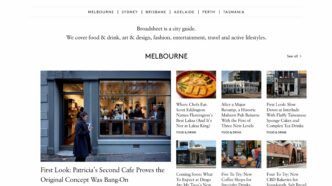
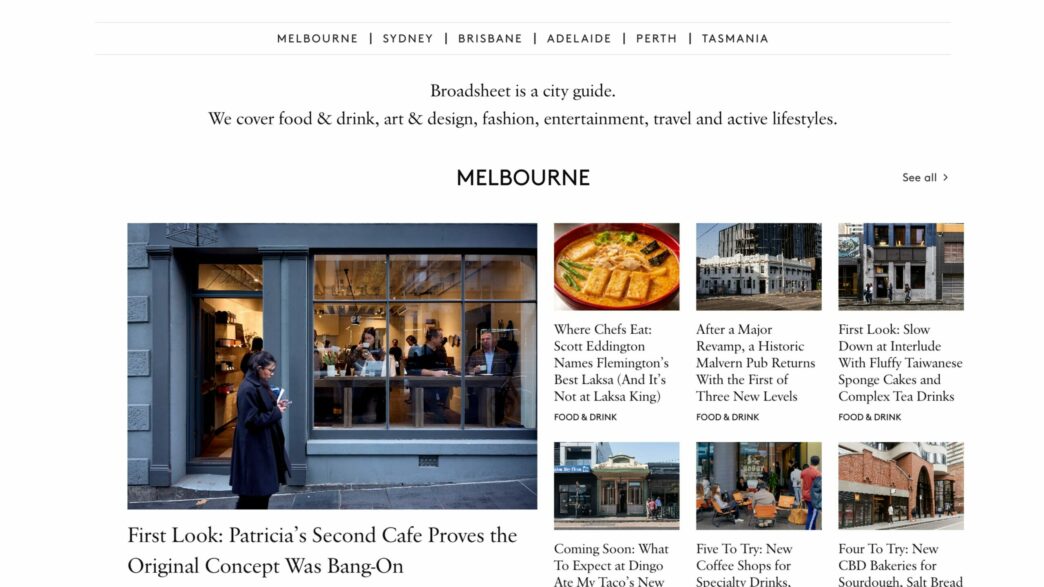
Broadsheet, Australia’s leading cultural publisher, is embarking on a bold new chapter. Founded 16 years ago, the brand has become synonymous with the best in food, drink, fashion, and design across Melbourne, Sydney, Brisbane, Adelaide, and Perth. Now, they’re taking their successful model to London whilst also moving towards a reader revenue strategy.
We sat down with Nick Shelton, Founder & Publisher of Broadsheet, and Ross Wilmot, Director of Reader Revenue, to discuss their international expansion strategy and the development of a subscription revenue stream, layered on top of their advertising model.
> Broadsheet Media treats advertising and subscription as complementary rather than competing, with engagement as the thread running through both

> Readers said they'd pay for quality content, but only bundled with things they couldn't get elsewhere: exhibition tickets, free coffee, and tools to curate their own Broadsheet experience

> Subscription isn't marketing's project. Broadsheet already ran 'Squads' against 90-day, one-year and three-year goals, so they formed a new audience monetization squad spanning editorial, product, data and CRM

> They launched registration ahead of the paywall, which built internal confidence before the subscription launch as much as it built the audience data
A consistent lens for diverse markets
For Broadsheet, the move from Australia to London is built on a repeatable editorial framework. Nick Shelton describes Broadsheet’s core product not as a list of recommendations, but as a specific lens that can be applied to any global city.
“The way we think about Broadsheet editorially is that it’s a framework,” Nick explains. “What you see through that lens differs depending on the city, but the values of the lens itself – quality, celebration, and curation – remain constant.”
Rather than relying on local intuition alone, Broadsheet uses this framework to solve a universal problem for urban audiences: the paradox of choice. By applying the same rigorous standards in London that they do across Australia, they maintain brand integrity while respecting local nuances. This city-agnostic strategy allows the brand to:
- Curate rather than catalog: Instead of exhaustive listings, they use a highly curated approach where they “don’t write about things we don’t like.”
- Prioritize the premium enthusiast: By maintaining high editorial standards, they attract a specific high-value audience cohort regardless of geography.
- Operationalize local reporting: By treating London as just another “market” within a proven system, they can scale quickly without reinventing their brand identity.
“We learned this lesson in Australia long ago,” Nick notes. “Sydney and Melbourne are fundamentally different markets with different behaviors. Going into London wasn’t about having expectations of what the city would look like; it was about reporting on it through that consistent, high-definition lens.”
Engagement: the common thread between ads and subscriptions
One of the biggest challenges in the publishing industry today is the perceived conflict between advertising and subscription revenue. Broadsheet, however, sees these models as complementary, with engagement being the common thread.
“We’re not a traffic-based model, we don’t sell programmatic advertising. It’s not about more people equals more money; it’s about the depth of engagement. And we’ve long had the muscle and mindset in the business of engagement. The better engaged the audience, the better we do as a business, something that applies across both advertising and subscription revenue goals.”
In short: by focusing on engagement, everybody wins.
Ross, Director of Reader Revenue at Broadsheet, who recently joined Broadsheet after working at a legacy media publication, explained that by moving even a small subset of their flyby audience into a medium-engaged cohort, they see an exponential increase in page views, the currency of traditional commercial models. This approach is useful for showing teams the clear benefit of engagement to the advertising side of the business while simultaneously building a base for subscriptions.
Whilst they measure a collection of engagement metrics, focused very much on quality over scale, frequency is their most important, north star metric.
The five pillars of a successful subscription strategy
Broadsheet’s transition to reader revenue is built on five key pillars, as outlined by Ross:
- An audience-centric approach: A laser focus on the most engaged readers, understanding their motivations, pain points, and what adds value to their lives.
- Compelling value proposition: Ensuring the subscription product addresses the needs of engaged readers. Initial research at Broadsheet showed that their readers would be prepared to pay for high-quality content, but that it needed to be combined with unique experiences like exhibition tickets, and perks like free coffee as well as tools to help them curate their Broadsheet experience.
- Cross-departmental alliance: Moving beyond a traditional marketing-led view of subscriptions to ensure buy-in across the entire business, from editorial to product, data, and CRM. At Broadsheet, they already had established ‘Squads’ associated to 90-day, one-year and three-year goals, so when moving to subscription, a new audience monetization squad was formed.
- Culture of test and learn: Continuous experimentation with subscriber journeys, funnels, pricing, and offers to drive sustainable growth.
- End-to-end lifecycle marketing: Delivering the right message to the right audience at the right time, supported by a robust data infrastructure and access to the right platforms.
“There are of course many other aspects to consider, but in my opinion, these 5 are the ones that move the dial the furthest”
Building a value exchange through registration
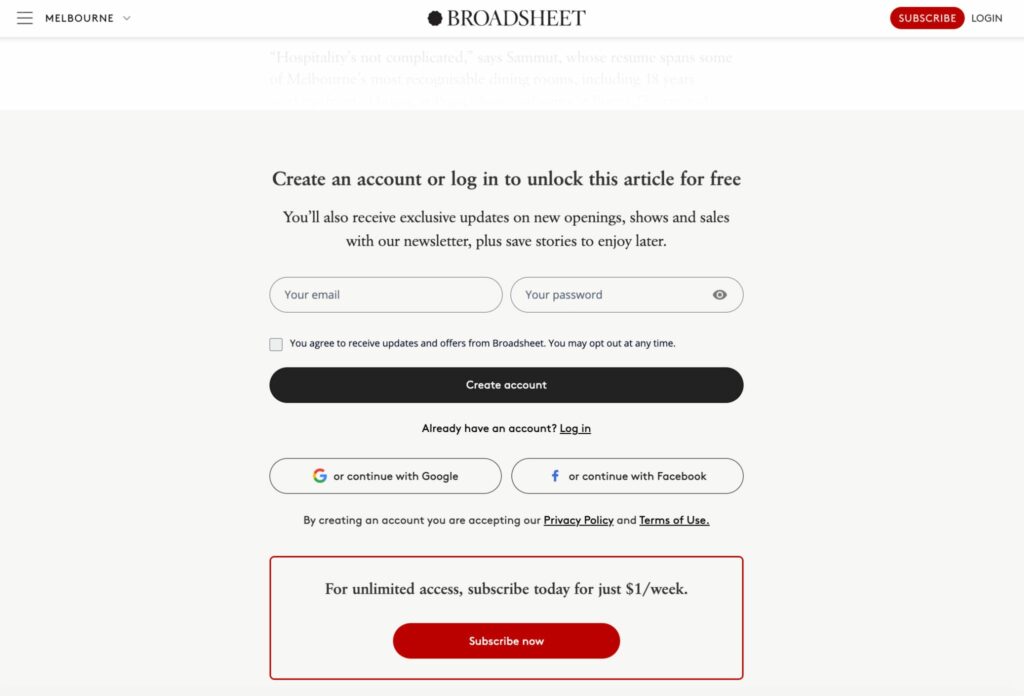
A crucial component of Broadsheet’s reader revenue model is the registration wall. Launched in Australia in December 2025, a few months before their subscription model, the registration wall has already outperformed industry benchmarks:
Specifically, a conversion rate (% of unique visitors who encountered the reg wall and converted) of 5.5% on the registration wall, compared to the industry benchmark of 3-5%.
“Registration serves us on several different levels,” Ross says. “It gives us the ability to communicate more directly with our most engaged audience, gather insights into their needs, and personalize their experience. And of course, it helps us reduce the reliance on third party platforms for our audience, which is going to be more and more crucial.”
Crucially, the registration wall introduces a clear value exchange on the site. “Previously, people were completely free to browse the site as they wished,” Ross explains. “The registration wall helps set the tone for the eventual introduction of a paywall, ensuring it’s not a shock when certain content becomes paid.”
Registration has also built confidence internally ahead of their paywall launch
“The insights from our research proved that there was definitely an appetite to pay as long as it’s the right proposition and that a subscription adds significant value to an individual’s life. And that’s where we’ve been focused on these three aspects of the subscription proposition, the content being the inspiration, the experiential side of things, and the utility aspects as well, pulling all those different ingredients together.”
Nick added that, ultimately, the team believed in the strength of their brand.
“We’ve been running this for 16 years. We know we have a strong brand. We know we create a product worth paying for. So let’s do it. Having a reg wall in place was valuable for validating our assumptions on conversion rates through the steps in the funnel. We exceeded every single one of those assumptions. Of course, more people provide data for registration than handing over a credit card, but we consistently exceeded benchmarks since the launch, so we didn’t feel we needed to wait around for subscription. We just had to go for it, with confidence.”
London: building a cultural footprint, Australia: Broadsheet digital subscription
Currently, Broadsheet’s London operation is focused on audience acquisition and brand awareness. Before switching on monetization features, they are busy establishing themselves as the ultimate London city guide.
While London is about growth, Australia is the testing ground for the brand’s most ambitious move yet: Broadsheet digital subscription. Launched just days ago (April 2026), this membership program represents the official transition from a free-to-read model to a premium value exchange.
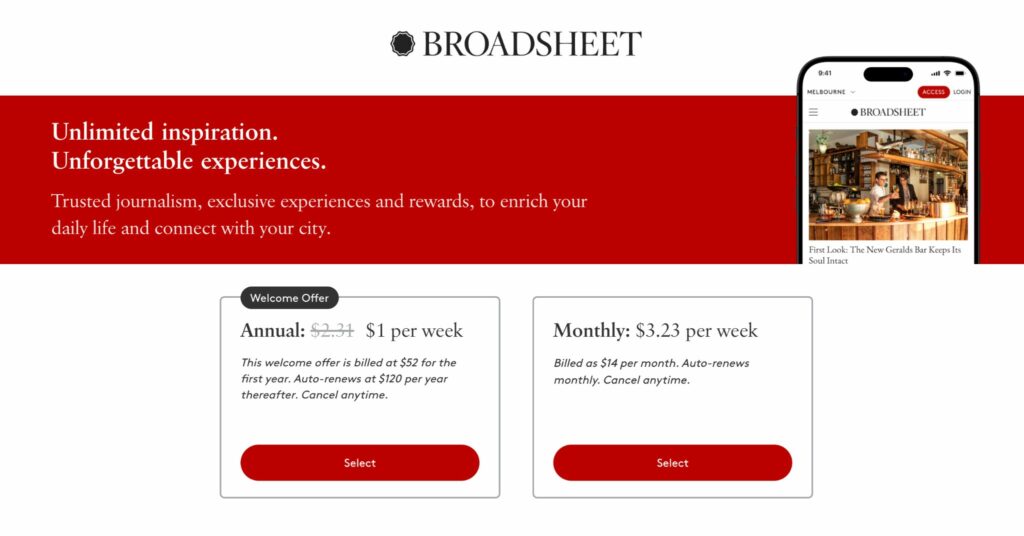
Ross highlights that early data from Australia has been “very strong,” already exceeding industry benchmarks for conversion. The model isn’t just about a hard paywall but rather an integrated experience:
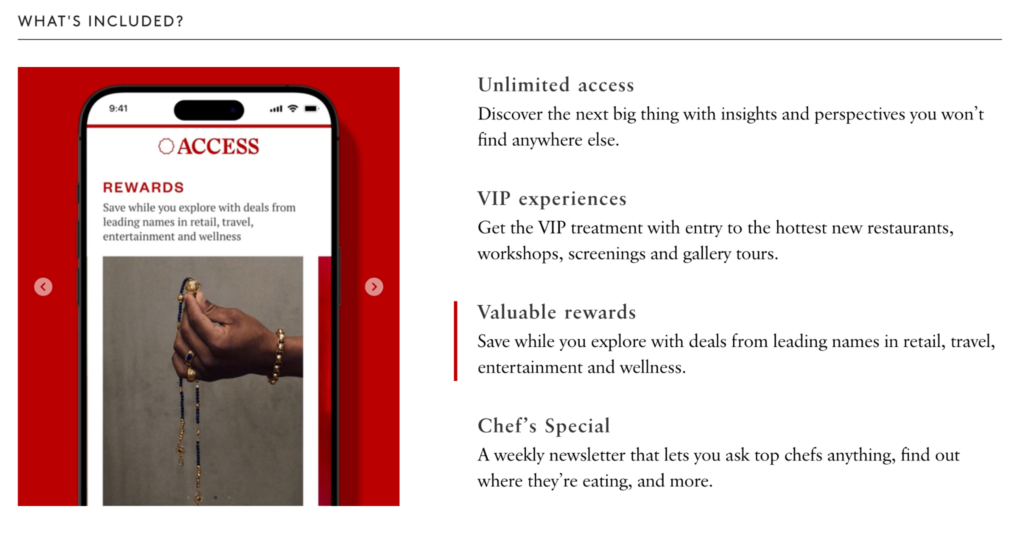
- Exclusive experiences: Members get early access to ‘Readers’ Preview’ dinners at the city’s hottest new restaurants
- Perks and rewards: The program includes ‘The Vault’ (high-value giveaways) and daily rewards like free coffee or discounts at local partners
- Journalism access: Unlimited access to Broadsheet’s trusted journalism for A$1/week
The current content access model is a static meter, where audiences have access to a set number of articles per month before being asked to register and then subscribe, but the goal is to move towards a dynamic model adapted to a reader’s level of engagement via Poool.

What’s next?
Of course, the launch is just the beginning! Ross shared that the team is already focusing on:
- Identifying optimisation opportunities that exist within their key conversion journeys and subscription checkout funnel
- Leveraging those insights to inform a cross-departmental working group focused on CRO, building a roadmap of experimentation and executing
- Introducing new forums to share actionable insights with editorial: what content is driving conversion (last click and participation) and engagement to inform content and commissioning strategy; identifying opportunities to potentially convert a higher proportion of readers below the superfan engagement cohort
- Building CRM muscle through talent acquisition and data engineering: unlocking capabilities within their Customer Engagement Platform (Braze) and Customer Orchestration Platform (Poool) to become more personalised and dynamic across owned channels
- Building further value into the subscription proposition through product development of utility tools