

You're reading The Audiencers' newsletter #83 sent out on February 18th, 2026. To receive future newsletters straight to your inbox every two weeks, sign up here.
Hope you’re doing well! I never know what to put in these intros 😅, the important stuff is always below, so let’s just dive in:
In today’s newsletter:
- Profitable by 2026: the business logic behind Le Monde in English
- New “Directory of Consultants”
- A “free” area? New (/old) strategy for hard walled media
- Building resilience with registration
- Links to add to your reading list
Profitable by 2026: the business logic behind Le Monde in English
The ‘Holy Grail’ for many non-English publishers is breaking into the US market, where they can reach a large audience with high propensity to subscribe. And with the rise of increasingly impressive AI translations, this now seems simpler than ever.
For France’s Le Monde, it’s helped turn a high-cost dream into a soon-to-be-profitable reality
But as Director of Diversification Arnaud Aubron highlights, it’s not as simple as just copy & translate…
> AI is the enabler, not the editor – Le Monde uses a triple-check workflow including native-speaking journalists
> The goal isn’t to replace the likes of the NYT but to become a complementary source with an EU perspective
> Contrary to the ‘AI replaces humans’ narrative, AI hasn’t killed jobs, but made the project viable. It actually allowed Le Monde to hire 10 permanent journalists who wouldn’t have been hired otherwise.
💡 The verdict: whilst AI does remove the technical barrier to entry, it doesn’t solve the cultural barrier. You can’t just translate and hope for the best, you have to offer a unique lens that readers can’t get elsewhere.
> Le Monde in English has clearly done things well, and is now on track to be profitable in 2026! Find the full interview on Audiencers
✨ New✨ Directory of consultants
In need of an expert consultant to support you in achieving all your reader revenue goals? Look no further! Audiencers is here to help;)
👏 A directory specifically for media brands
👏 Segmented via key areas of expertise and language
👏 A link to contact them via LinkedIn for more info
👏 Supporting publishers and independent consultants alike
👉 If you’re a consultant not on the list, submit your profile using the button in the top right hand corner!
👉 If you’ve already submitted your profile but haven’t yet claimed it, find your page and click “claim this profile”. We’ll approve it and you’ll have full editing access (cool right!)
P.s. As a team of just 2, we might not approve changes/submissions for a few days, but don’t fret, we’ll get round to it when we can!
A “free” area? New (/old) strategy for hard walled media
We’re seeing an interesting flip in publishers’ subscription models – whilst many used to have a “premium area” with articles reserved for paying subscribers, a few are now including a “free area” on their homepage, with fully open content.
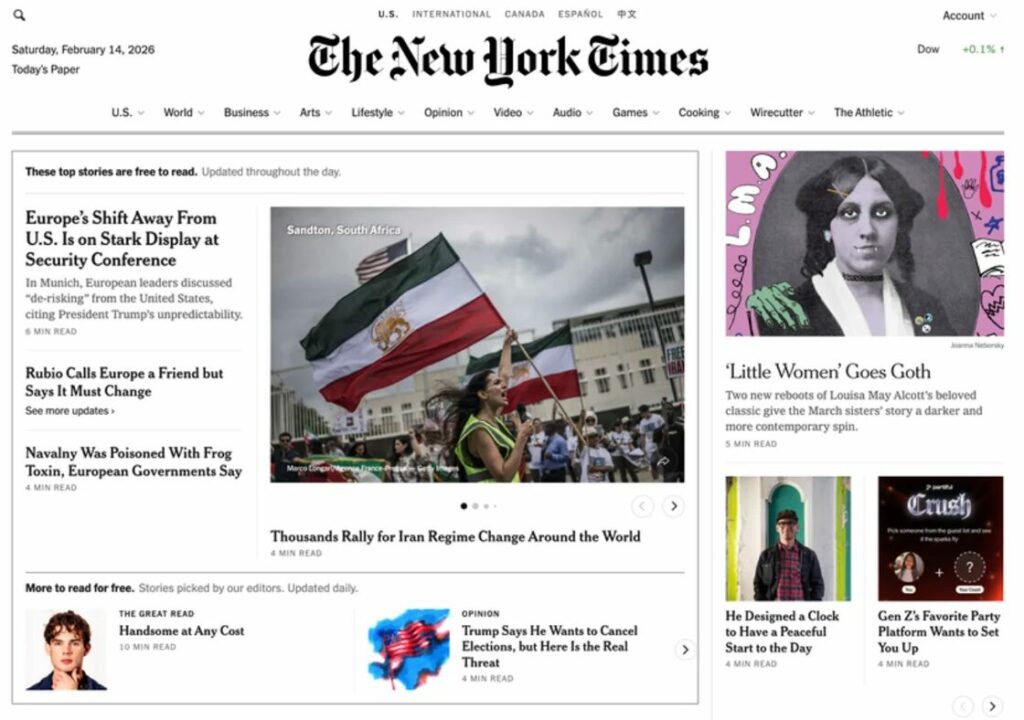
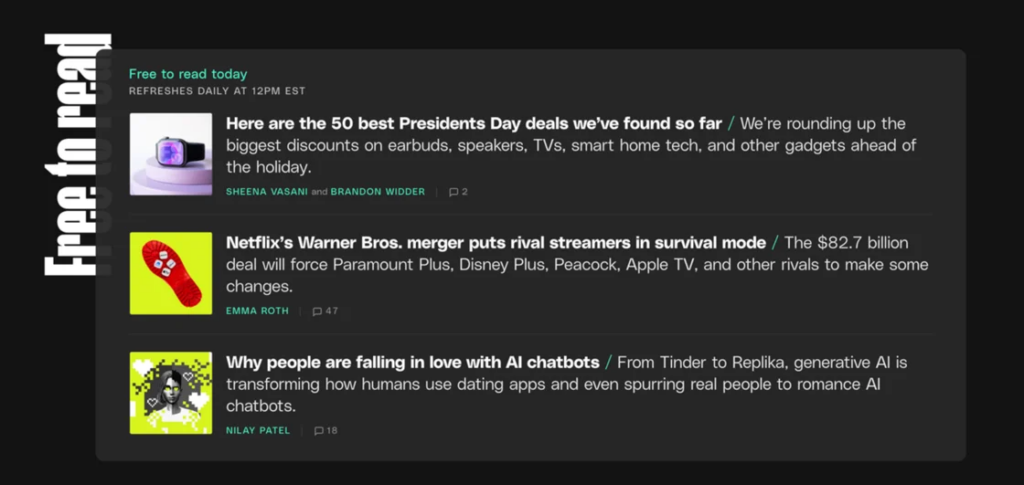
I imagine that these homepages are built specifically for non-subscribers, aiming to balance engagement with frustration whilst combatting the “subscription saturation” challenges (i.e. leaving more content open to allow middle-of-the-funnel audiences to discover the value of their content).
Thanks Kaiden Chandler (The Ithaca Times) for sending these examples over!
Building resilience with registration
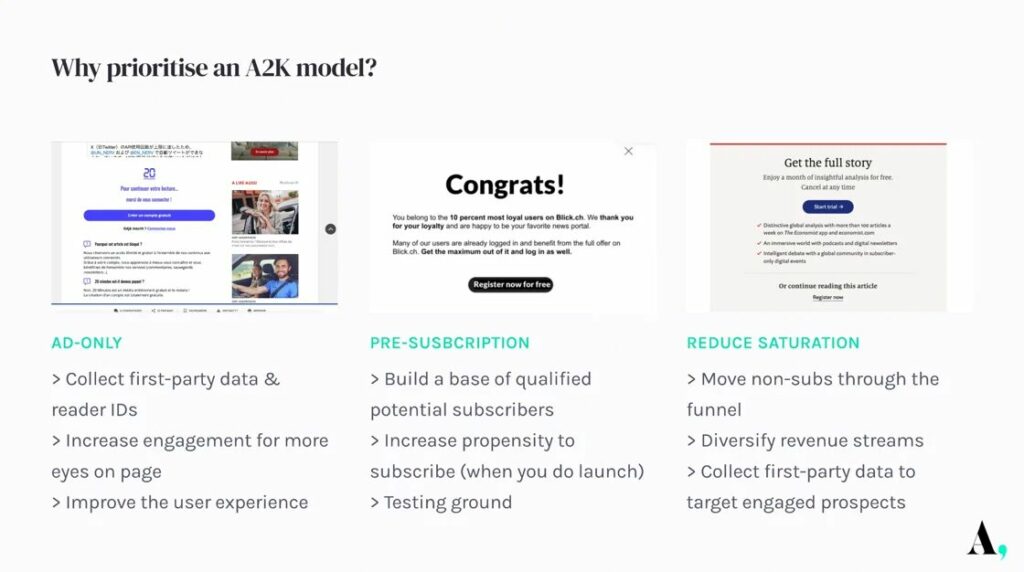
Building resilience in a privacy-first, platform-fragmented market isn’t just about subscriptions, it’s about registration…
Why move registration to the top of the agenda?
> Monetizing the “maybe” segment: In many markets, willingness to pay is low (around 10% in the UK, Spain, and Italy). Registration provides a longer runway to demonstrate value before asking for a credit card whilst increasing revenue from ads
> Counter declining ARPU: Demographic data can increase display ad rates by 45%, and registered users convert to paid subs at 3x to 40x the rate of anonymous readers
> Data resilience: With third-party cookies crumbling, first-party data is the only way to maintain effective audience targeting and personalisation
How can you succeed in registration?
> Build a high-value proposition: a convincing statement and benefits to convince a reader to pass through the registration wall
> Reduce friction with progressive profiling: collect data over time, maybe starting with just an email address and password. But only collect what you’ll use!
> Understand your “Why”: this helps you focus efforts into the right aspect of registration
> Engage immediately: onboarding registered users just as you would subscribers
In our latest article on Audiencers, we share recommendations from FT Strategies’ latest report, combined with our own registration case studies, to help you build the anonymous to known strategy needed for 2026.
Links to add to your reading list
- An audience expert’s advice for getting first-time visitors to come back within a week
- Why Aftonbladet’s readers reject AI articles – but embrace AI chatbots
- News24 curated a “Best of Investigations” series, making high-impact archive pieces free for 24 hours only. This reached 500,000 users and added 23,000 highly engaged readers to their retargeting pool for future campaigns. (from FT Strategies’ registration report)
See you in 2 weeks for the next newsletter,
Madeleine