

You're reading The Audiencers' newsletter #75 sent out on October 29th, 2025. To receive future newsletters straight to your inbox every two weeks, sign up here.
NPA’s summit in Chicago was a blast last week – from redefining why journalism exists and building bridges between teams, to architecture boat rides, trying to line dance and what we thought were jokes about our hotel being haunted (turns out they weren’t jokes!!)
Overall the event felt like a form of therapy for anyone working between editorial and product. Bridge roles can often feel lonely and unsupported, with no clear roadmap or career trajectory. But ultimately it’s an exciting place to be, and a chance to create your own set of rules and job description (to an extent!).
In today’s newsletter:
- How to raise your price without losing subscribers: 7 mistakes to avoid
- CT insider launches AI audio briefing: What can you learn?
- How could you make cancellation worse? Use reverse engineering in your next workshop
- Join our retention workshop in London with FT Strategies
- What we’ve been reading this week: articles to add to your reading list
How to raise your price without losing subscribers
Increasing prices is a necessary part of a healthy business. But of course, with price rise comes churn risk… so how do you find the perfect balance?
Well (like usual) there’s no magic formula. But in his latest article for The Audiencers, Lennart Schneider shares the 7 biggest mistakes you should avoid:
1. Rare but large price jumps – you can think of price acceptance to a muscle that needs to be trained: If you continuously improve, subscribers will follow the change, but if you want to run a marathon after 5 years without training, you will fail.
2. Price increases without alternatives – increasing the price removes the ‘powerful’ position that a customer is in. Giving them options rebalances this power.
3. Detailed explanations – focus less on communicating the reasons for the price increase and instead talk to the options the customer has and the consequences if they don’t agree to the price increase.
4. Justifying price increases with new features – many users aren’t interested in the new features at all, which worsens the price-performance ratio and creates frustration.
5. A lack of communication strategy – most price increases require the customer’s approval, and it often takes several requests, across various channels, before the customer agrees. So start this work early.
6. Communication too late – users don’t want to be presented with a fait accompli, it’ll trigger stress and defensive reactions. Amazon presented price increases a year in advance!
7. Increasing prices equally for new and existing customers – price increases are also an opportunity, and can be used strategically to help new customers stay (and keep the old price for longer).
> Share the full article with your team working on price increases & the marketing around it
What can you learn from CT Insider’s recent launch of an AI audio briefing?
📈 Prioritize low-lift, high-impact production
> Minimise resource investment: Design the initial workflow to be low-lift in terms of time and traditional production resources. CT Insider’s goal was a daily production time of about an hour to an hour and a half, including human review.
> Use existing technology: Integrate and build on tools you already use rather than starting from scratch, as CT Insider did with Everlit.

✍ Focus on editorial quality
> Perfect the AI prompt: Don’t settle for simple article summaries. Dedicate time to perfecting the audio script prompt to generate an output specifically “intended for listening.” The script needs a different structure than written news.
> Maintain human fact-checking: Ensure a human editor fact-checks and edits the AI-drafted script every day to maintain accuracy as well as to ensure proper pronunciations and flow
♻️ Design for audience habit and engagement
> Build a habit-forming product: Make the immediate goal to create a consistent, daily product that increases user engagement and fosters a daily listening habit.
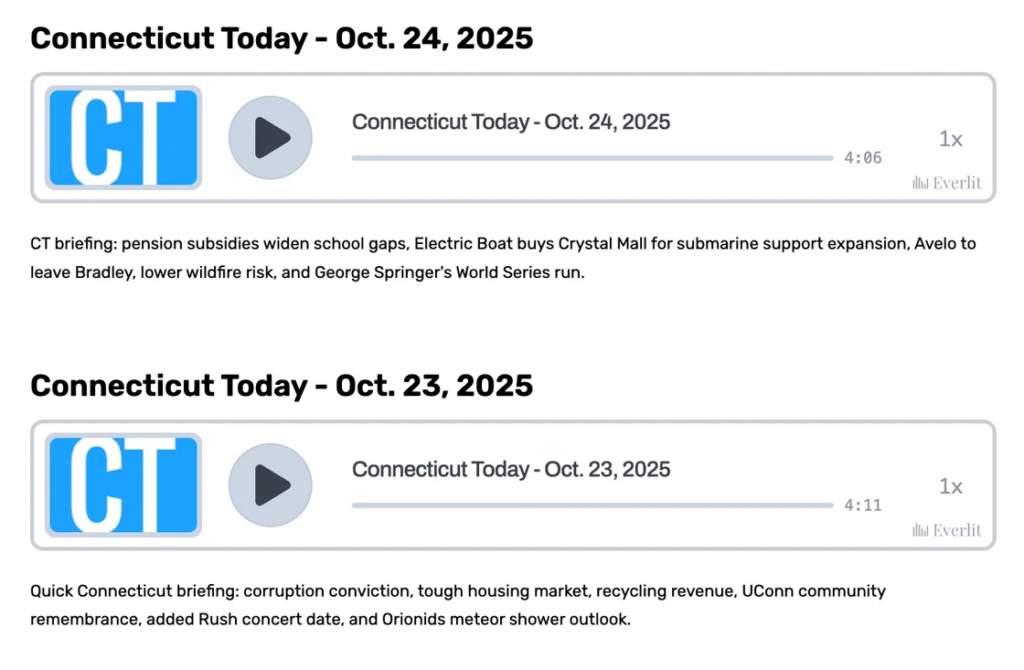
> Incorporate structural hooks: Draw inspiration from other media, like local TV newscasts, by including teases for segments (e.g., weather, sports) at the start to keep listeners engaged.
Use reverse engineering in your next workshop
The Telegraph’s Dean Attil and I had a lot of fun last week running a cancellation journey workshop with product people at the NPA Summit in sunny Chicago.
The part I enjoyed most was when we asked groups to make the cancellation journey worse (yes you read right).
This step in a product workshop helps us to understand the pain points of our personas, the emotions to avoid and potential pain-killers to provide.
And the attendees dove head first into this question…
“Make someone wait in a queue to cancel”
“Hide the cancel button, make it hard to click on, put it below the fold”
“Make them feel guilty for cancelling for their family, make a parent feel like a bad parent”
“Tell someone how much money they’ve paid you, how much they pay for all subscriptions!”
It got pretty intense 😅
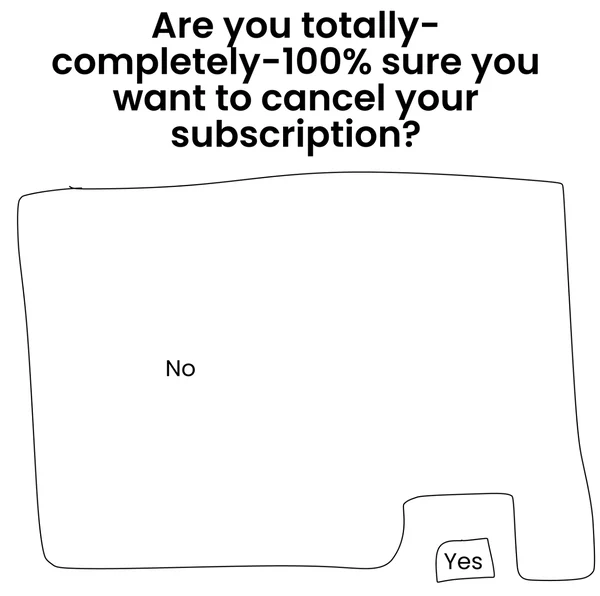
(I found this brilliant LinkedIn post earlier which illustrates the ideas perfectly 😂)
It’s also a fun exercise to get attendees’ creative juices flowing, imagining themselves as the persona in this nightmare situation.
The next step was to turn these into solutions, building a journey that overcomes the key pain points for each type of subscriber.
> Fancy having a go at this workshop yourself with 50 other publishing pros working on their cancellation journey, trying to balance high retention rates with good customer service (not to mention abiding by changing regulations)?
Well you’re in luck!
Dean and I are running this workshop again in London this November 25th at Poool x FT Strategies’ exclusive event: Rethinking Retention for Long-Term Value.
We’ll be sharing data and best practices on how publishers are perfecting retention, with case studies from a collection of brands ahead of the game, followed by a hands-on workshop for you to brainstorm with others also working on retention.
> Request a spot here (it’s free!)
What we’re reading this week
- The build or buy question is back! TLDR: The hybrid path often makes most sense, building on what you buy
- Why The Guardian is no longer dependent on page views to drive revenue
- The Financial Times proves expensive journalism can work—sort of
See you in 2 weeks for the next newsletter,
Madeleine