Where publishers should be heading in 2026: the HERO framework

Hero Framework, The Audiencers Hero Framework, The Audiencers

For a long time in the media industry, the end goal has been publication. The product is the destination. We worked backward from a deadline.

Our relationship with our audiences was driven by a constant search for growth. More readers, more subscriptions, more impressions. We see them as a mass, not as individuals. It’s a fundamentally one-way communication with a focus on form over function.

But today we work in a world where we’re no longer competing against each other but against the external force that is AI. And AI is a master of the print mindset. 

If our only value is publication and growth, we will lose. 

The way to survive isn’t to out-compete AI at its own game. The way to survive is to lean into what AI cannot do:

Build real, purposeful human relationships.

In this new structure, the goal is impact, the focus is on long-term impact and we measure value over volume, seeking to build belonging through meaningful interactions.


And if we think about it, this isn’t anything new either. It’s always been about people.

So, the question is, how do we find our way back to being audience-centric in order to (amongst other things) win against AI?

*note, I in no way mean that we can’t use AI to achieve this. AI is definitely part of the solution as well as the force pushing us in this direction.

Firstly, let’s redefine what our funnel looks like

We’ve all been taught about the classic marketing funnel – Awareness first, then Interest, Conversion and finally Retention.

But we can compare this to fishing with a huge net (hear me out, it makes sense!)…

I think it’s called Cast Fishing? 🤷‍♀️

We throw the net and catch some fish we can eat, great. But we also catch other fish that we can’t eat (so need to be thrown back), as well as other things that we definitely can’t eat, like rocks and seaweed.

This means we’re putting a great deal of effort into throwing out the net when we can’t get value from the majority of things we catch.

Acquiring new audiences (awareness) can be seen of in the same way. We spend so much time and resources on reach and acquisition, when very few of these audiences will be valuable to our long-term business model – i.e. convert into subscribers and stay.

A more common comparison is that of filling a bucket with holes in.

Instead, what if we turned the funnel upside down?

In this funnel, we start with our most valuable audiences.

If we can understand what this reader looks like, we can use this information to inform the rest of the funnel and create acquisition strategies that work to find more of the “fish we can eat”.

Case Study: Le Soir 🇧🇪

At Le Soir in Belgium, their FAA (Fidélisation, Acquisition, Audience / Retention, Acquisition, Audience) model guides all product, technological and editorial decision-making, with retention at the forefront.

Thanks to this, they no longer seek to grow their audience by any and all means possible – instead they’re looking to better understand and monetize their most engaged readers.

Case Study: Daily Mail 🇬🇧

The UK’s Daily Mail has done something similar, analyzing data to understand what a “perfect subscriber” (someone with a high engagement and retention rate) looks like.

They now have a form of ‘recipe’ that teams can use to inform decisions throughout the user journey.

For instance, during onboarding, new subscribers are encouraged to download the app and discover content with the aim of creating more “perfect subscribers”.

How should you tackle awareness and interest?

We (sadly) can’t influence search’s evolution or its impact on our visibility.

That doesn’t mean abandoning user acquisition. It means prioritizing what we can control: strategically engaging and retaining existing audiences, ensuring we’re the destination.

Concretely, we need to widen and nurture the middle of the funnel – the happy middle, according to Sarah Marshall of Condé Nast – the space between a casual, fly-by visitor and a loyal, paying audience.

Unlike the fly-by, these readers have repeated, meaningful interactions with your brand. They consume more, contribute to higher lifetime value and even advocate to bring others to discover your work.

How can you build the happy middle?

Alexa, play “Holding out for a Hero” by Bonnie Tyler.

(Sorry, you’ll have this in your head all day…)

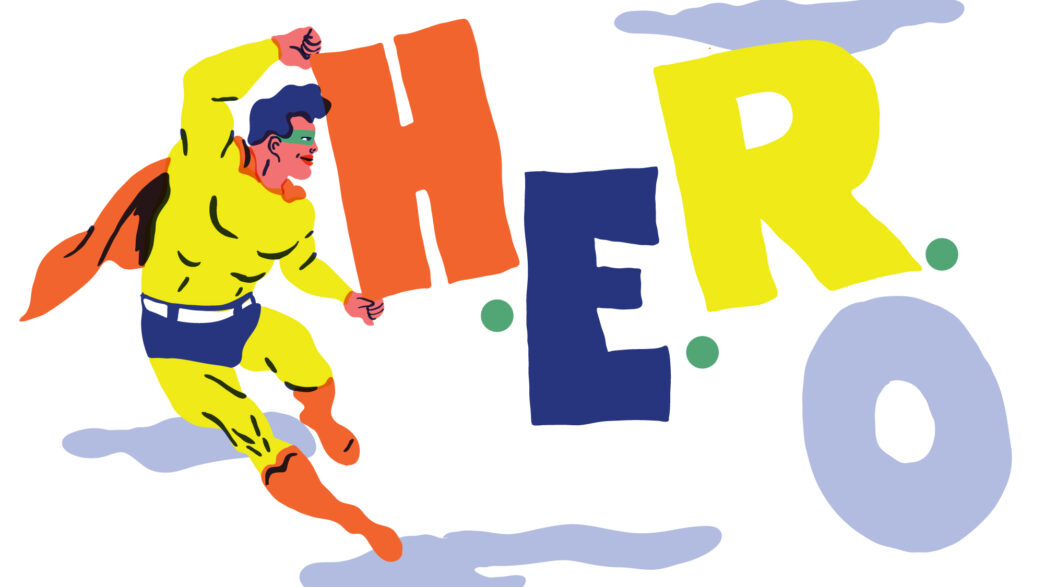
Just like Bonnie, we need a HERO.

Specifically – Habits, Engagement, Relationships and Ownership.

Just some of the ideas of how to achieve H.E.R.O
  • Habits: ensuring users consume your content and visit your site regularly
  • Engagement: increasing the quality time that a user spends with your brand
  • Relationships: building community, and human connections with readers so they feel a sense of belonging
  • Ownership: not being dependent on large platforms, and owning your audiences’ data

> You can find examples on how to do this in our other article, Developing the middle of the funnel: how to turn fly-bys into loyal readers

What about the metrics in this new structure?

Heiko Scherer recently talked about how the most valuable newsroom KPI is no longer reach but belonging, which fits perfectly in this new model.

Reach is essential, but misleading:

No publisher can disregard reach. Visibility is still fundamental. Content needs to be found. Audiences needs to be aware that journalism exists and is available.

But reach has become easy and abundant. And reach doesn’t equal retention. It doesn’t predict habit. And it says little about who will choose to pay or stay loyal.

Reach measures visibility, not connection.

What about engagement?

Time on site. Scroll depth. Shares. Comments… These offer more texture than raw traffic data. They indicate that a user did something beyond simply landing on the page. They suggest curiosity or interest.

But engagement is nuanced and often misunderstood.

Time spent does not always mean quality reading. It can reflect distraction. Scroll depth may say little about comprehension or satisfaction. Shares and comments are often driven by strong emotional reactions, including anger or frustration, rather than affinity.

Perhaps most importantly, engagement tends to measure moments, not relationships.

Belonging is where loyalty and value take shape

At the top of the hierarchy sits belonging. It is the hardest to measure and, increasingly, the most essential.

Belonging describes the reader who returns regularly. Who builds habits around your content. Who participates thoughtfully. Who chooses your publication over the infinite alternatives.

This is not passive consumption. It’s investment.

How do you measure belonging?

Unlike reach or engagement, belonging does not lend itself to simple, universal metrics. Still, it is possible, and critical, to measure its signals.

Metrics that suggest belonging include:

  • Frequency and regularity of visits
  • Retention rates across time periods
  • Direct traffic and app opens
  • Participation in community features
  • Subscription tenure and renewal rates
  • Referral and recommendation behavior

Case Study: Financial Times 🇬🇧

The Financial Times, for example, evolved its core metric from recency, frequency and volume towards lifetime value and, later, global paying audience. This reflected a shift from counting visits to cultivating durable relationships.

Which brings us to the final Funnel 2.0

In this new, audience-centric structure, the goal is impact, the focus is on long-term impact and we measure value over volume, seeking to build belonging through meaningful interactions. 

Of course, it’s not just about a revised framework, but a whole cultural shift. Things won’t change overnight, but by investing in this structure, and designing teams and KPIs around it, the operations and results will follow.