To wrap it up:
- The value proposition canvas helps you define your customer's profile and pair this with your product/service to ensure your premium offers provide value
- The Golden Circle framework will allow you to work on your why, what and how
- Starting with the why is how you'll best define a value proposition that matches your audience's needs
- Defining your value proposition is by no means easy and yet it is THE essential preliminary step to work through before launching or re-launching a premium strategy
Quickly, what is a value proposition?
Why is it important to define your value proposition?
How can you even begin to sell a product or service without first defining what it is that you’re selling and how you’re providing value to your customers?
A clear value proposition:
- Sets your media apart from all others
- Aligns your teams around a shared vision
- Serves as a compass for your marketing, product, and editorial actions
- And can be infinitely adapted in your conversion messages.
In this article, we’ll work through Poool’s method of defining a value proposition, ensuring that you can write conversion texts, build offer pages and create promotional campaigns with ease.
Method for defining your value proposition
This work can’t be improvised. We recommend working in three stages:
- First, define the content and benefits of your offer
- Then work on creating a gallery of target customers (personas) for whom you can summarize your offer in a single sentence.
- Finally, design taglines for each of your business objectives and for each of your personas.
1. Define the content and benefits of your offer(s)
We suggest that you work from a framework initially developed by Dr. Alexander Osterwalder, The Value Proposition Canvas, built for ensuring that a product is adapted to its market.
The canvas is divided into two sections: customer profile and value proposition.
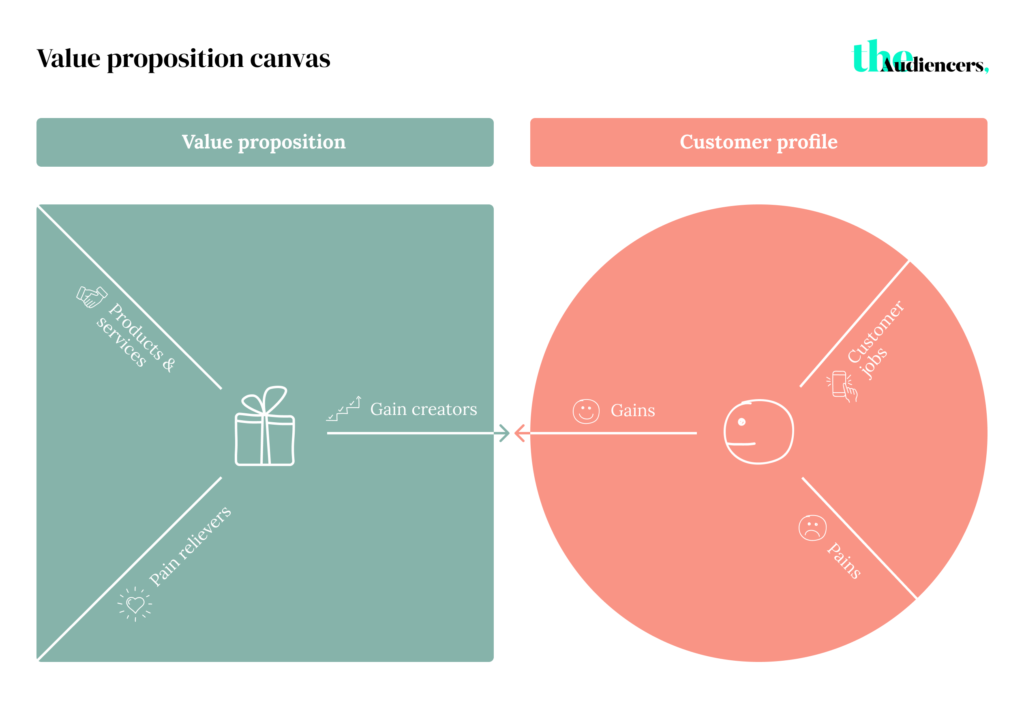
Customer profile: Always start with the customer as they’re at the center of your value as a business.
You are also likely to have different customer segments, each with their own needs, wants and interests, so it’s important to complete a unique customer profile for every segment.
- Gains: the benefits that customers expect and need from you. These should appeal to their interests and make them more likely to embrace your value proposition
- Job-to-be-done: this refers to the operational, social and emotional tasks that a client must carry out. It involves any problems they have to solve and what they hope to satisfy
“What social, emotional, and functional jobs does your customer do on a daily basis? They have some functional jobs that you probably know about. But you’ll also need to uncover how they do that job, how they feel, and what social qualities come into play. For instance, a parent with the job of driving a child to school may also have functional jobs of getting them there on time, ensuring they’re fed throughout the day, making sure they’re not looking like an outcast (social standing may be important), providing the feeling of being loved and appreciated, etc. Ask enough “whys” and you’ll get this info.”
Business Models Inc.
- Pains: these are the difficulties and negative experiences faced by the customer when trying to get the job done
A profile should be created for each customer segment, as each has different needs, challenges, and tasks to perform.
Identify the needs of your target audience
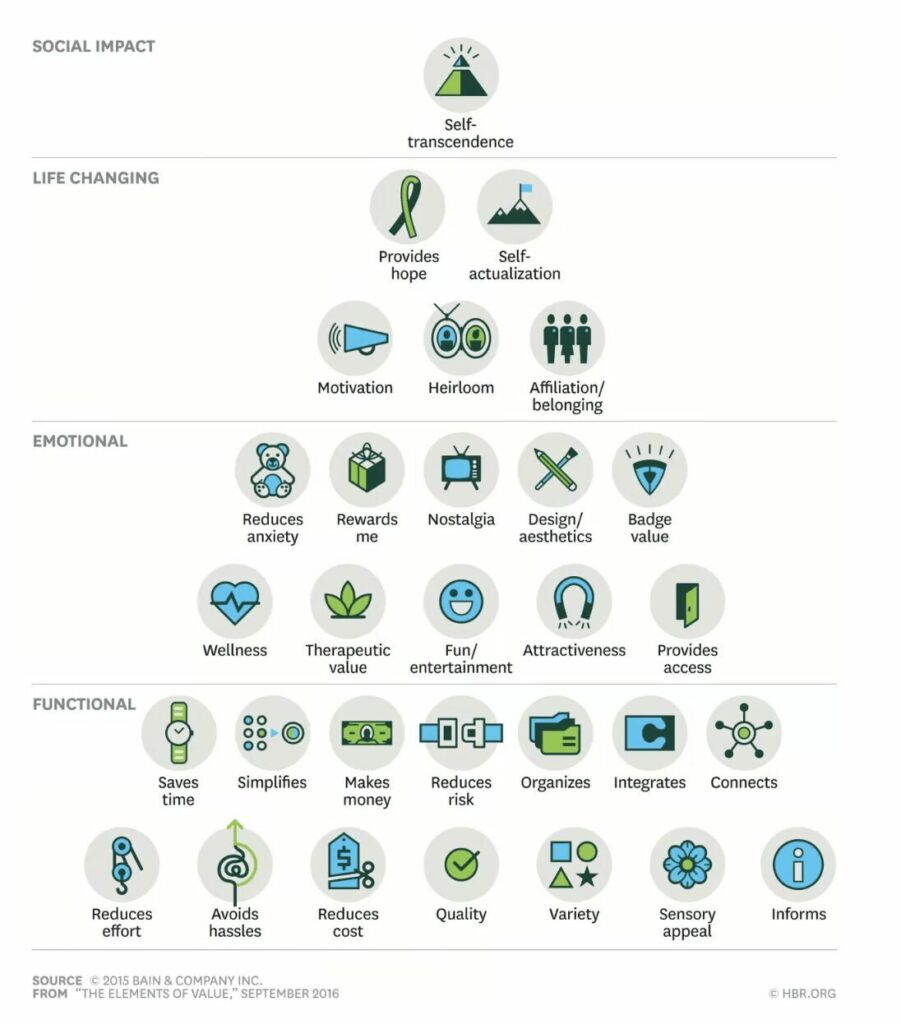
Identifying customer needs when your product is information may seem difficult. However, readers are consumers like any others, and we strongly recommend that you study the pyramid of values below. Created by Bain & Company, it classifies our needs into four categories:
- Social impact
- Life changing
- Emotional
- Functional
Value proposition: here we turn to your product or service and how it fits with the above.
- Gain creators: how does the product or service meet the customer’s needs and how does it provide them with value?
- Pain reliever: how does the product or service solve the pain and difficulties that a customer may encounter whilst carrying out this task?
- Product or service: what is the product or service that creates value, solves problems and justifies the creation of value for the customer?
2. Build your personas and summarize your offer in one sentence.
A persona is the name given to a virtual character who embodies your typical target audience.
All personas have their own name, identity, and sociodemographic criteria. In general, you can identify 4 to 5 personas per product range to cover the entire spectrum of potential customers.
These virtual characters should remain at the forefront of your entire team’s minds, and every employee must know which one they are working for at all times.
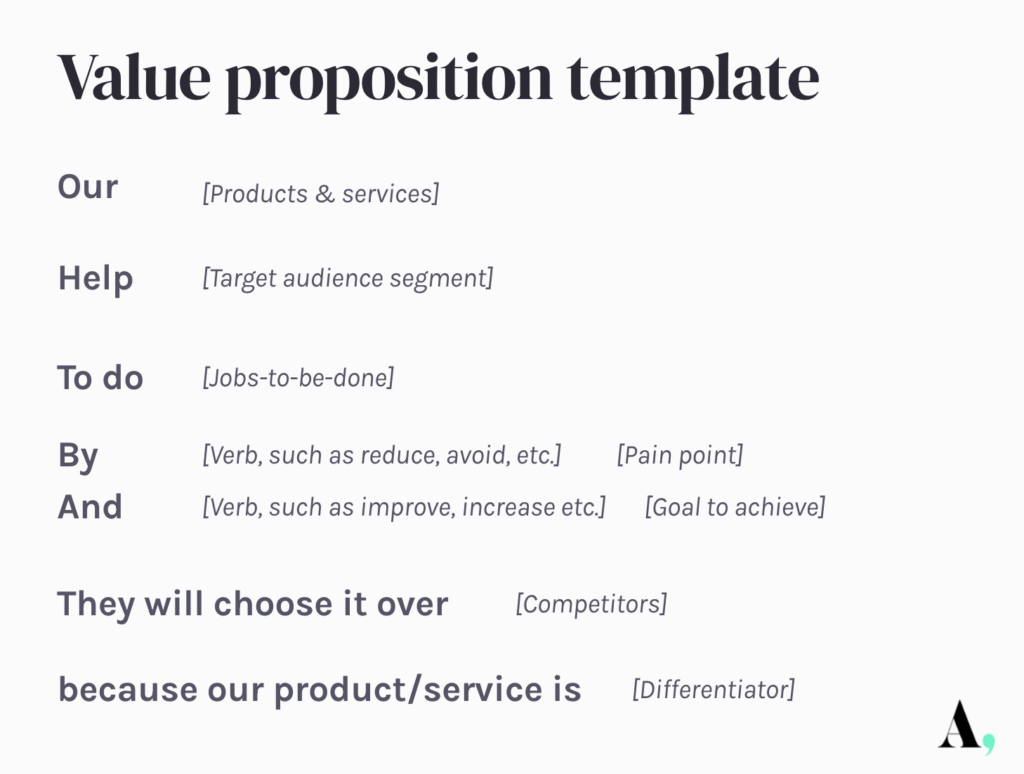
Once you have defined them, it should be easy to fill in this sentence template for each of the personas:
3. Create your taglines
Once you have a clear idea of what you are selling, to whom, and why, let your imagination run wild and create different taglines for your business objectives.
You can start with these three main categories:
- Taglines to encourage account creation
- Taglines to encourage subscription
- Taglines to discourage unsubscribing
Once you’ve done this, writing your conversion texts and building your offers page and promotional campaigns will be much, much easier.
Why, what and how
For this second section, we’re going to work from The Golden Circle framework laid out by Simon Sinek.
The circle is divided into 3 parts: what, how and why.

What: What do you do? This should be very (very) easy to answer. For a magazine, for example, you publish articles, columns, surveys, etc in paper versions and digitally
How: How do you do this? With what people, tools, focus, quality, layout, etc. This, again, should be straightforward to answer and, above all, strictly defined within your team
Why: Why do you do this? A bit trickier and unfortunately not simply as a way to make money. Monetization is the result rather than the why. Instead, here is where you define what you’re going to tell your prospects so that they pay in exchange for your products or services
After the ‘why’, you should consider the following questions:
- Why does this structure exist?
- Why do you get up in the morning?
- Why should people be interested in what you do?
- Why are you useful?
- What makes you different from others in the industry?
- What do you bring to your reader to make them spend time with you?
Most businesses start by answering the obvious questions (on the outside of the circle) and then work their way in towards the center. This leads to simple messaging such as
“Subscribe to access all our articles!”
But, of course, you can do better.
This is why more successful companies go the other way around, starting from the center (the why) and moving outwards.
Poynter

What do they bring to the reader? An intelligent start to the day
Why should users subscribe? Information and inspiration
Followed by the what – the Poynter newsletter
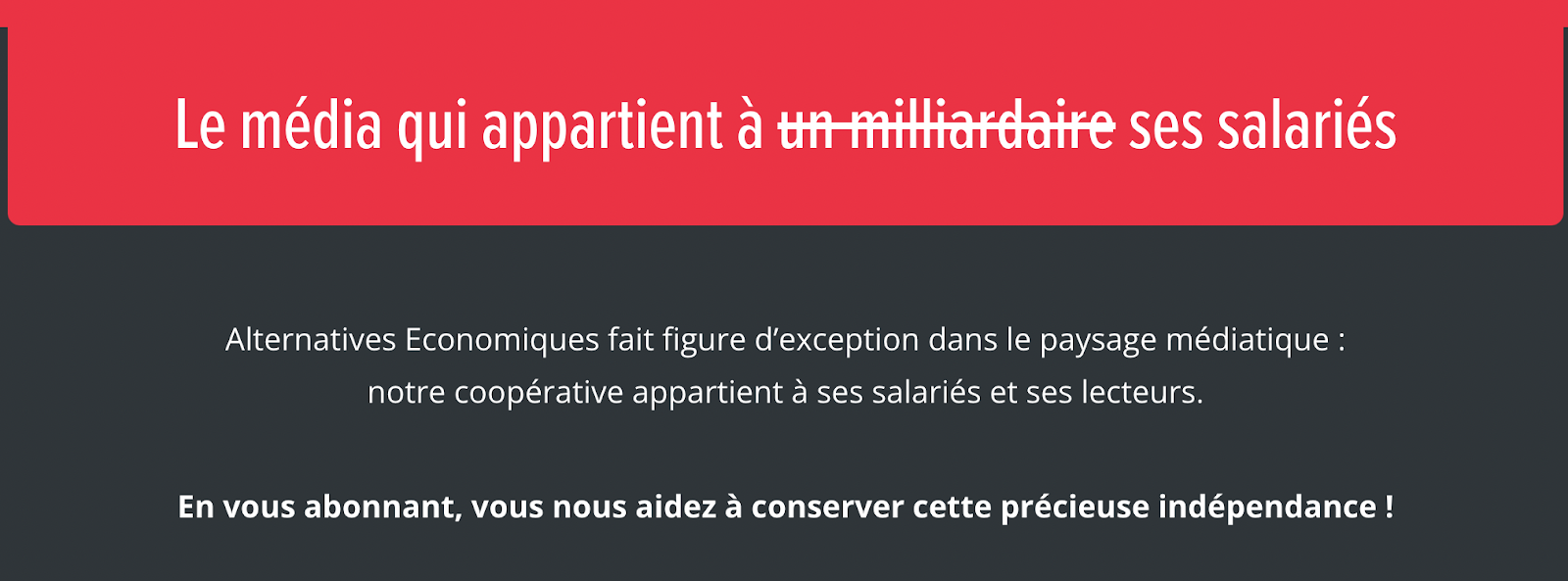
Alternatives Economiques
“The media that belongs to a millionaire its employees.
Alternatives Economiques is an exception to most in the publishing industry: our cooperative belongs to its employees and readers.
By subscribing, you’re helping us to preserve this valuable independence!”
Why do they publish content? To provide independent journalism
What makes them different to others in the industry? The media’s owned by its employees and readers
How do they do what they do? Thanks to subscribers (like the reader, hopefully) and employees (this resonates with the reader who is also an employee somewhere)
The Independent

What do they bring to the reader to make them spend time on the site? Insights, information and ideas/inspiration
What makes them different? The Independent perspective, a unique take on news
Note the lack of even a mention of specifically ‘what’ – the product itself, subscription.
The New Zealand Herald
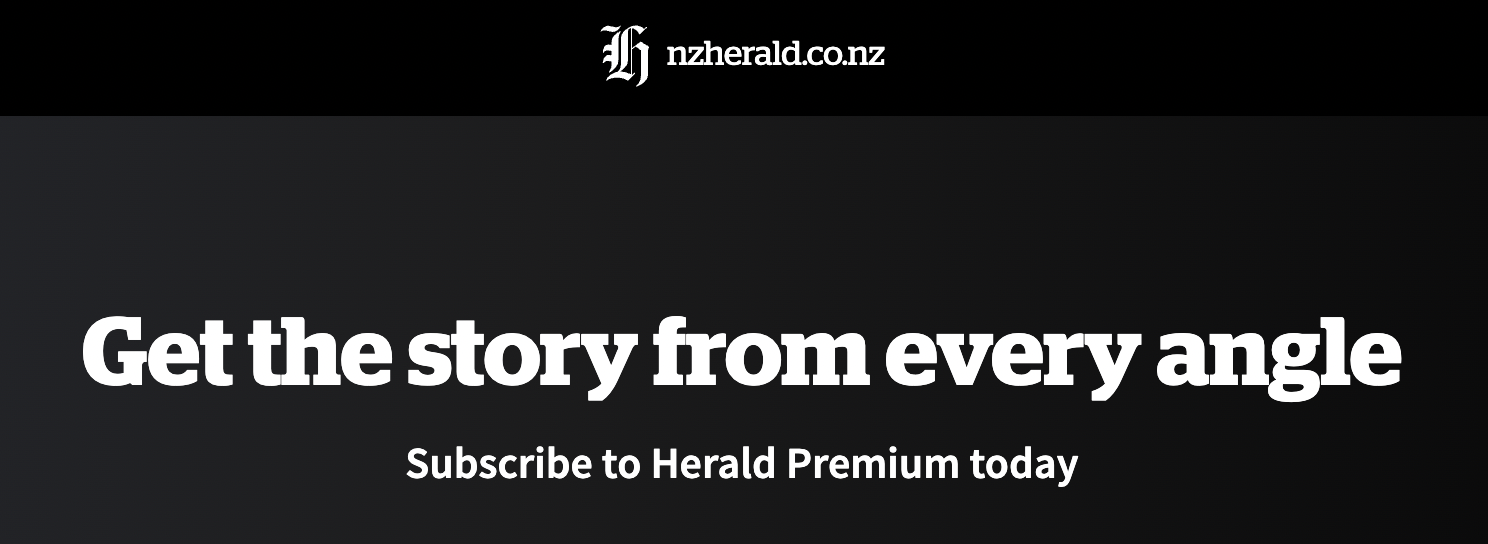
Why should people be interested in what they do? Not just sharing a story, but from every angle
La diaria
“Subscribe to the diaria that depends solely on you”
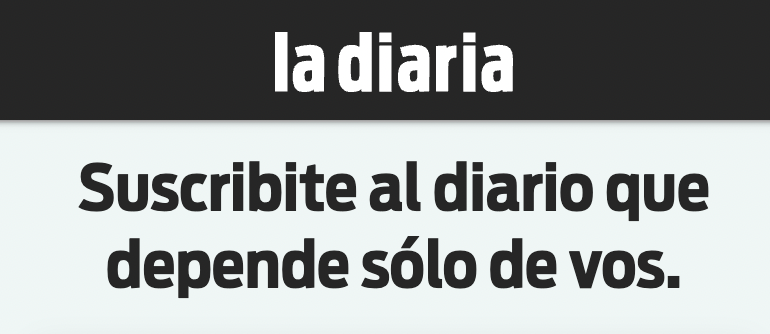
Why does this structure exist? Thanks to the reader (synthetic personalization with ‘you’)
The Wall Street Journal
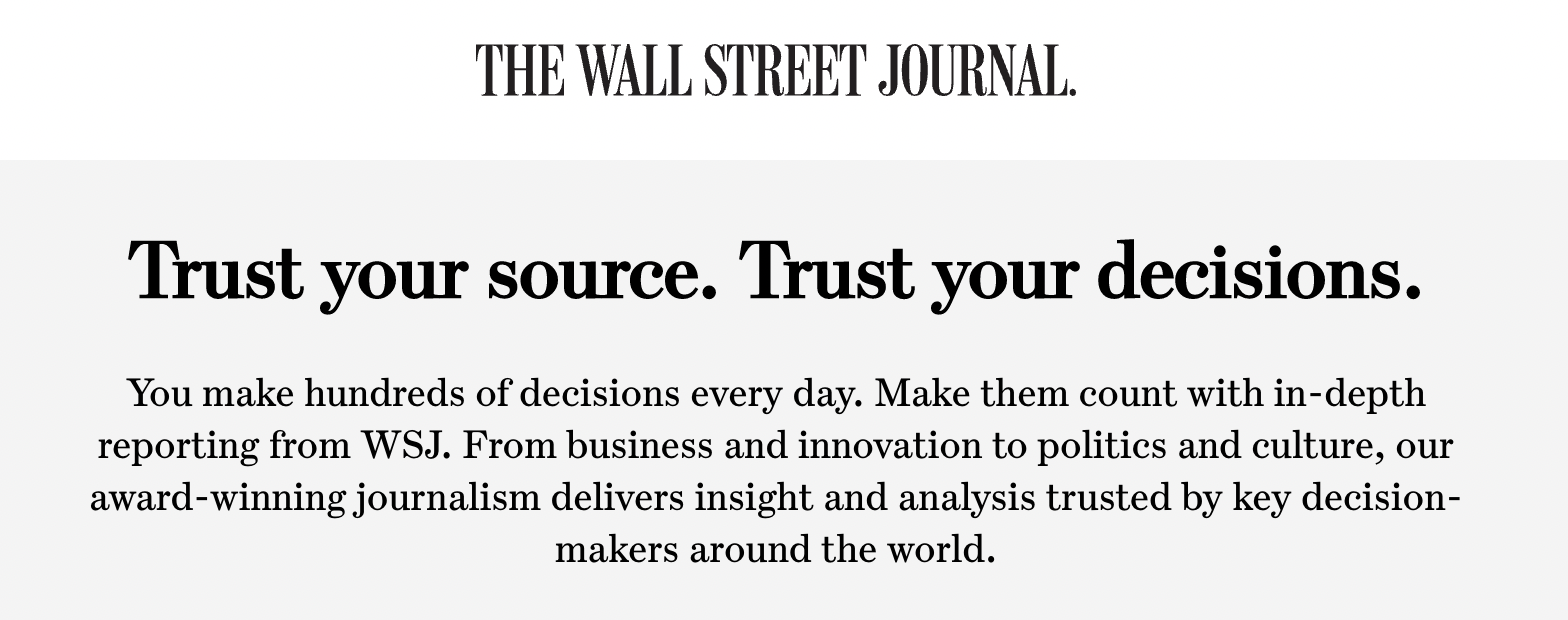
Why do they publish content? To provide trustworthy journalism that solves a pain-point for readers
What makes them different from others in the industry? The reader makes decisions daily, and WSJ will help them to make more informed decisions, more easily with trustworthy journalism, implying well-researched content written by experts.
The Sydney Morning Herald

Why choose The Sydney Morning Herald? Their “Here’s to reason” campaign is aimed at readers who reject extremism and misinformation and seek nuance, context, and perspective.
The Economist