

Khalil A. Cassimally is an audience consultant and coach who helps organisations align teams around change, user needs and AI.

Audience and funnel work succeeds or fails on internal communication, yet few people get structured support to improve it. Drawing on recent research and his own practice, he shares a practical three-step way to use AI to:
> Understand your intervention style
> Identify strengths and gaps in how you communicate
> Take small, intentional steps to improve how your communication skills
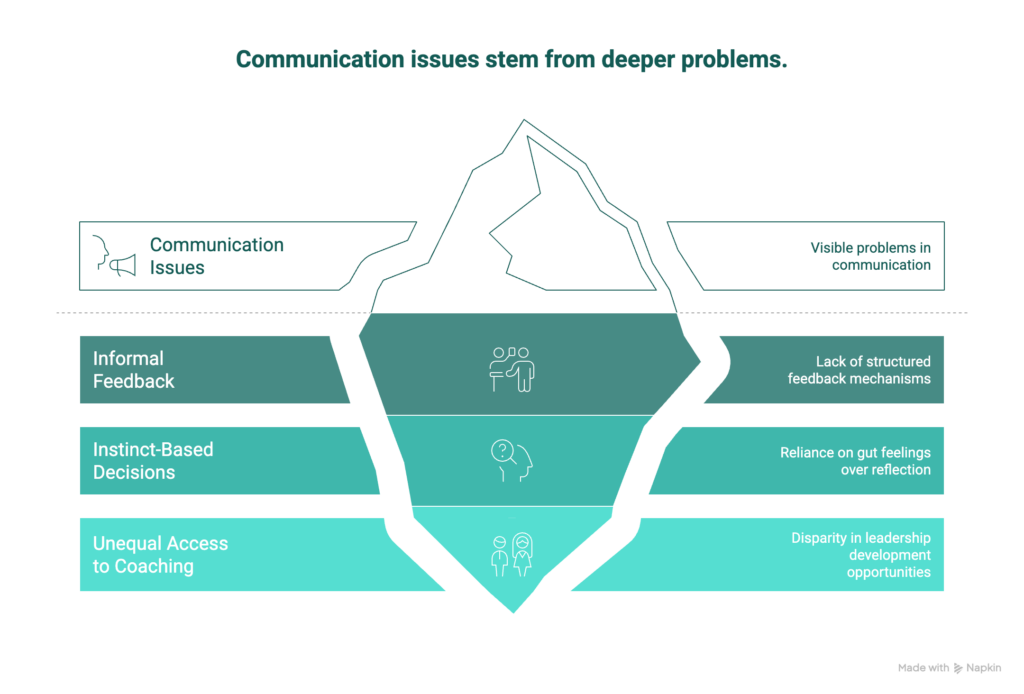
Most audience and product work lives or dies on internal communication.
Yet, communication is also where many people struggle. Doing it well can be hard! And while senior executives may have access to coaching and leadership programmes, the people doing much of the day-to-day work rarely do.
This is where AI becomes interesting.
In an article published by Harvard Business Review (HBR) last year, researchers Katharina Lange and José Parra-Moyano explored whether AI could support intervention improvement in a way comparable to human coaching. Working with 167 global executives, they used AI to analyse real conversations and provide feedback, which participants then compared with feedback from human observers.
The results were telling. About 30% of participants received feedback that largely validated what they already believed about their intervention styles. More importantly, around 55% landed in what the researchers called the “zone of learning”: the feedback was both surprising and useful, sparking new insights.
My takeaway from this research isn’t that AI replaces human coaches but that reflective feedback can be made far more accessible than traditional coaching ever allows.
Inspired by their research, I built a repeatable process for using AI chatbots like ChatGPT and Gemini to improve my own interventions.
The research-informed process breaks down improvement into three phases:
- Understanding intervention style
- Identifying strengths and gaps
- Taking steps to improve how to intervene
Phase 1: understand your intervention style
Understanding how you currently communicate is the first step to improvement. To achieve this, you have to understand your preferred style – which you can do systematically with some anonymised transcripts and specific prompts.
> Use a shared language: John Heron’s categories of intervention
Most of us have default patterns of intervention. We need to name those patterns otherwise “communicating better” remains vague. To do this well, we need a shared language.