The Next Gen News Report 2 (NGN2), a collaboration between FT Strategies, Medill Knight Lab, and the Google News Initiative, provides a roadmap for news organizations to reach younger audiences. The core of the report is the 7 Modes of Engagement, which distinguishes how "next gen" consumers (ages 18-25+) discover, consume, and share news.
To reach the next generation of news consumers, publishers must stop thinking about “the audience” as a monolith and start designing for specific “modes” of behavior. The second Next Gen News report reveals that younger consumers are not passive; they are active “information curators” who cycle through seven distinct mindsets.
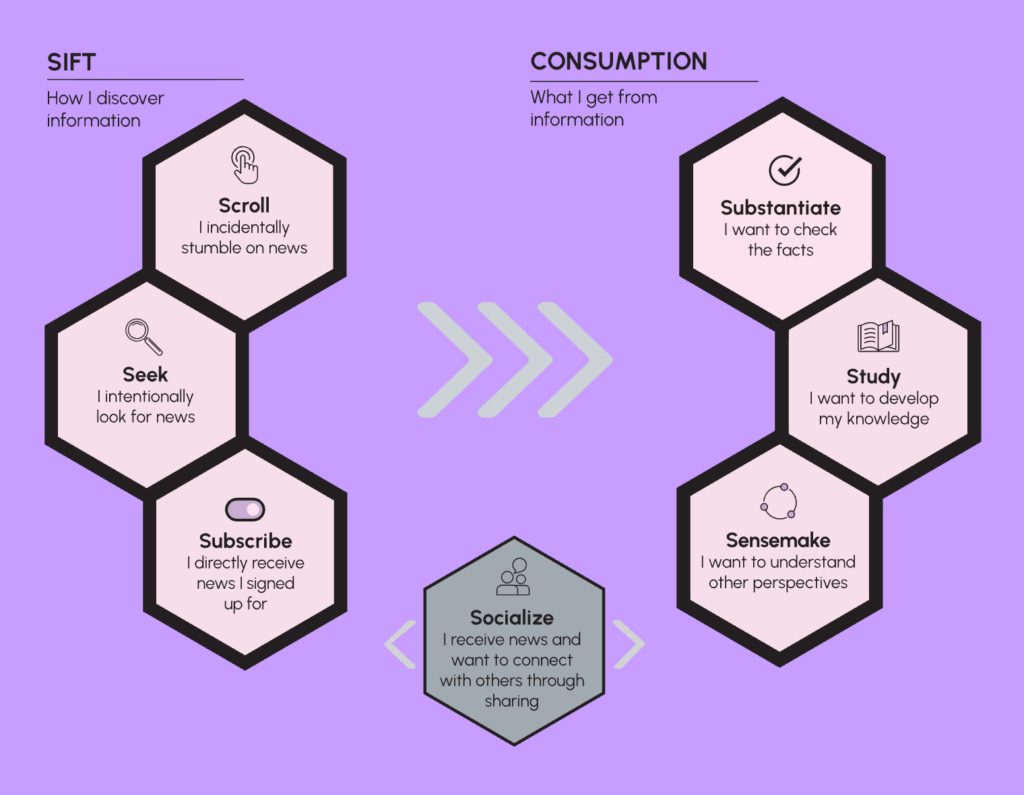
Let’s breakdown the 7 Modes of Engagement and uncover how you can win in them.
1. The “Sift” Modes: how news is discovered
In sift modes, users filter through their chosen information environments to separate news from noise.
Across all markets studied, the report finds that young consumers actively curate their information ecosystems, seeking to reduce the daily mental load from sifting through endless content. Consumers intentionally mold their environment to refine and filter the news sources they encounter.
Observing this shaping process in the field showcases how sifting is richer than originally thought, now defined through three distinct modes of news discovery:
Mode 1: Scroll
❤️🔥 The vibe: passively encountering news whilst browsing social feeds
🕺 The energy: engagement is often spontaneous and fleeting, shaped by the emerging news producers they follow and platform algorithms.
💪 The strategy: intentionally create content that feels native to the platform and find patterns that break through to capture fleeting attention in the few seconds before viewers scroll to the next post
How to win at Scroll mode:
- Post consistently and predictably
- Balance the tone to make news entertaining without trivializing serious events
- Develop repeatable storytelling templates.
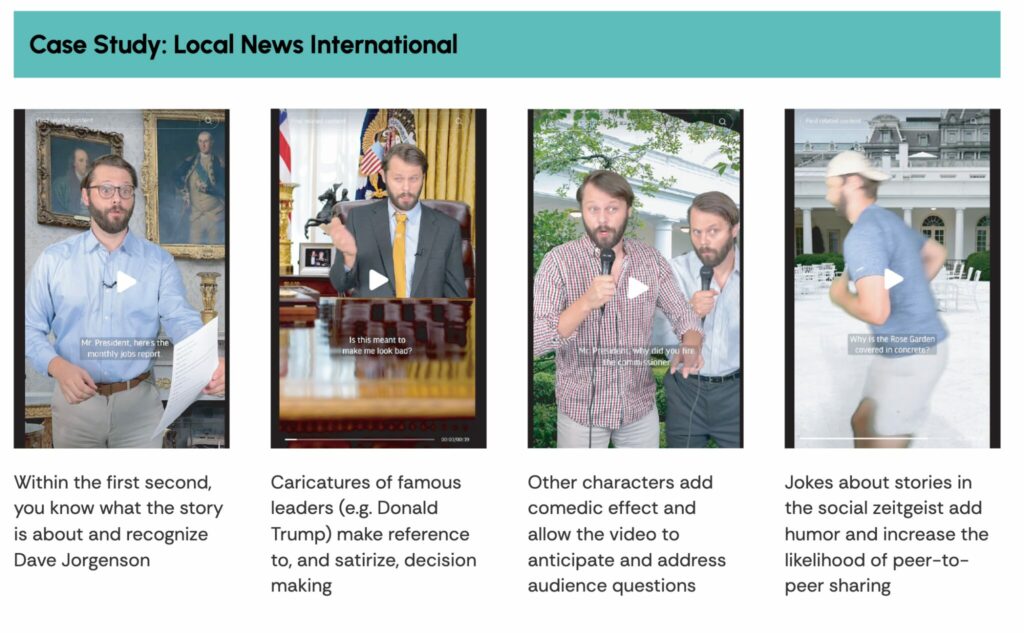
Case Study: Local News International. Using “Dave,” a recurring character who plays the role of the viewer, they use skits and satire to cover complex news in 40 seconds. By using a consistent personality and humor, they stop the scroll and build a recognizable brand identity without formal news constraints.
Mode 2: Seek
❤️🔥 The vibe: actively looking for information on a specific event or topic
🕺 The energy: a highly intentional mode of engagement, where consumers look for efficient, information-rich content that delivers depth and relevance without distraction
💪 The strategy: anticipate information needs and make depth accessible without friction, ensuring that credibility, clarity and efficiency guide every interaction.
How to win at Seek mode
- Guide discovery
- Deliver curated briefings
- Offer live formats that capitalize on immediate interest.
- Create seamless, intelligent discovery experiences (such as Ask FT or Ask The Post)
- Design intuitive interfaces within owned and operated platforms
- Provide high utility & control, such as personalization and tailored formats based on preferences, such as listening or watching
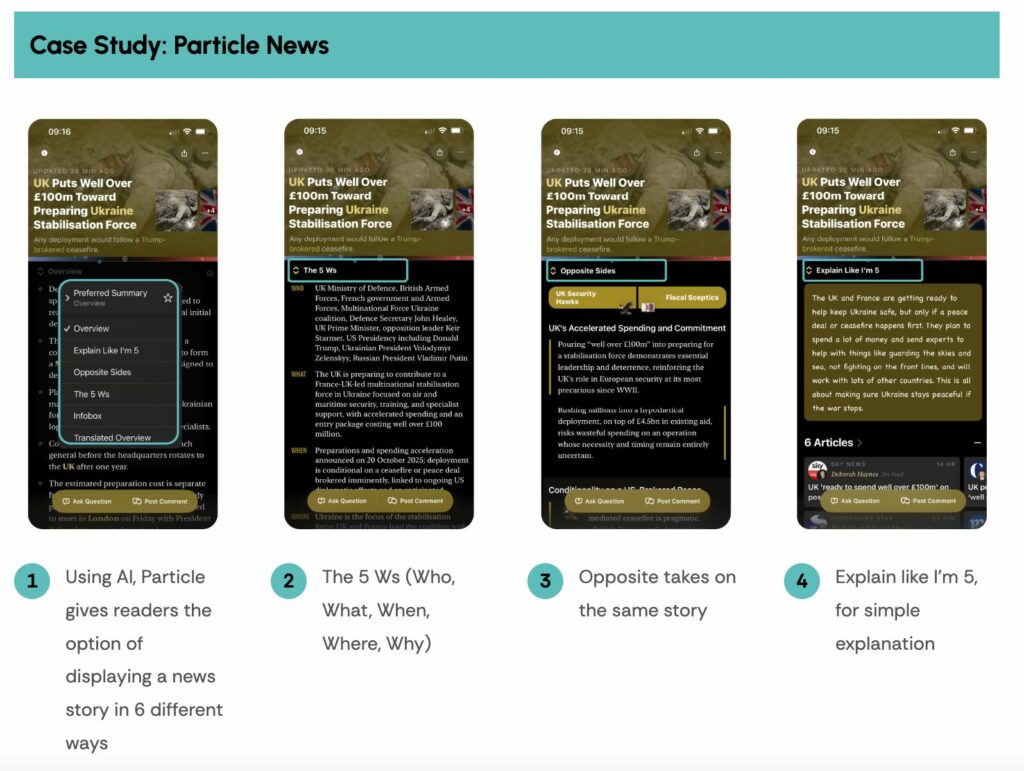
Case study: Particle News. Using AI, Particle gives readers the option of discplaying a news story in 6 different ways, including the 5 Ws, opposite takes on the same story or “Explain like I’m 5”
Mode 3: Subscribe
❤️🔥 The vibe: receiving news from trusted, curated sources (newsletters, podcasts, SMS) they have deliberately chosen
🕺 The energy: people expect timely, important or novel updates from sources whose judgement they rely on and do not want to miss
💪 The strategy: timely, important or novel updates from reliable sources
How to win at Subscribe
- Sync with daily habits: design delivery around audience routines and preferences, not output cycle, and consider offering personalized delivery
- Make subscribe content dense and easy to complete
- Standardize the skeleton for instant scanning
- Keep it short, but provide options to go deeper
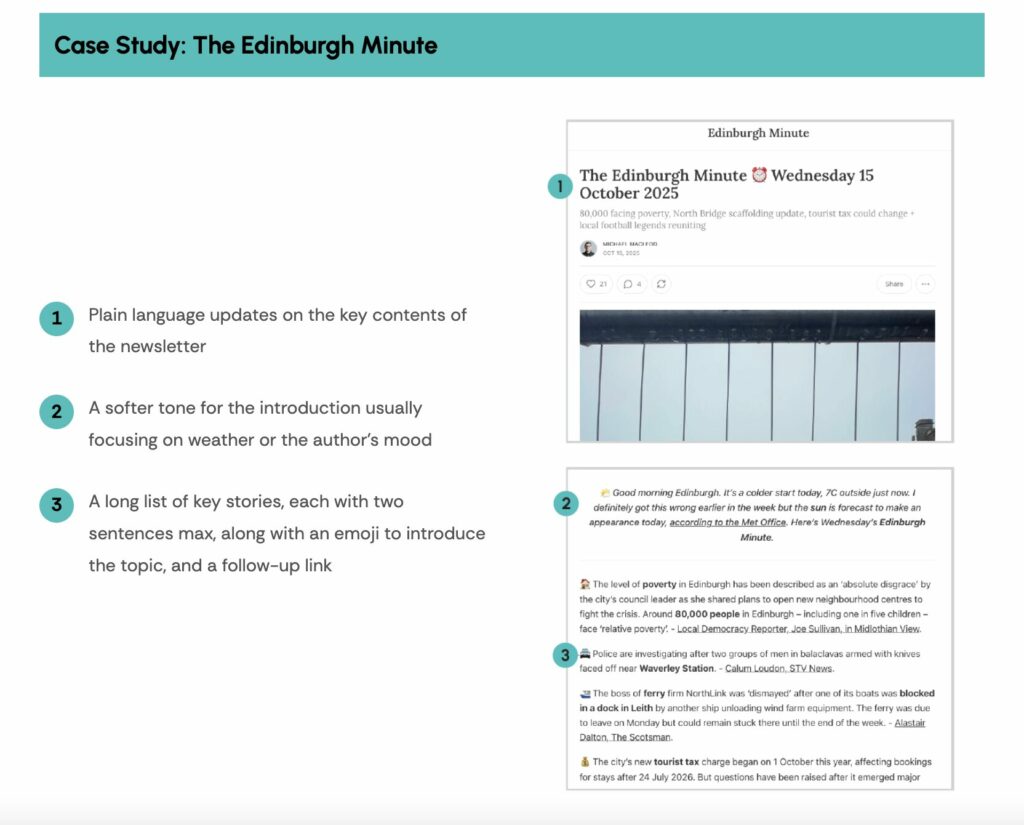
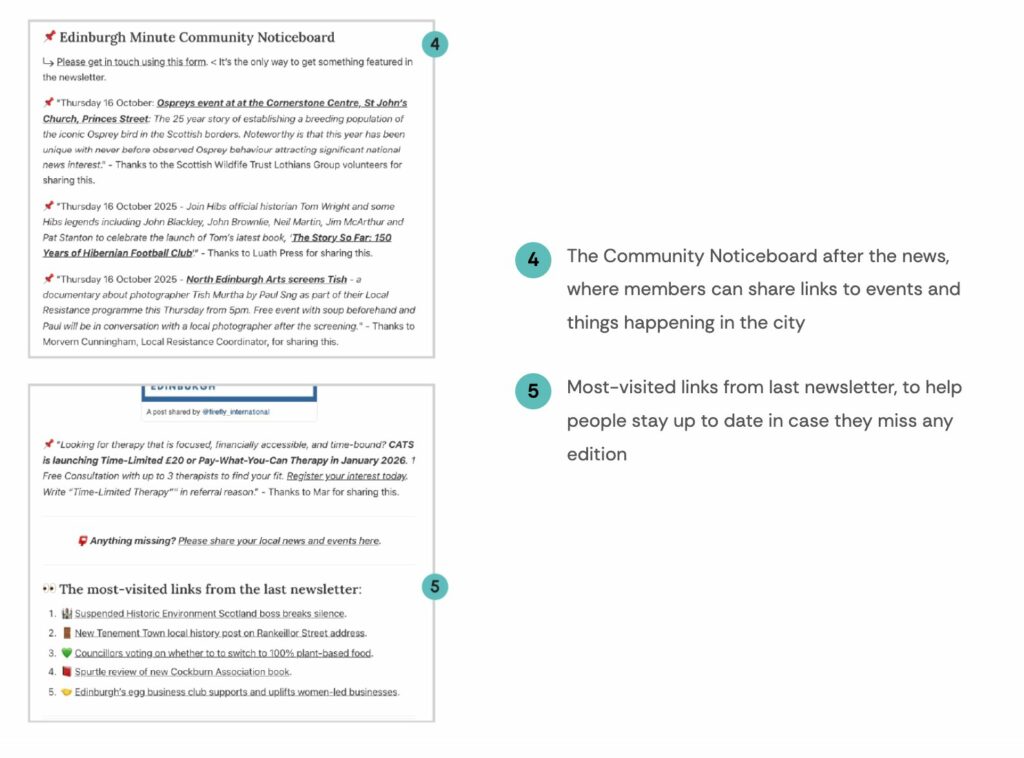
Case Study: The Edinburgh Minute. Short paragraphs, plain language, softer tone in the introduction. A long list of key stories, each with two sentences max, along with an emoji to introduce the topic, and a follow-up link.
2. The “Consumption” Modes: how news is processed
In consumption modes, users have chosen to explore a subject, topic or piece of content more deeply.
Audiences are more likely to engage further when a story feels personally relevant, emotionally resonant or sparks their curiosity. How they first encounter that story does not dictate what happens next. Differing motivations shape how individuals choose to go deeper, whether by verifying facts, exploring context, or interpreting different perspectives.
The 2025 findings reinforce the three modes we previously identified that capture how audiences engage more deeply with the news once they move beyond sifting. These modes are:
Mode 4: Substantiate
❤️🔥 The vibe: verifying if a story is true or finding the "raw" facts.
🕺 The energy: an individual has found a piece of information and wants to quickly and credibly confirm it
💪 The strategy: create content that is promptly delivered after a breaking news event, focusing on main claims and facts, with simple, clear and digestible evidence at its core
How to win at Substantiate mode:
- Meet your users where they are
- Prioritize accuracy and relevance over speed or volume
- Push information directly to audiences
- Lead with facts
- Create quick, easily digestible formats
- Show your working: stitch primary source materials into the content and show the process
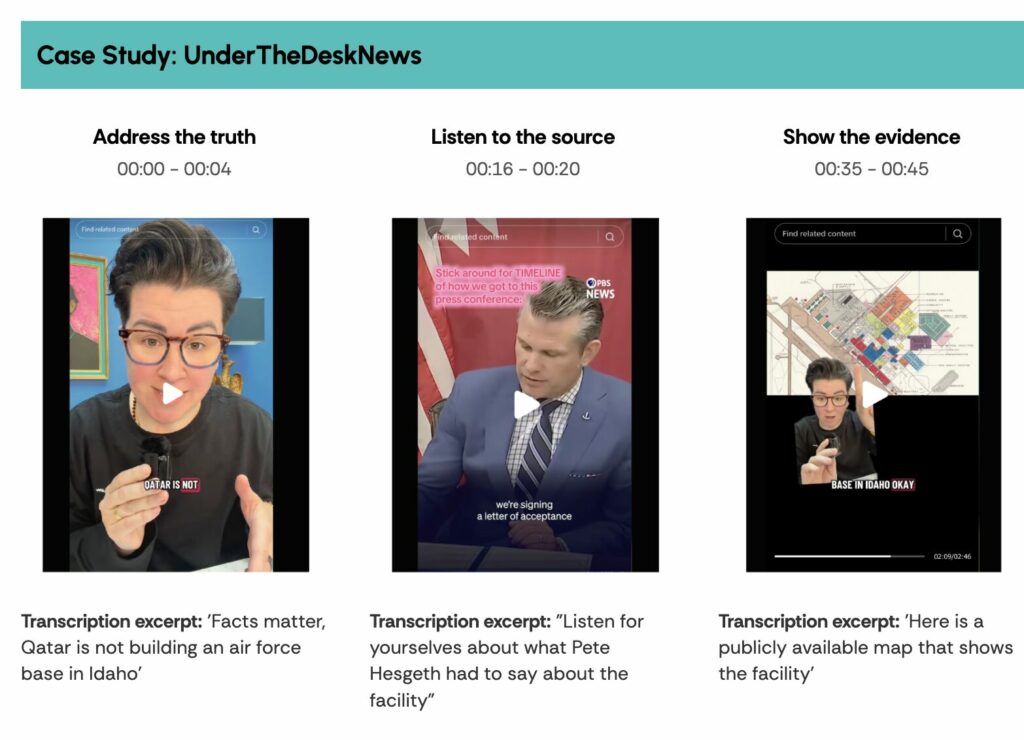
Case Study: UnderTheDeskNews. They often presents sources behind the presenter, such as maps of military facilities, to promote substantiation. These successful news producers clearly annotate from where information has come using overlays on videos or references in text, and they include links in captions and bios
Mode 5: Study
❤️🔥 The vibe: going deep to master a topic of personal or professional interest
🕺 The energy: a desire to learn, upskill and be inspired. For some, Study mode is a pleasant distraction
💪 The strategy: producers can create long-form, information-dense content that has high-production value to keep engagement high, while showcasing their lived experience as a means to draw users into the story.
How to win at Study mode:
- Bring the story to life through immersion.
- Show interest
- Open with the motive, not just the topic
- Use mini-brands or shows as a creative sandbox
- Start with a learning goal to orient the audience and prime attention
- Favor evergreen or under-explored themes
- Build concepts progressively and go deep
- Bring it to life: gather original evidence, showcase it in original ways and develop a signature form
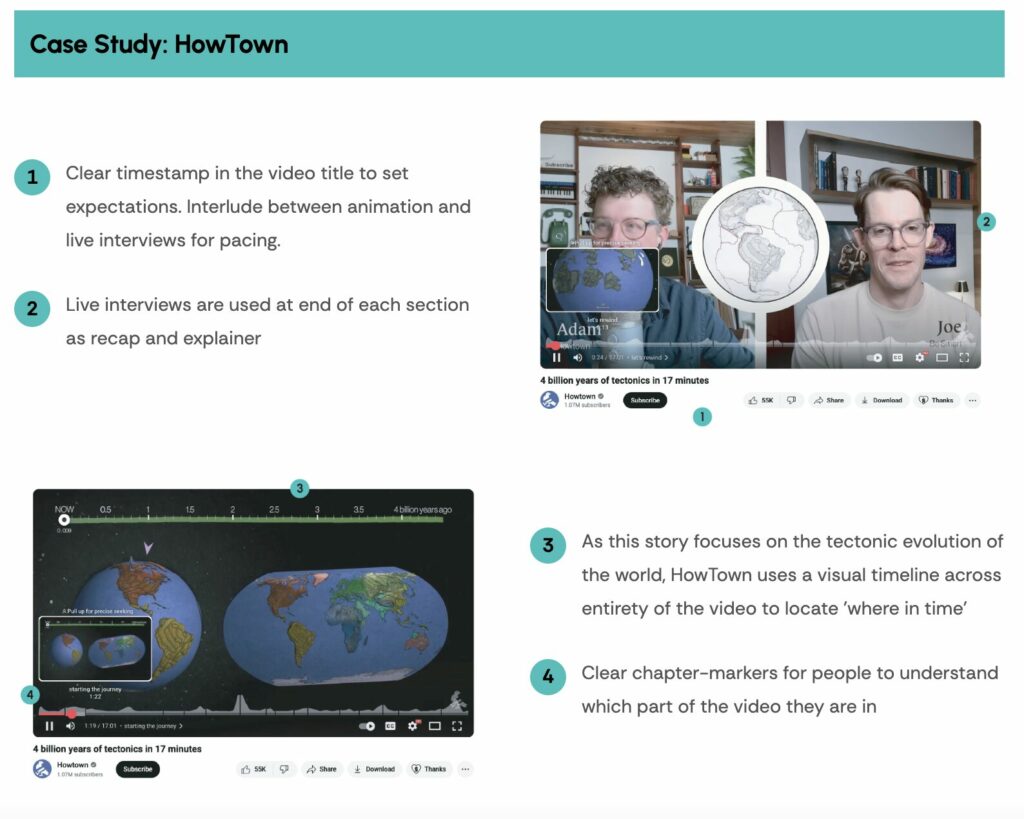
Case study: HowTown. 15-plus-minute long-form videos that have clear chapter markers and distill key information while allowing users to easily go back or skip specific sections.
Mode 6: sensemake
❤️🔥 The vibe: looking for context to understand why a story matters and what to think about it
🕺 The energy: exploring different viewpoints to form opinions. This mode is driven by curiosity and a desire for co-learning spaces
💪 The strategy: create spaces that invite perspective and transparency, helping audiences process disagreement and find orientation amid uncertainty
How to win at Sensemake mode:
- Create open conversations
- Create open spaces for honest conversation where producers and audiences can think aloud
- Clearly disclose your intention, bias or viewpoint
- Orient and include the audience: vary show formats to deepen engagement and reach audiences across information needs
- Use livestreams to transform news into a shared, real-time act
- Use satire wisely (it should stimulate critical thinking): build recurring inside jokes to make complex topics feel approachable and foster a sense of belonging
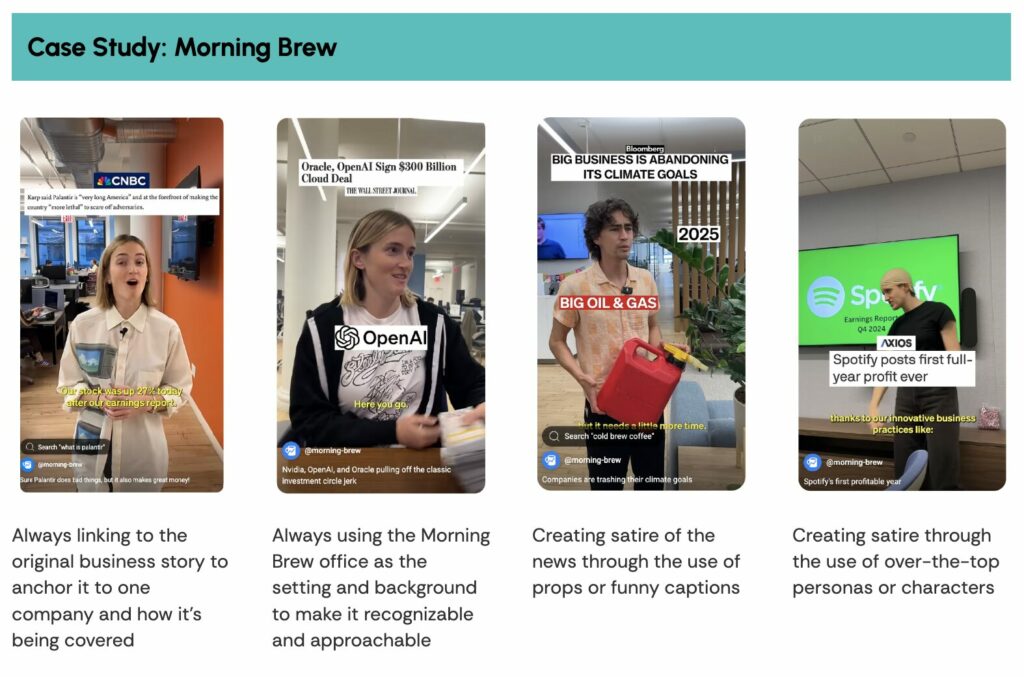
Case Study: Morning Brew. Always linking to the original business story to anchor it to one company and how it’s being covered. Satire is created through the use of props, funny captions and over-the-top personas or characters.
3. The “Social” Mode: how news is shared
Mode 7: Socialize
❤️🔥 The vibe: sharing news to connect with others, express identity, or start a conversation. Sharing news is less a discrete consumption habit and more of a long-term relational action to be considered in its own context.
🕺 The energy: there is no more valued, trusted source than friends and family, and often these connections help cut through content overwhelm.
💪 The strategy: build for sharing!
How to win the Social mode:
- Make sharing a “product feature” that makes the action effortless for readers
- Create content that people want to send to their peers
- Leading news producers tell human stories
- Consider using memes to condense meaning and inject humor
The takeaway for publishers
The “Next Gen” consumer is suffering from information overwhelm. To win, publishers must transition from being “content factories” to “mode-specific service providers.” Whether it’s winning the first two seconds of a Scroll or providing the deep-dive tools for Study, success in 2026 and beyond depends on meeting the audience exactly where they are.