David Carzon (formerly of Arte, Télérama, Libération, and Binge Audio) is a journalist, consultant, and author. This article was originally published in his newsletter Hupster, and provides a follow up from Audiencers first article on Le Monde in English, published six months after its launch in 2022.
Increasingly more publishers are launching international editions, all looking to capitalize on the potential of AI translation, particularly into English. While these announcements sound promising, I have my doubts about their viability for private media outlets.
To see if there’s real opportunity here, I sat down with Arnaud Aubron, Director of Diversification at Le Monde. Having led Le Monde in English project for four years now, he shares why they launched, the target audience, the work required for this project, and how it’s on track to become profitable in 2026.
Does that make it a replicable blueprint? It’s not that simple. I’ll let him explain…
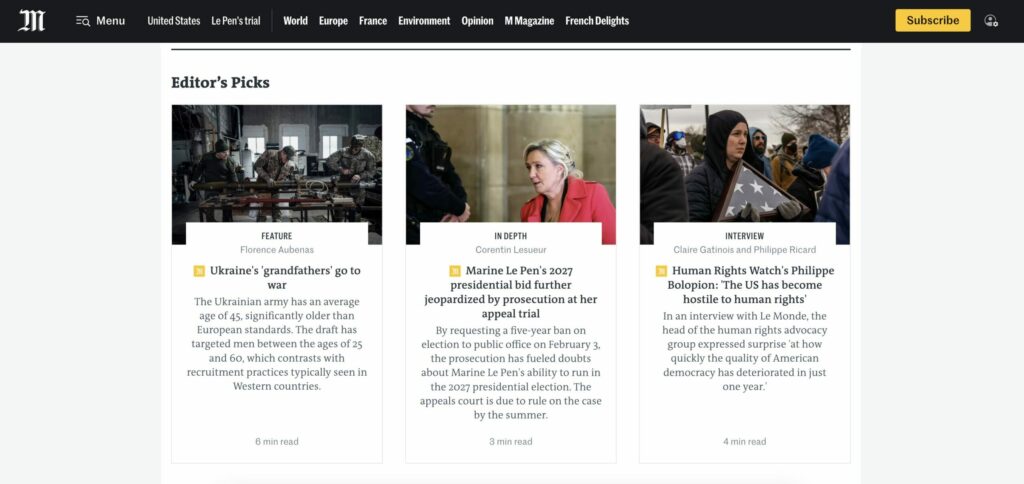
What needs did you identify that led to the launch of Le Monde in English?
The idea isn’t anything new. We actually found records of a print edition of Le Monde in English from the late ‘60s, though it didn’t last long. There’s always been this sense that a global heavyweight like Le Monde needs an English voice. To talk to the world, you speak English—and that’s truer now than ever.
The “why” was obvious, but the “how” was always too expensive. When we revisited the idea in 2021, two things changed the game: advances in AI (specifically DeepL) and the rise of digital subscriptions. Before, you’d need an army of translators, which was a non-starter. Furthermore, an ad-based model doesn’t work here because advertisers buy national, not global. Since the audience is naturally fragmented, we had to rely on a subscription-first model.