Max Moné is co-founder and CEO at Poool, the dynamic journey builder to boost subscription conversion, engagement, and loyalty.

This article is the first in his 6-part series following an analysis of 100 subscription businesses. He'll share trends, best practices and lessons for media brands with a reader revenue model.
It started with a simple idea.
We (at Poool – an awesome customer journey builder for publishers) wanted to build a “subscription moodboard”. Not a strategy, not a benchmark report. A moodboard. Like designers do when they start a project – they look at everything that exists, take screenshots, and see what patterns emerge.
So last year, we went on a little adventure: we subscribed to things.
A LOT of things. We created accounts, tested products, downloaded apps, clicked on paywalls, went through onboarding flows, tried to cancel (which is always a lot less simple). And we did this across 100 subscription business models in 15+ industries.
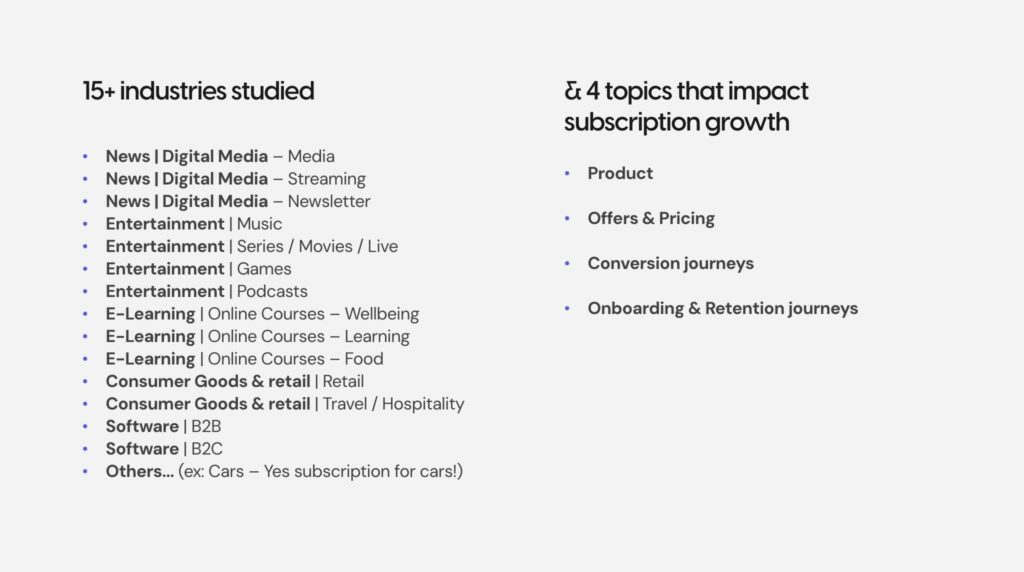
And we had a lot of fun doing it (not for the cancellation part, as you’ve understood)
Because when you start looking at subscriptions outside of media, you quickly realize that people subscribe to pretty much everything. Toilet paper (yes, Who Gives a Crap has over 40M$ in revenue, and a lot through subscription). Japanese snack boxes (TokyoTreat). Wine (Le Petit Ballon). Razors (Dollar Shave Club). Personalized coffee with a charity donation included (We Are Here). Genealogy research (FindMyPast). Cars (yes, cars). Even Walmart has a subscription now that bundles grocery delivery, Paramount+, and Burger King discounts. I’m not making this up.
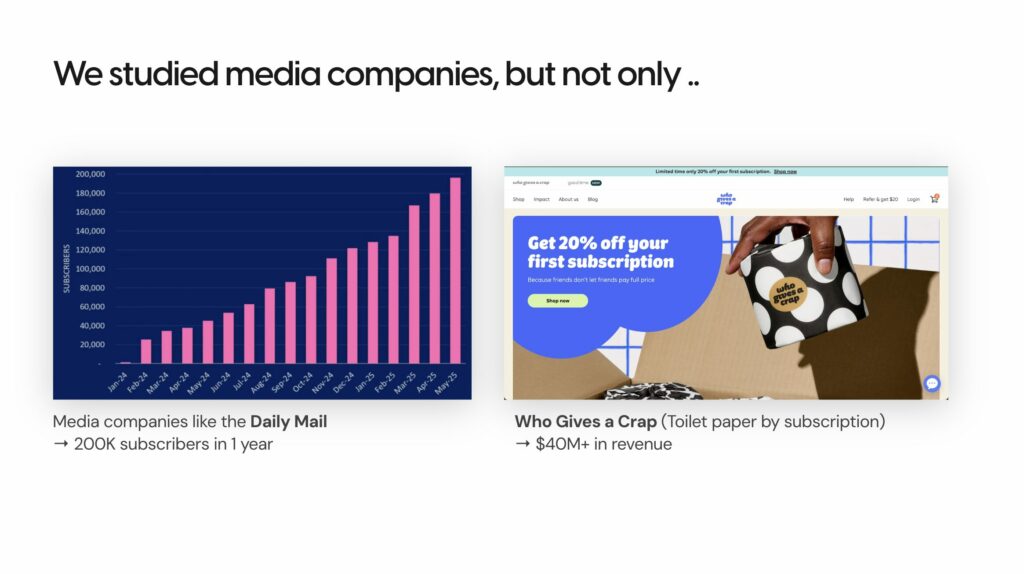
Of course we also looked at the usual suspects: Netflix, Spotify, The New York Times, Financial Times, Masterclass, Calm, Miro, Xbox, and many others. To be clear: we didn’t interview anyone. We didn’t get access to internal dashboards. We simply observed, as if we were a user. We subscribed, we tested, we unsubscribed. We took a lot of screenshots.
We then presented this moodboard to some of our clients. And their reaction was so enthusiastic that we thought: OK, let’s turn this into a series for Audiencers.
So here we are.
This is the first article of a series of 6. And the goal of this first article, is to give you a taster of what you will find in the episodes to come.
Let dive in!
What surprised us most: it’s all about engagement
OK so here’s the thing.
Historically, media companies have always been focused on page views.
More page views, more ads, more revenue. Simple.
Over the past five years, the industry shifted to subscriptions. The new priorities became conversion rates, subscriber counts, churn. That makes sense. If you’re building a subscription business, you measure subscription metrics.
But when we looked at these 100 business models, we noticed something different about the top performers.
We can’t know for sure what Spotify, Netflix or Calm measure internally. We don’t have access to their dashboards. But when you look at how their product is designed, how they onboard users, how they structure the experience, everything seems built around engagement first. Not conversion. Not retention. Engagement.
And when you think about it, it makes sense. Because the more you engage a user, the better they convert. The more engaged they are, the longer they stay. The more engaged they are, the higher their lifetime value. And the more engagement, the more money you make through advertising (volume of page views, and quality of data).
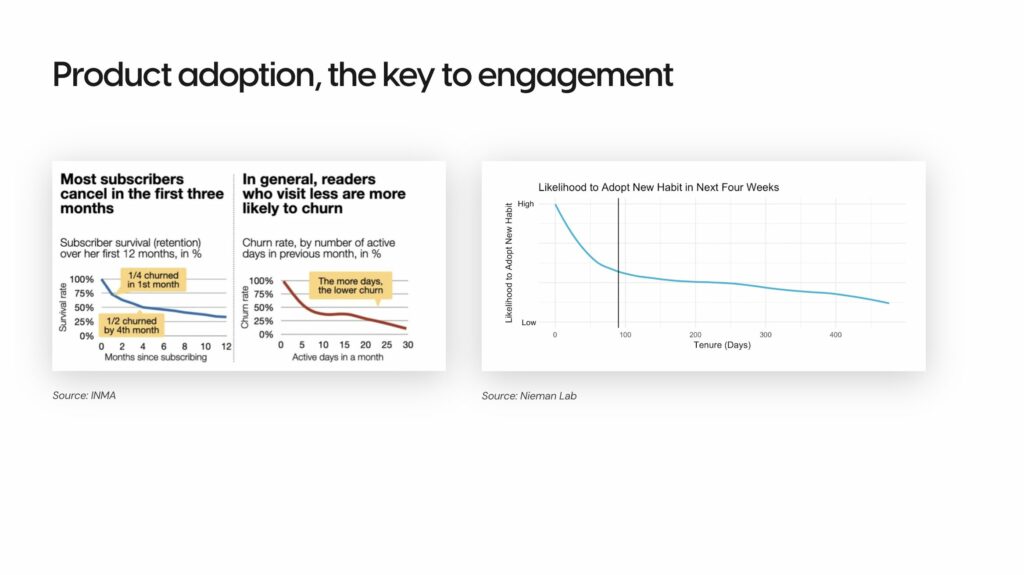
The data we have access to confirms this. INMA data shows that a quarter of subscribers churn in the first month, and half are gone by the fourth month. Nieman Lab published a study from The Wall Street Journal showing that the probability of adopting a new habit drops dramatically after 100 days.
El País shared internal data on this at an INMA event, and it’s very clear: subscribers who use editorial newsletters churn 24% less. App users churn 15% less. Premium newsletter users churn 29% less.
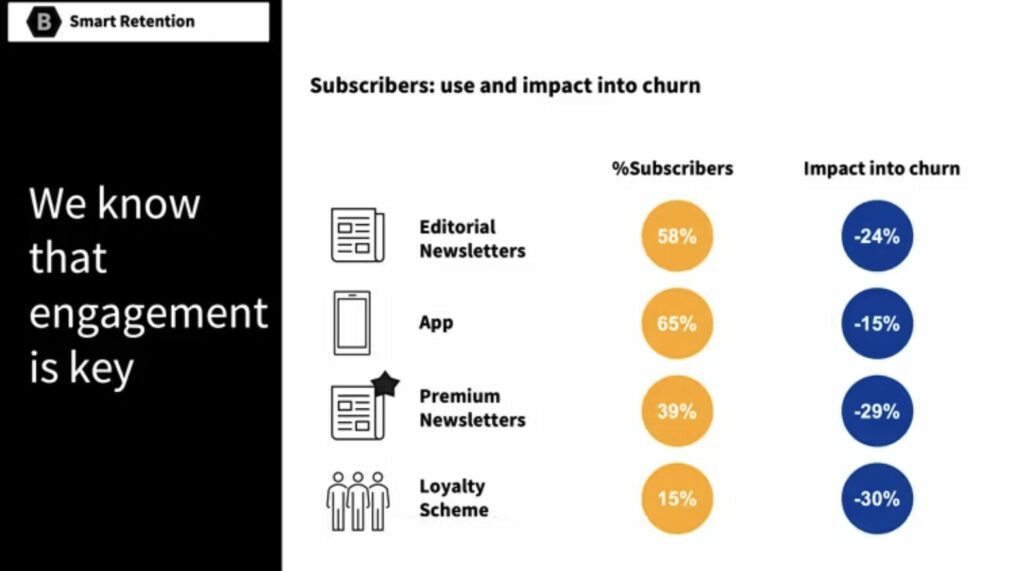
The pattern is consistent.
Engagement isn’t a consequence of conversion. It seems to be the cause of everything else.
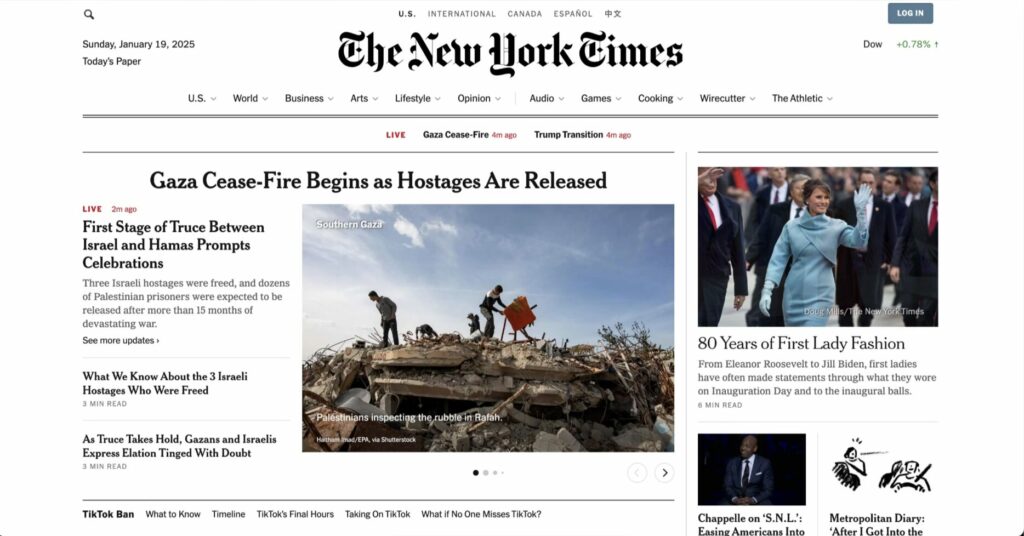
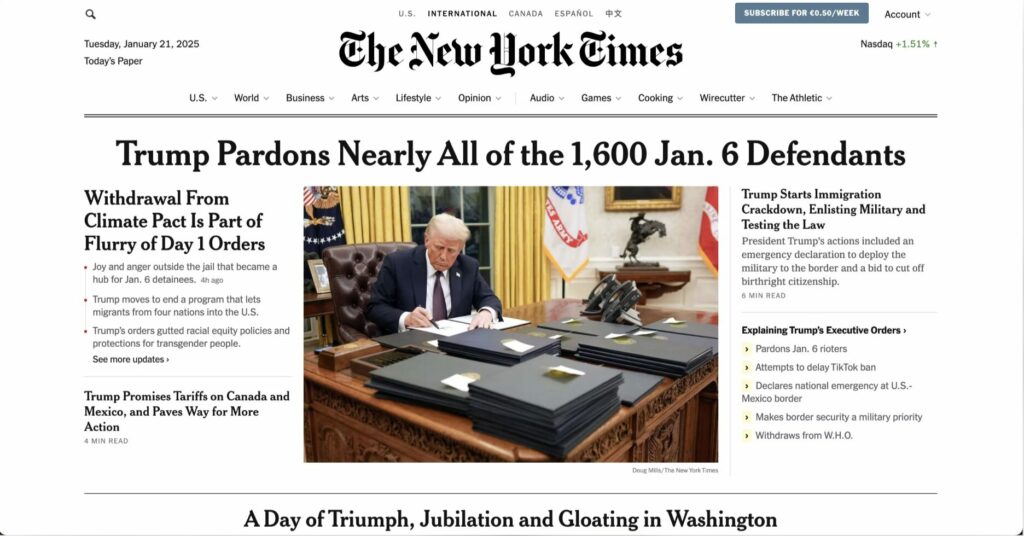
Just look at the homepage of one of the biggest newspapers in the world (you know the one) – they don’t have a single call to action here. It’s all about engagement.
From a linear subscription journey to an infinite cycle
Over the past 10 years, whether in e-commerce or in media, I’ve seen the same model everywhere. Literally everywhere.
Attract traffic → convert → let them discover the product → retain.
Aaand, we’re done.
A linear, finite sequence. It is was in every strategy deck, every conference talk, every blog.
What we observed in the best-performing subscription businesses is fundamentally different. Their journey looks more like a series of loops, with baby conversion step:
Attract → Convert at level 0 (ex: create an account) → Discover → Engage through a personalized experience → Convert at level 1 (trial) → Discover new features → Engage → Convert at level 2 (subscription level 1)… and it keeps going until it NEVER ends
What’s critical in this model is that each step has one single objective. Not two, not three. One. If the user is at the “discovery” stage, you don’t show them a subscription CTA.
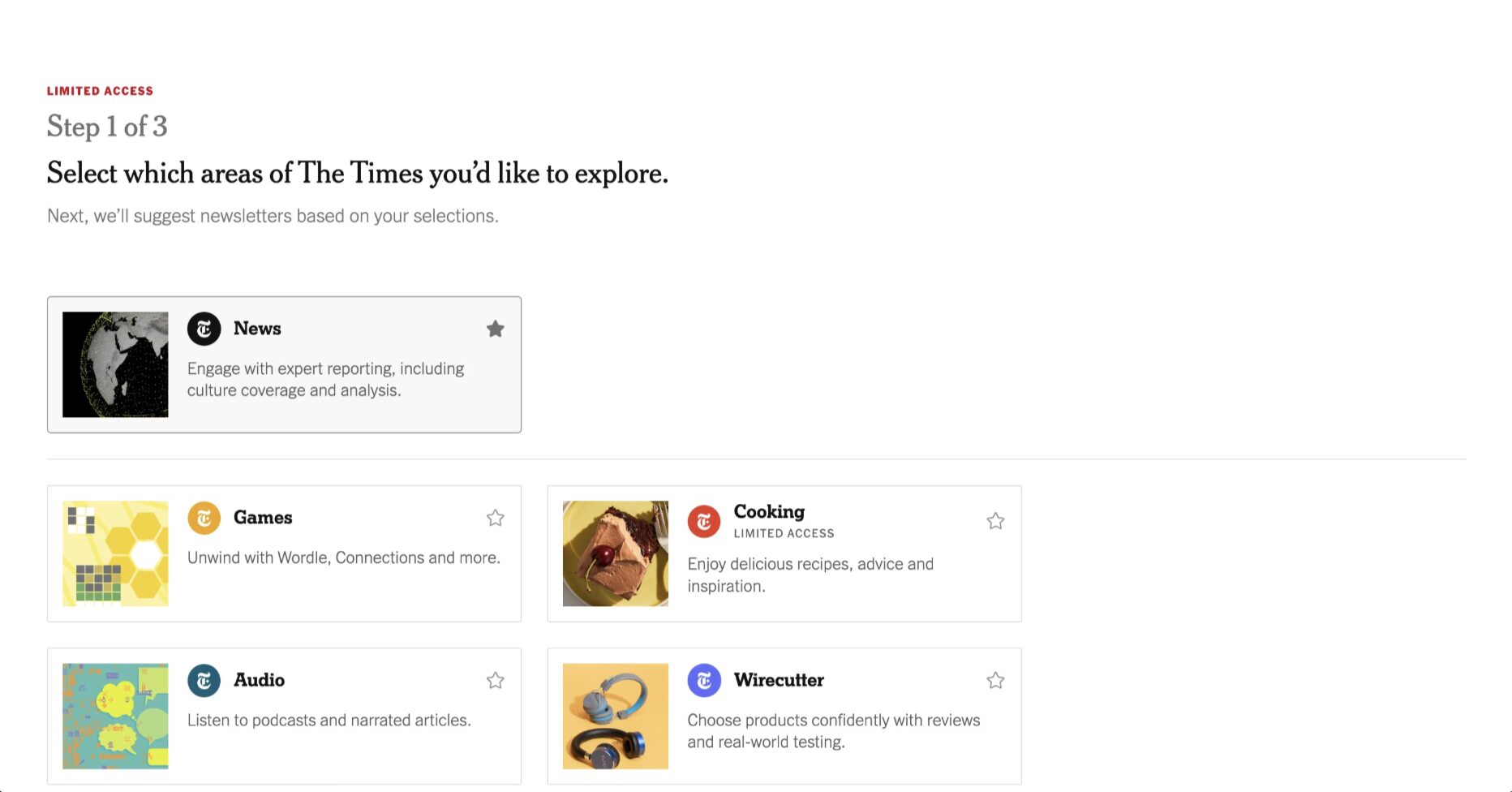
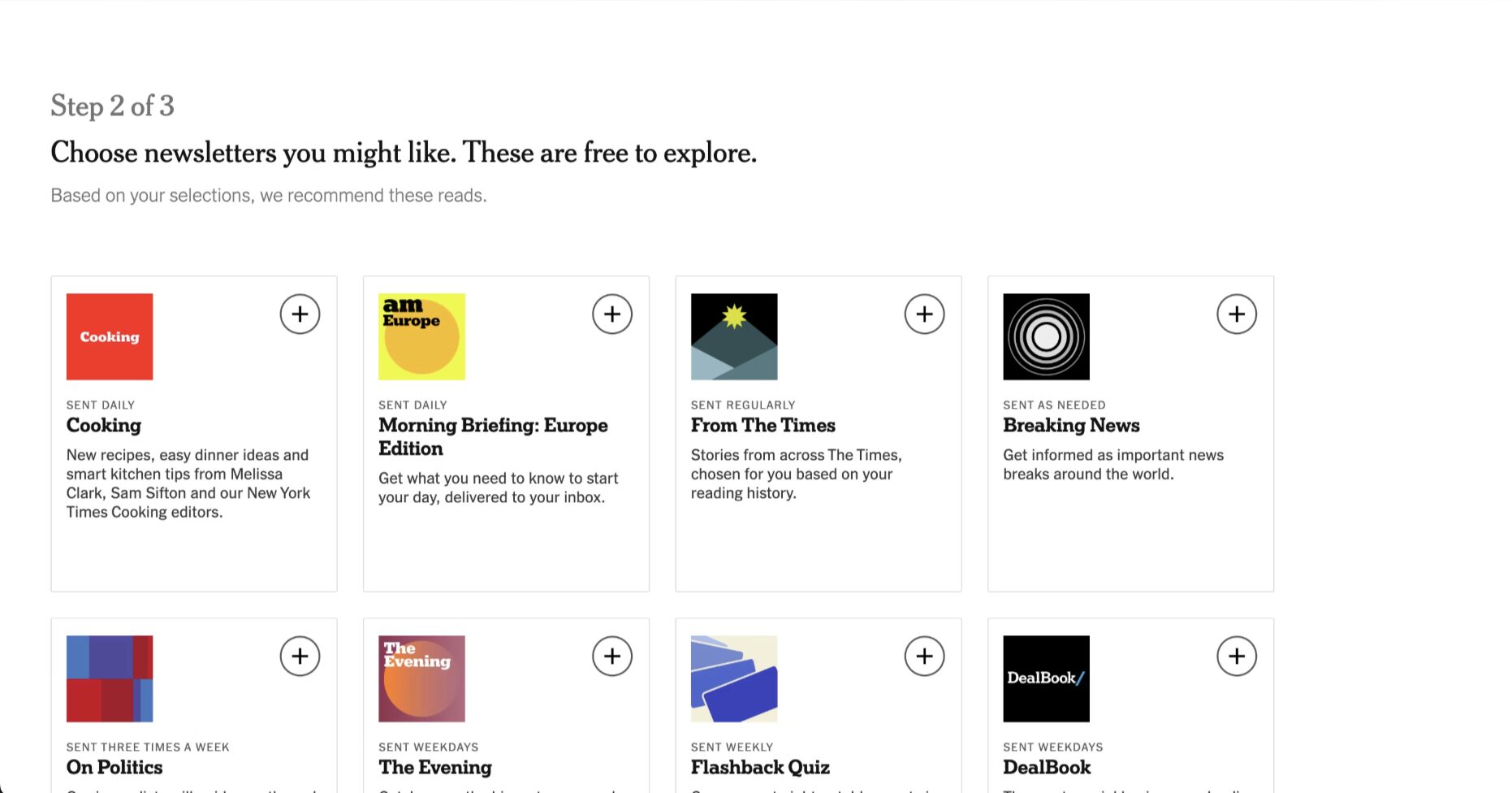
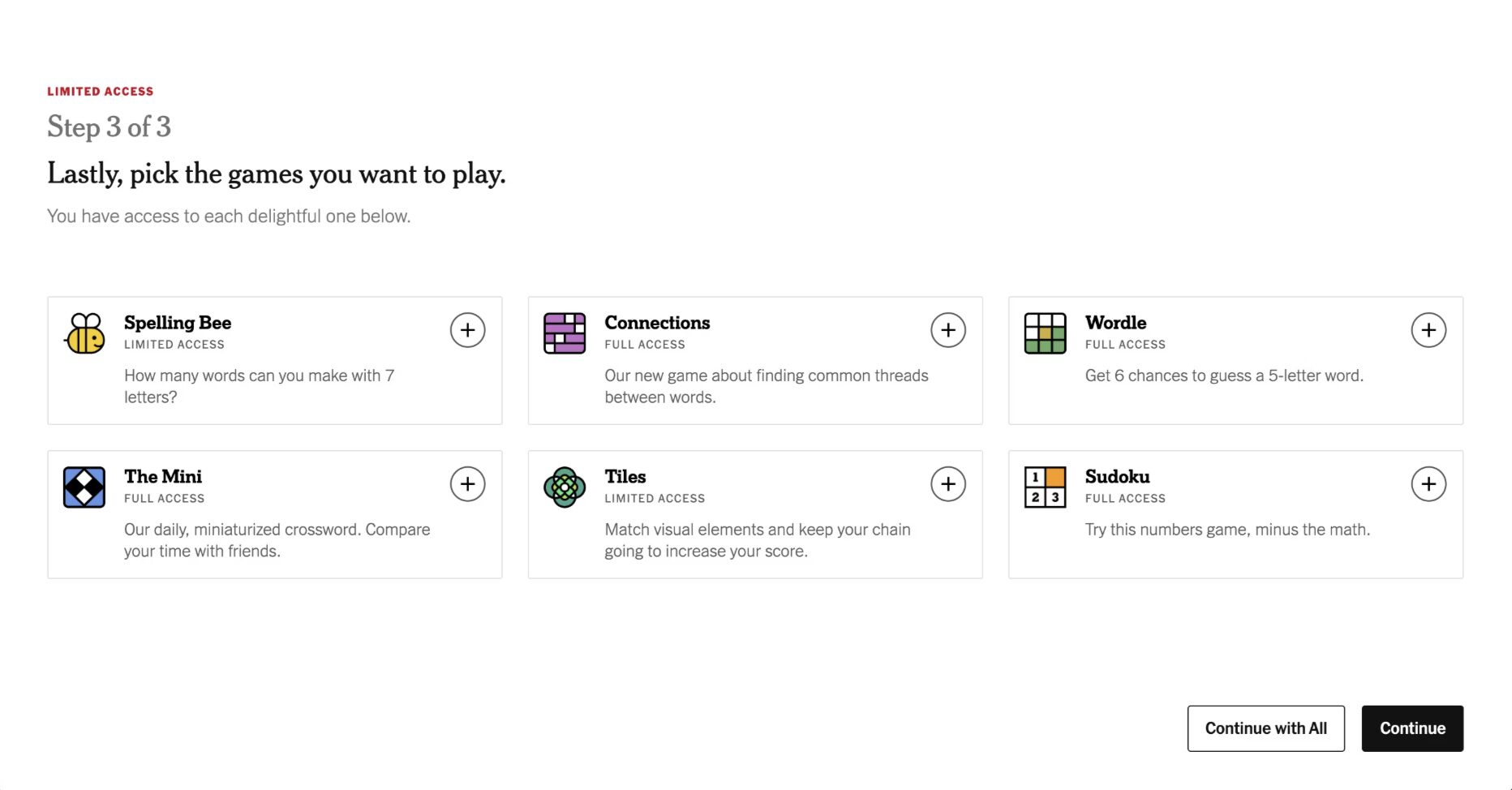
Take the New York Times. This one blew our minds a bit. When you look closely at their registration flow, there is not a single subscription CTA anywhere. Zero. None. Nada. At that stage, the only goal is to create an account, understand the user’s interests, and start personalizing the experience.
During registration, they ask which areas of The Times you want to explore. They recommend newsletters based on your selections. They let you pick games. They prompt you to download the app.
(click on the images to enlarge)
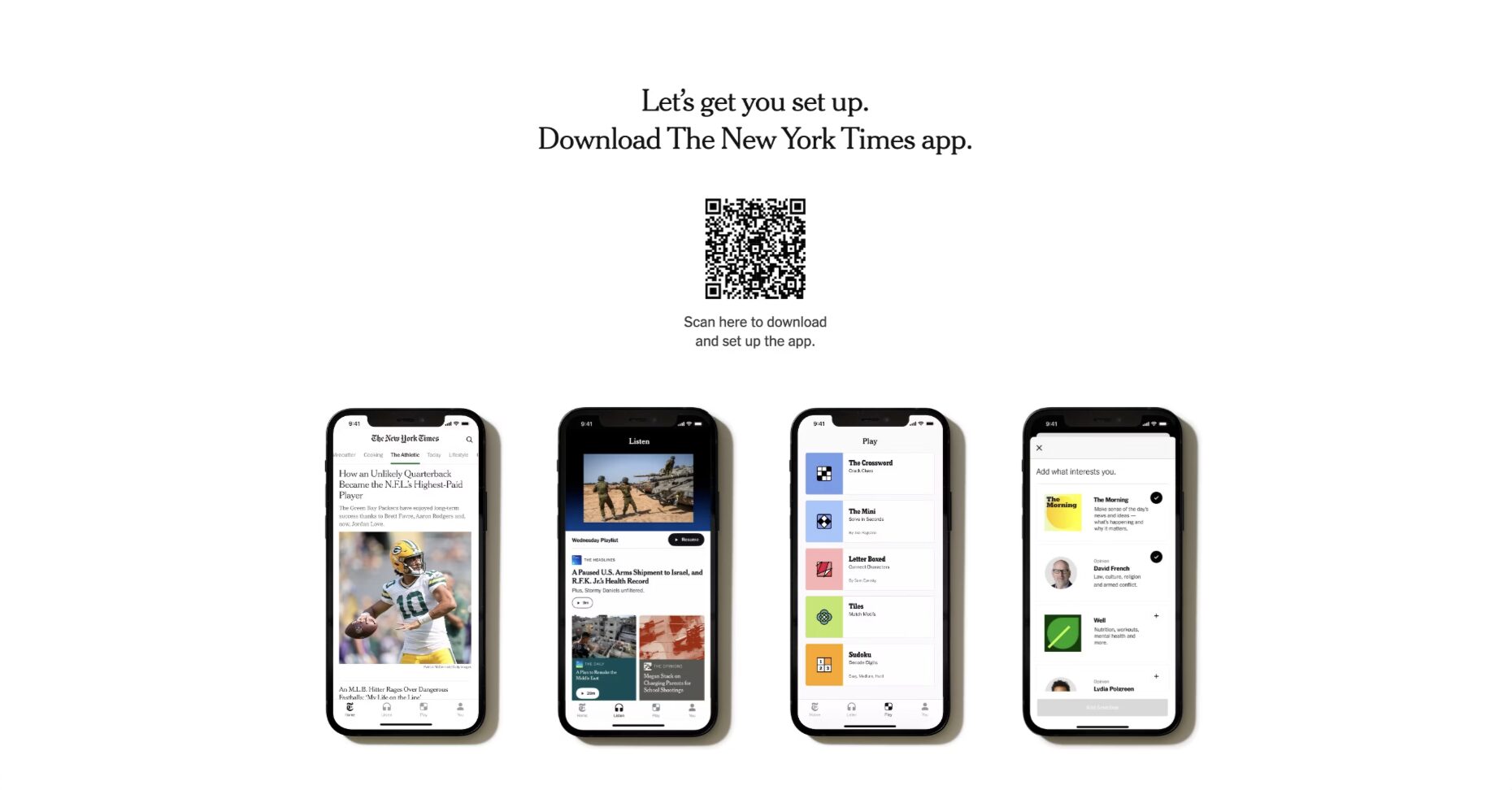
Subscription CTAs come later.
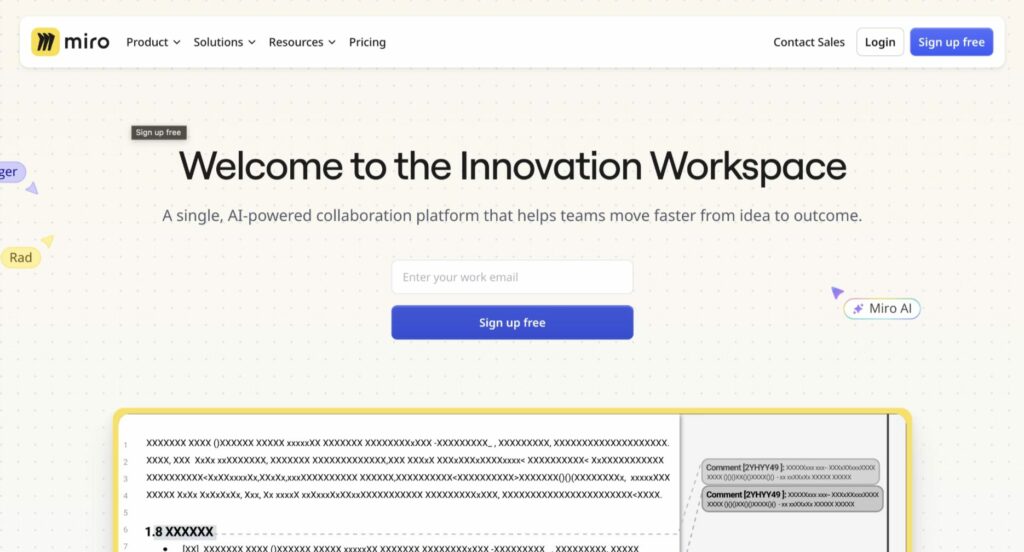
But look at Miro, a 600M€+ subscription based company, pushing a “signup for free” on the homepage. Same pattern here.
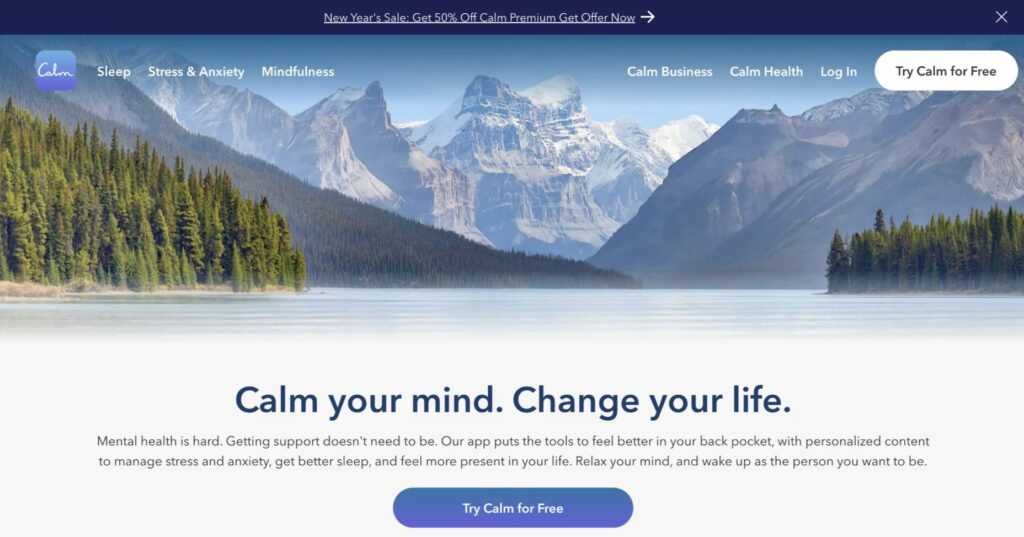
Calm does the same. Before you can start a free trial, they ask you more than 10 questions. How have you been feeling? What’s your biggest source of stress? What are your goals? They literally build a custom experience for you before asking you for log in or money. I found that pretty remarkable for a meditation app.
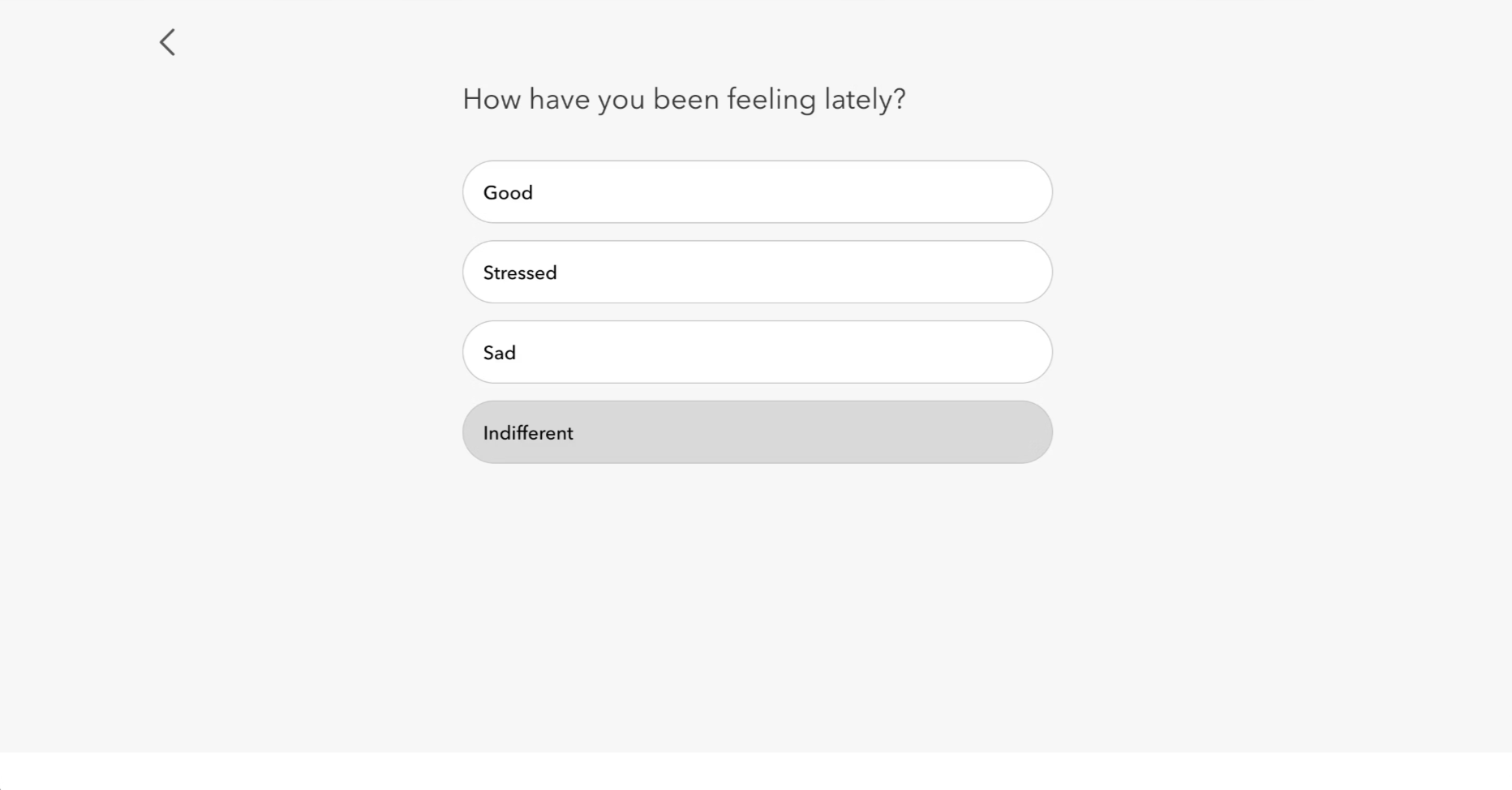
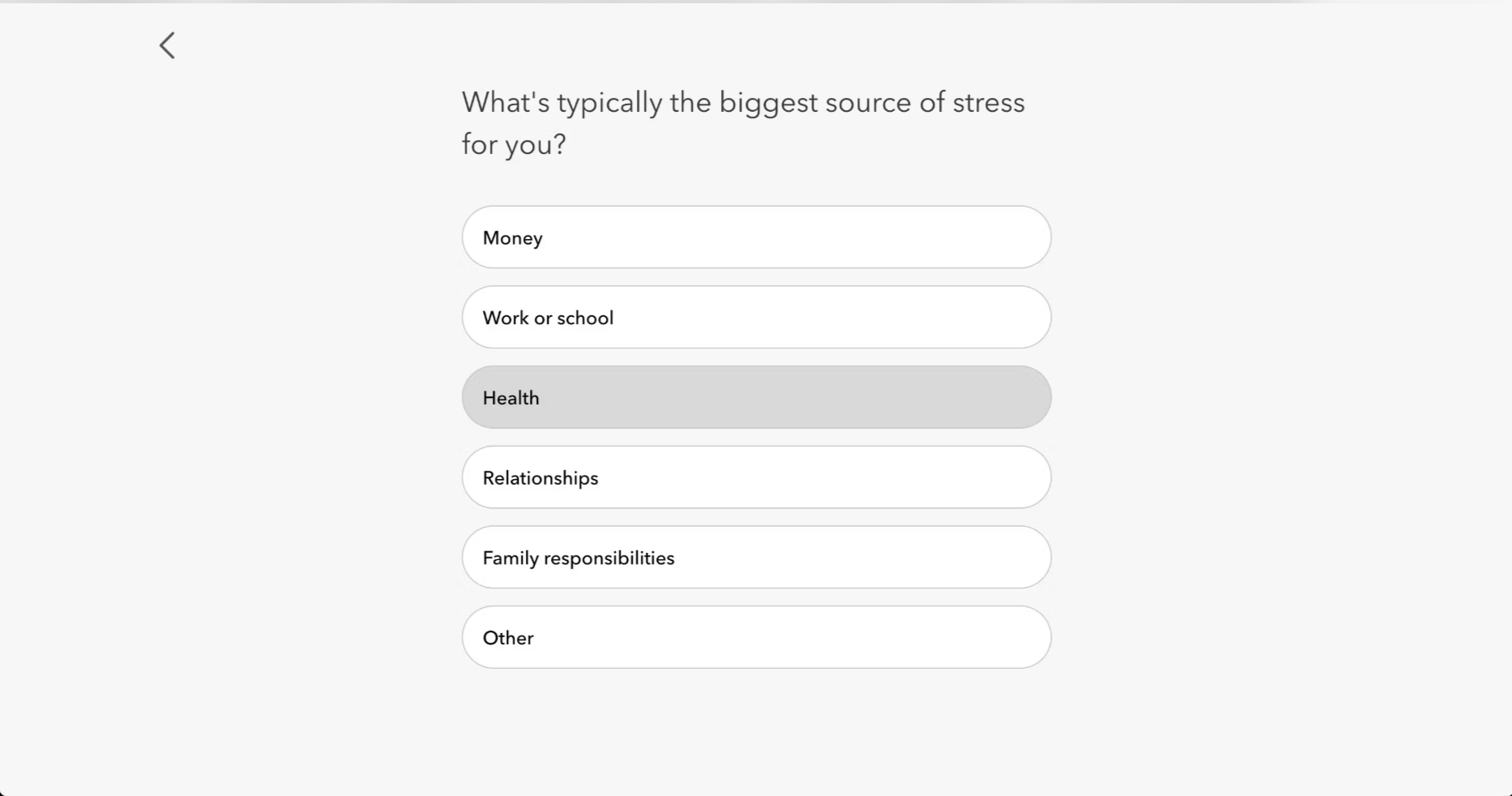
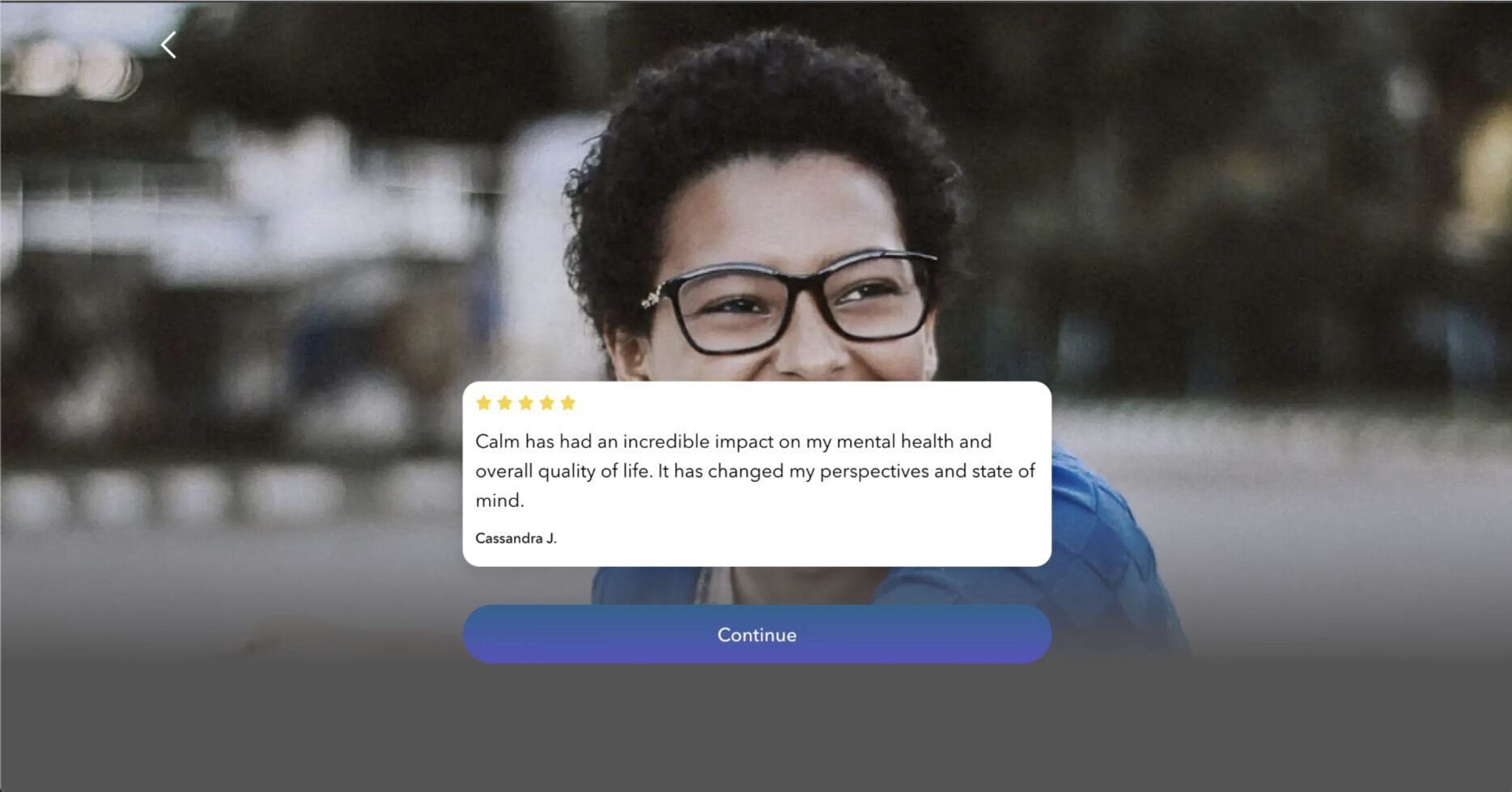
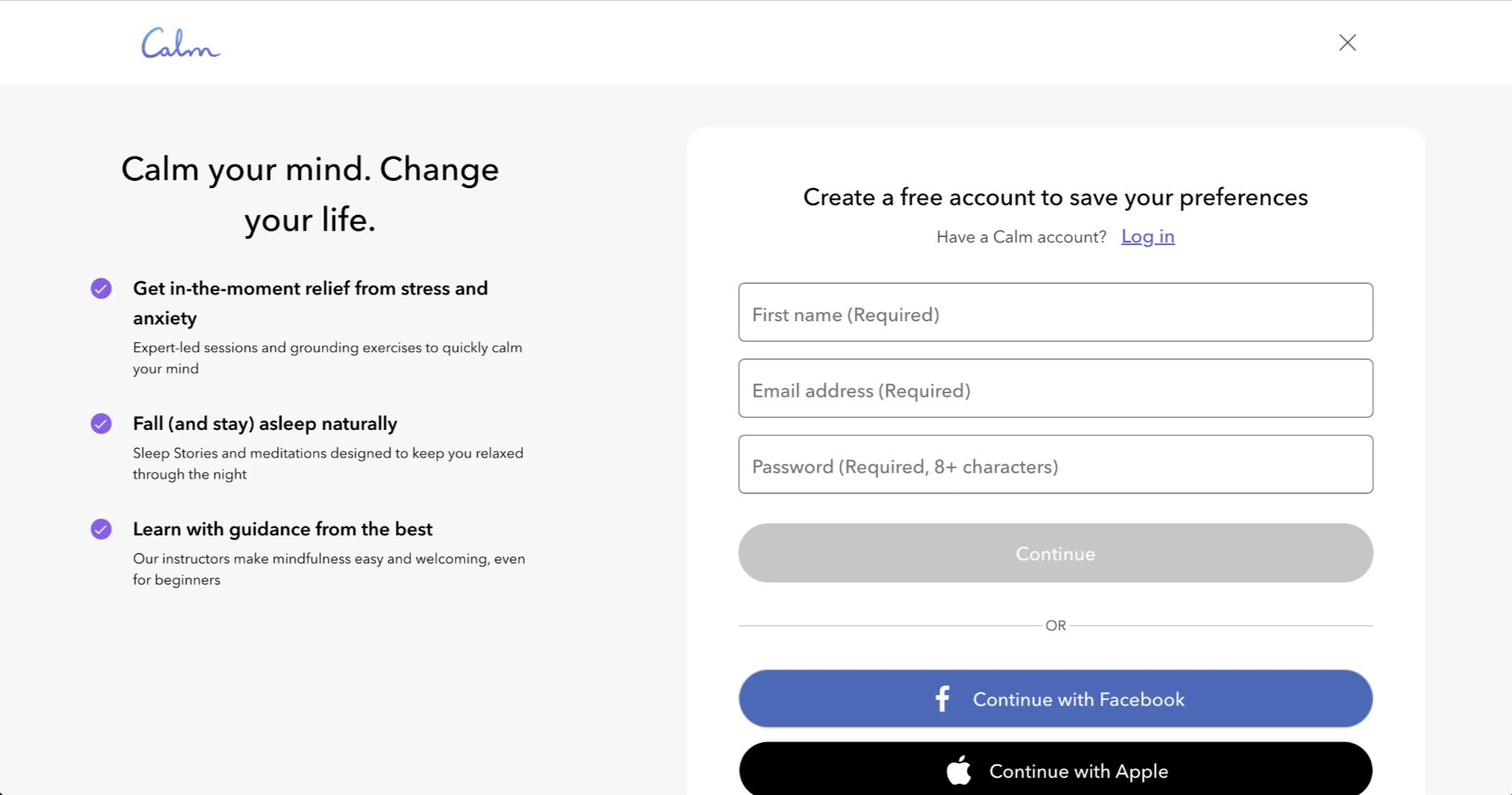
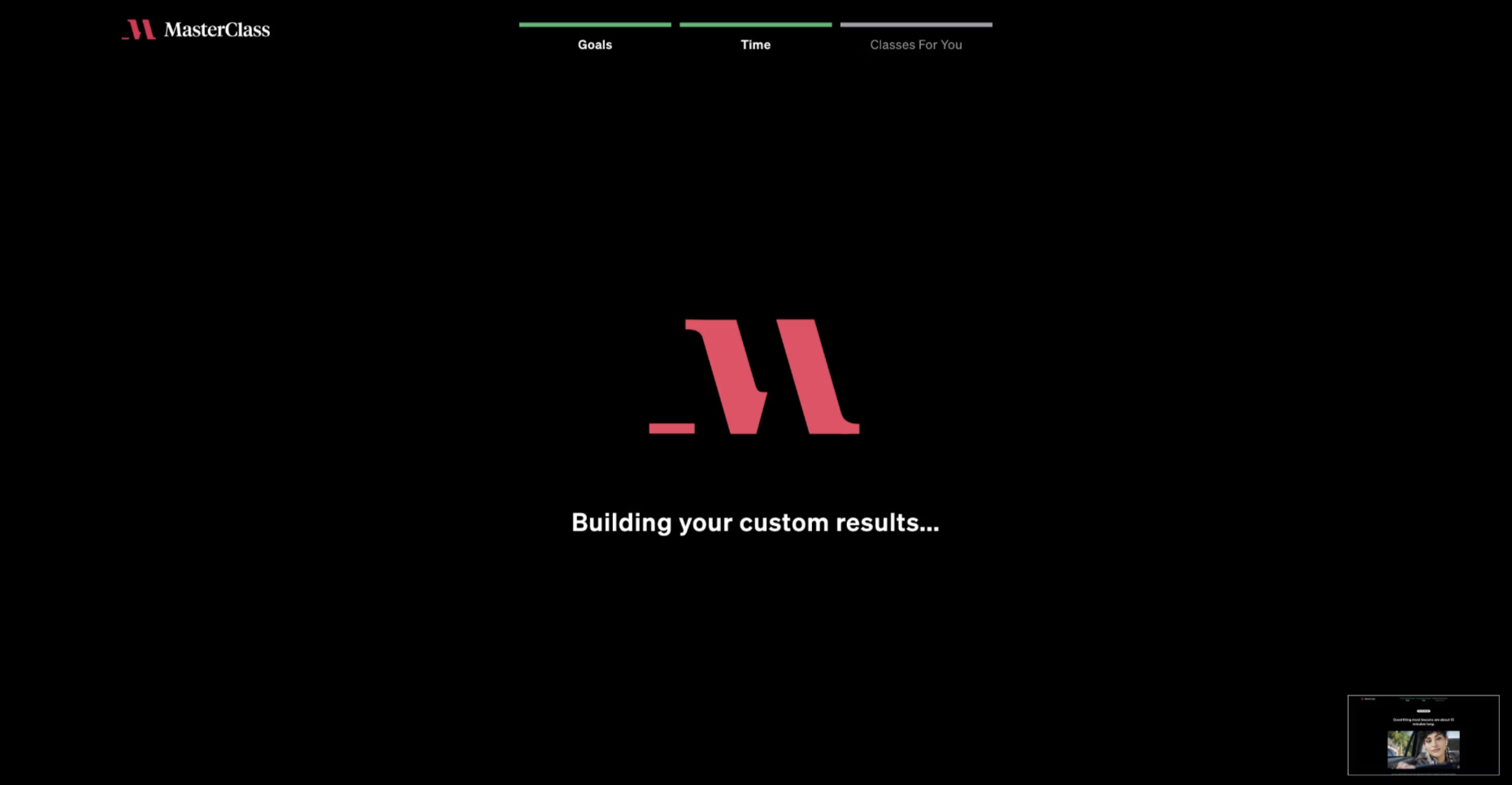
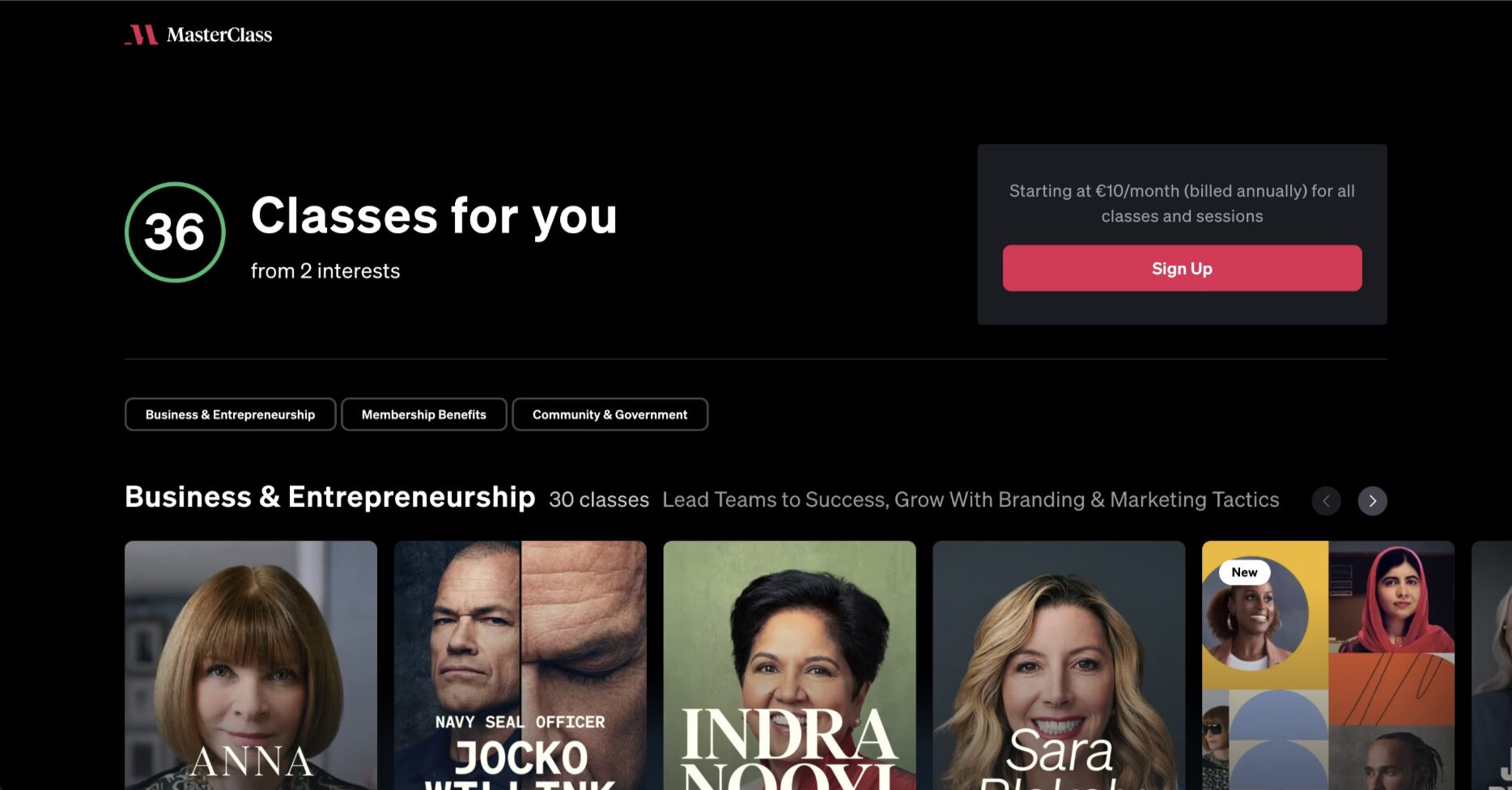
Masterclass goes even further. Even when you arrive from a paid Google ad, they don’t send you to a checkout page. They ask about your interests, build a personalized path of 36 classes (“Building your custom results…” appears on screen), and only then present the offer.
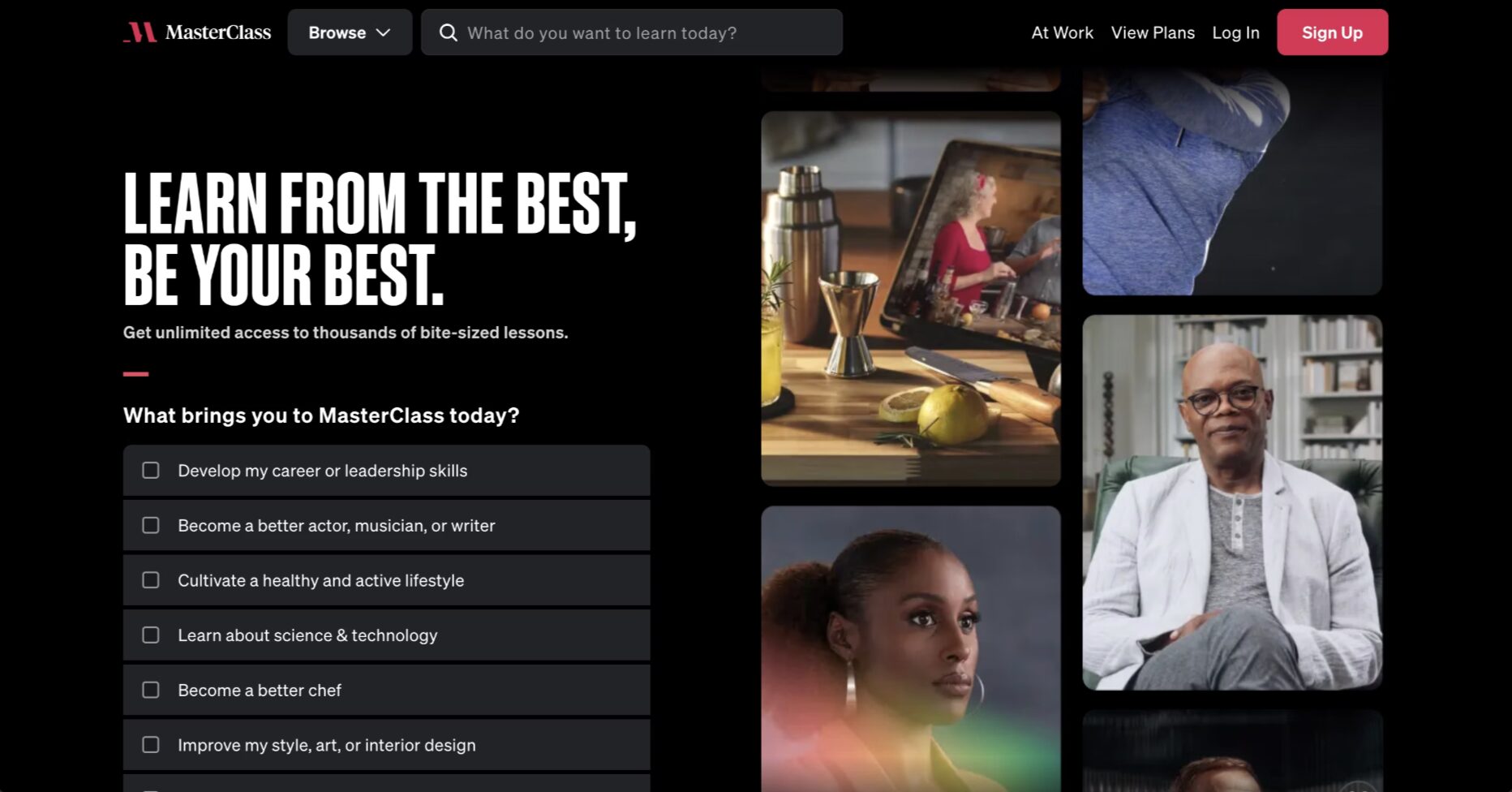
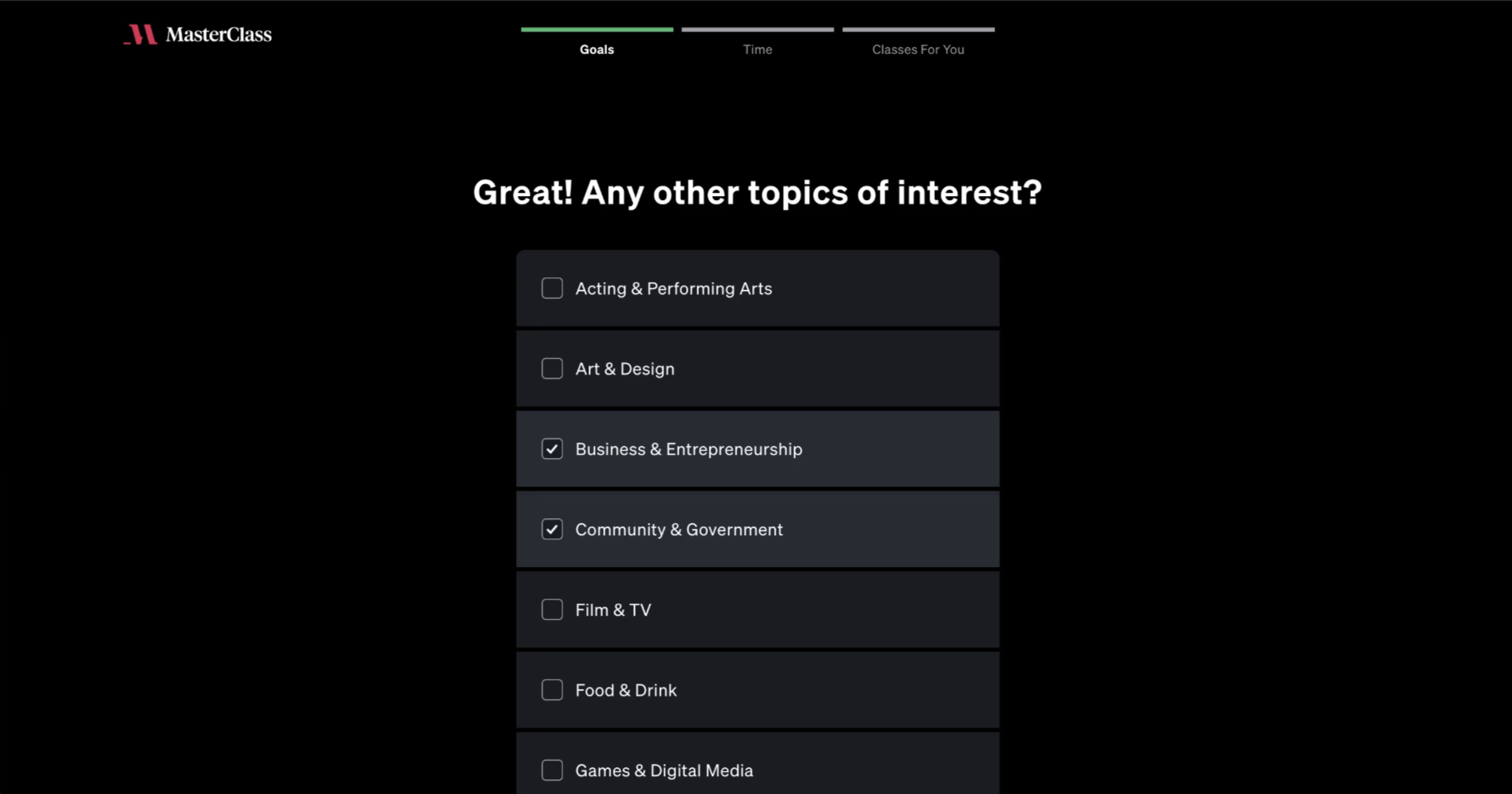
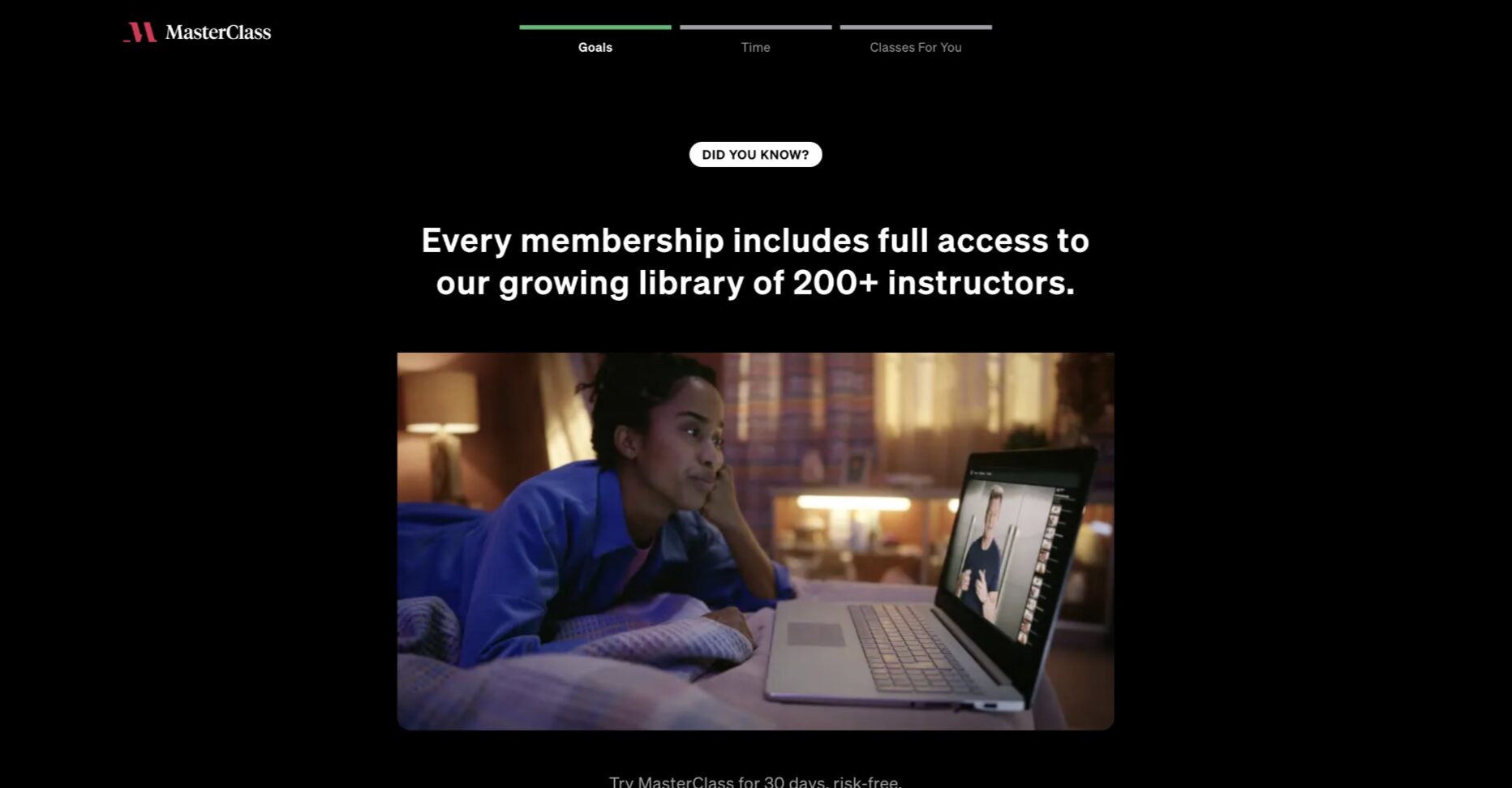
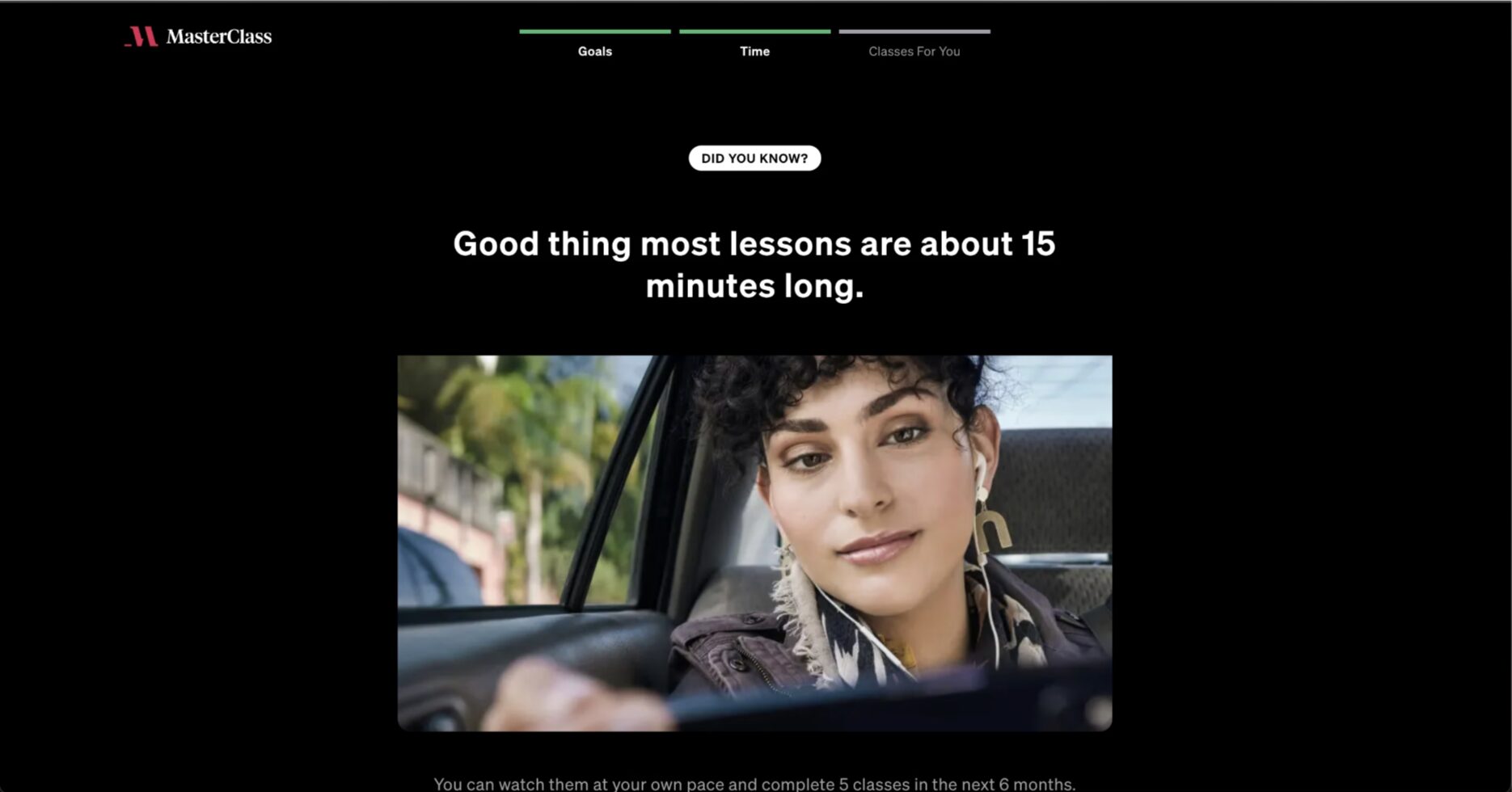
Each step, one job. Discover first. Sell later.
These companies have probably iterated dozens of times to get to these journeys.
And they keep iterating (I strongly guess).
That’s actually why we built Poool in the first place: to allow publisher to build, AB test and improve each stage of your their journey (registration flow, onboarding flows, conversion flow and many more) without needing a dev team every time you want to try something new.
Check out how Irish News grew subscriber base by 15% in 6 months using Poool (published on Audiencers, of course)
What’s coming in this series
As I said, this is the first article in a six-part series.
We have a lot to share, so here’s a quick overview of what’s next:
Article 2: Product. From manual paywalls to intelligent paywalls: the 6 levels of sophistication we identified. This is the only article in the series focused exclusively on media, because the product question (what’s behind a paywall) is very specific to our industry and not comparable to other sectors.
Article 3: Conversion. Why the best performers replaced the linear funnel with an infinite cycle. And why they don’t try to sell too early, or too expensive on day 1.
Article 4: Offers & Pricing. “Acquire with one simple offer, retain with many.” What we saw on pricing, and why a single price means optimizing for an average user who doesn’t exist.
Article 5: Retention. The first 100 days are your only window. Product adoption vs. anti-churn, and the 3 lock-in effects we observed.
Article 6: Bonus. The fun one: Toilet paper, Japanese snack boxes, razor blades, wine, genealogy: the most surprising subscription models we came across, and what they teach us about engagement.
What you can take away from this (and test tomorrow)
We don’t have a single truth, nor claim to have found it (sadly). We looked at 100 business models and took a lot of screenshots. But here’s what we think is worth considering (we will try to include this at the end of each article):
Ask yourself: what is the one goal at each step? If your registration wall also pushes a subscription CTA, you’re trying to do two things at once. The best performers we observed don’t do that. Every step has one job.
Start measuring engagement alongside conversion. Not instead of. Alongside. Track which product features your subscribers actually use. El País showed that each additional touchpoint (newsletter, app, loyalty program) reduces churn by 15 to 30%. That’s concrete and measurable.
Look outside media for inspiration. Some of the most interesting things we saw came from companies that have nothing to do with content: Calm’s onboarding, Miro’s registration flow, Dollar Shave Club’s friction removal. The principles are the same.
If you have questions, disagreements, or examples that contradict what we saw, we’re genuinely interested. This is a conversation, not a lecture.
Drop me (Max, CEO at Poool) an email.
See you next week for Article 2.
This article is part of the series “We studied 100 subscription business models. Here’s what we learned.” published on The Audiencers.